
With all of its SaaS offerings, Salesforce.com is consistently integrating with other forms of cutting edge technologies, such as Twitter, Box.net, and more to offer clients more diverse and appealing options. Today, the company is partnering with Adobe to offer the “Adobe Flash Builder,” off of Force.com, Salesforce’s platform to build and deploy enterprise applications.
The new offering is meant to allow developers and IT departments to build cloud-based rich media applications off of Force.com. Developers can use Adobe Flash Builder for Force.com to extend or enhance existing Salesforce CRM implementations and custom-built Force.com applications, or build entirely new applications to meet business needs.
Within the new offering, Adobe’s Flash Builder lets users build these cloud-based internet application that can be deployed to end-users via the browser though Adobe’s Flash Player or to the desktop through Adobe AIR.
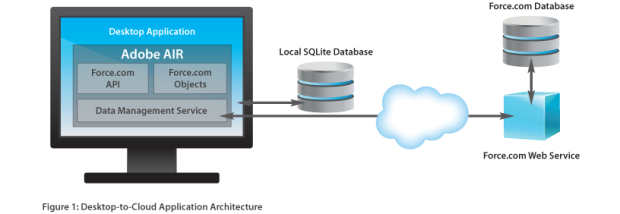
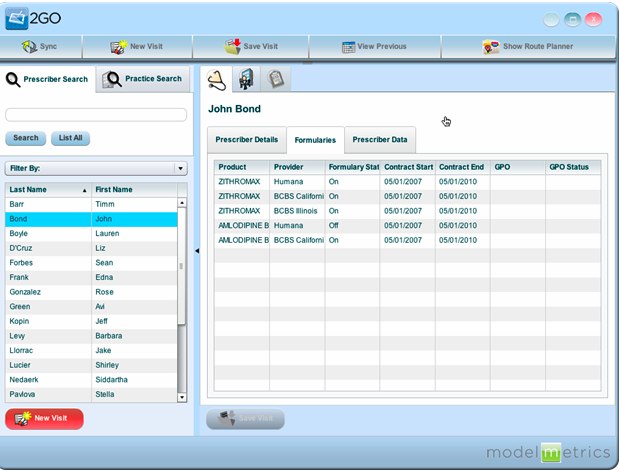
The builder lets developers interactive UI features easily, such as drag and drop technology. Developers can also add data visualization such as charts and dashboards for better management and monitoring of applications. The new builder is also integrated with Adobe LiveCycle Data Services that lets clients automatically synchronize data between the Force.com database and an desktop-based Adobe AIR local data store, allowing developers to build apps that easily connect between the browser and the desktop. A screenshot of a application built with the Adobe Flash Builder is posted below.
Salesforce recently upgraded its Force.com platform by launching Force.com Sites, an application that lets companies build and run their applications for internal use as well as public use on Salesforce.com cloud computing platform. In terms of the enterprise, this is a big coup for Adobe’s Flash platform, which faces competition from Microsoft’s Silverlight product.


Getting a Page not found for http://develope...om/flashbuilder
fixed? works for me.
Viva HTML5; R.I.P flash/flex.
To create a datagrid like the one in the image above that gets it’s data from any data source (Java/.Net/PHP/ Web Service), smoothly scrolls through thousands of rows, has the ability to sort by any column, would take a Flex dev less than an hour. How long do you think it would take to recreate this in HTML5? Weeks? Months? What about the stuff that’s not even remotely possible in HTML5, like automatic data synchronisation between client and server, like in LCDS or GraniteDS? For these types of data-intensive enterprise applications, HTML5 is not, and never will be, in the same league as Flex.
Actually, with Javascript tools that are currently available, it would only take a few minutes. Why would anyone want to continue down a path using proprietary tools that lock you in to an insane OEM with completely lame licensing.
+1
Yeah. Wait untill it starts looking like a look-alike of your mockup in different browsers. HTML can never be truly independent of browser quirks. At least as long as people use IE…
UR misinformed, or just lacking knowledge completely. Numerous libraries available to have one codebase for all browsers. And FYI, people in the know, know that IE kicks ass. Sorry fanboy jr.
The Flex framework is completely open source (MPL license), as is the the compiler and the debugger. If you’re choosing an open source JavaScript library / framework and use their datagrid, then there’s no licensing difference between their work and the Flex one. One outputs SWF that runs consistently in Flash Player or Adobe AIR, the other outputs HTML that runs in the browser or Adobe AIR.
What is it about the Mozilla Public License that is so lame?
Mike Potter
Adobe Developer Marketing
Mike, the complaint will always boil down to the fact that the Flash player is proprietary. Open source that, then you can really talk about open source.
There’s no need for Adobe to make the Flash Player open source. Anyone can use the published SWF spec and build their own Flash Player (there are no licensing restrictions), just like the HTML spec is freely available and anyone can build their own browser. This is what the Open Screen Project is about.
Really? Then what was all this about ?
http://linuxcen...-a-web-browser/
Can you show me an example please? What I’d like to see is one that has at least the functionality of a simple Flex datagrid, eg:
1. Smoothly scrolls throw thousands of rows.
2. Click on any column to sort.
3. Double-click on any field to edit.
4. Ability to drag any column to reorder.
5. Resizable columns.
6. The ability to set all this up in less than an hour.
Really ? Can you control rowspan / colspan on a datagrid like this HTML example in Flash / Flex ? Ha, thought not.
Of course you can! ItemRenderer’s in Flex can be as simple or complicated as you like. The example you gave is trivial.
Nope. Try it out or look carefully at the challenge before jumping to conclusions. I asked a few of my friends good at Flex and they could not do it.
I’m sorry but whether your friends have the knowledge or skills to do this in Flex is not relevant. If they can’t, your phrase ‘good at Flex’ is not appropriate as I would class this example as intermediate at best. Each column in that DataGrid can have a different ItemRenderer. The ItemRenderer’s for the Status and Count columns both have opened and closed states. Putting the Status cell into the open state triggers it’s equivalent Count column to also enter the open state and the row height is adjusted accordingly. There is nothing difficult about the example – the open state layout could easily be accomplised by a Grid component or a combination of VBoxes and HBoxes. Imagine a framework where you have all the layout possibilities of HTML and CSS, and then some others like Advanced Constraints, and you get some idea of the layout possiblities of Flex.
Nice try with all that confusing jargon.
And you totally missed the point that the state names are DYNAMIC. Not surprising, given that you are a dumbed down Flex UI developer.
And I see that you have no response to this:
http://linuxcen...-a-web-browser/
Good day
Look, I wasn’t trying to confuse, I was describing in simple terms thjat any Flex dev could understand the simple solution to this simple problem. The state names ‘open’ and ‘closed’ are just names *I* have given to the states when the little ‘+’ has been clicked and when it hasn’t. Do you know how a Flex DataGrid works? Each ItemRenderer has a data object which can be as complex as necessary to contain all the information that cell needs to render itself. The amount of information that would need to be contained in this object for your example is tiny. Some of this information would be needed to display the closed state and some would be need to display the open. This example is trivial.
You have admitted in both your responses that you know nothing about Flex and yet you confidently assert it cannot do something which it clearly can. This makes you look like a fool.
There is nothing, absolutely nothing, that you can do in HTML that you cannot do in Flex. Yet 90% of Flex you cannot do in HTML.
Regarding that link you provided, that has nothing to do with Adobe’s openness as a company as you have suggested elsewhere. Adobe sells a technology that allows content providers to stream encrypted video streams. If content providers pay a lot of money to produce content, they have the right to generate revenue from this content. If they couldn’t generate revenue, the content wouldn’t be produced in the first place and would that really be the best outcome? If someone makes a tool to circumvent that protection and thus make Adobe’s product far less valuable to customers, I would ask them to stop doing it too if I was running Adobe.
good luck with that fantasy.
It’s a powerful tool for building cloud-based rich Internet applications (RIAs), which can easily be deployed to end users through the browser via the Adobe Flash Player, or directly to the desktop using the Adobe AIR runtime. These applications run seamlessly online or offline while taking full advantage of the security, scalability, and reliability of http://www.force.com
Strange to see a typo in Techcrunch’s article of all places…..the last line
In terms of the enterprise, this is a big coup for Adobe’s Flash platform, which faces competition from Microsof’s Silverlight product.
—–
its Microsoft, of course, whatever happened to your spell check!
Alright. There must be money changing hands here. There’s no other excuse for writing about Salesforce so often.
http://www.goog...mp;oq=&aqi=
The fact that Adobe has renamed Flex Builder to Flash Builder in the upcoming iteration gives incredible insight into the long term viability of the product. I’ve used Flex before, and while I don’t mind it, as others have mentioned, HTML5 and JS will make it irrelevant.
You’re high. And spineless. That is all.
Removing the data components from CS3 and repackaging them as Flex, only to have to subtly reintegrate them into the Flash brand in 2010 was high. And spineless, given that a lot of the original move probably hinged on making end consumers purchase an additional IDE. At least they had the sense to release the free SDK. FD FTW.
Since Adobe purchased Macromedia, which developed Flex, you are clearly misinformed.
The Flex framework is a lot more than the data components from CS3, especially when Flex 1 originated back I think in Flash 8 days.
Flex Builder can be used for more than creating Flex projects, as you can create pure ActionScript projects with no part of the Flex framework involved, which is one of the many reasons Adobe rebranded the Flex Builder to Flash Builder. Adobe is also integrating Flash Builder more closely with the Flash IDE in CS5. Meanwhile, the Flex framework itself has not changed in name.
If that didn’t convince you on the long term viability of Flex, just look at all the Adobe websites like Buzzword that use Flex.
Meanwhile, there’s still a big gap in what’s capable in Flash Player 10 today to what is capable in HTML5, which not all the major browsers completely support yet (plus the spec is still evolving). By the time HTML5 is fully supported in the majority browsers, several more versions of Flash will have been released widening that gap of functionality even more, giving developers more reasons to use Flash and Flex over HTML/JS when it comes to applications.
BTW, for those wondering, Flash Builder is the new name for Adobe Flex Builder. We are changing the name for the next release (due out in early 2010).
Mike Potter
Adobe Developer Marketing
Other than the marketing spin, is there anything actually new here from a developer perspective? Couldn’t you do all this stuff before?
HTML5? Okay, wake us up when it actually delivers on all that is promised across all major browsers. The Flash platform, leveraging the Flex framework, is far superior to the Javascript solutions. This opinion is based on experience in an enterprise environment. We have had a much more productive and pleasurable experience with the Flash platform than with any Javascript/CSS/HTML setup.
Actionscript = 00
Javascript = hack in 00 like qualities
Salesforce only allows developers to customize their CRM application, it doesn’t allow actual publishing of your own applications. They control the licensing of every user. It’s unfortunately all about lock in.
The total commerce for force.com publishers is only 12-15 million per year with a combined audience of administrators of about 60-70 thousand. Be very careful before investing in this small lock-in based ecosystem.
Obviously Adobe paid TechCrunch to do damage-control for this post:
http://www.tech...ange-your-name/
Yeah, waiting for Adobe to create a new product called “cloud” and then sue everyone for trademark violations.
Intalio is a great enterprise cloud as well. A good solution for the SMB market is egnyte
Although I commend The HTML5 crowd for their passion, it’s hard not overlook how withdrawn they are from the real world.
With RIA platforms such as Flex, Silverlight and the underdog JavaFX there is no denying they’re are light years ahead – it would be unfair to even compare the 2.
As a real case study, just look at the time, resources and money Google put into developing the Wave interface; which by the way is still buggy and unreleased. The same interface could have been built and completed in a couple months using an RIA framework versus a couple of years dealing with evil javascript and cross browser funk. Not everyone has pockets as deep as Google.
Goodnight and good luck….
irieb88 +1 .