 It’s well known that casual games are popular among mainstream Web users. However, when you’re a publisher maintaining a community, you want to go beyond engaging each user separately and increase total engagement in bulk by connecting users with each other. Enter multi-player casual games.
Israeli startup Come2Play, which we’ve described as the Ning of social gaming networks, has provided this part of the equation since its founding in mid-2007. It’s now keeping up with the zeitgeist by adding a virtual economy in a box that could prove compelling to community sites.
Is there actual money being made? Indeed there is. Come2Play’s CEO, Alon Barzilay tells me that every 1000 users who visit Come2Play’s token store (via any of its games) generates $45 in revenue, split 50%/50% between publishers and Come2Play, and that is after developers get their 30% share off the top. This mind you is beyond the ad-rev share that extends across the same entities.
On the face of it this sounds very much like HeyZap’s recently launched payment platform. There are some key differences however, beginning with the fact that HeyZap focuses on single player games and only a fraction of its 12,000+ games are payment-enabled.
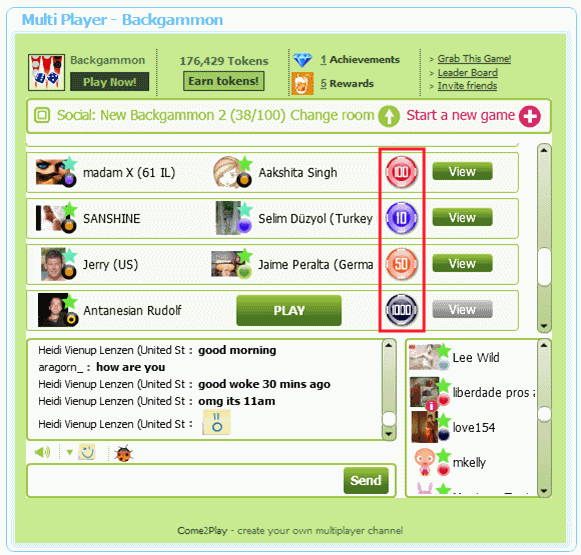
Come2Play’s game catalog is only 35 games deep, but all are multi-player and payment-enabled. The games can be embedded individually or as a channel/portal that includes social features such as game rooms, chat and leaderboards—features that are not available in HeyZap’s single player games.
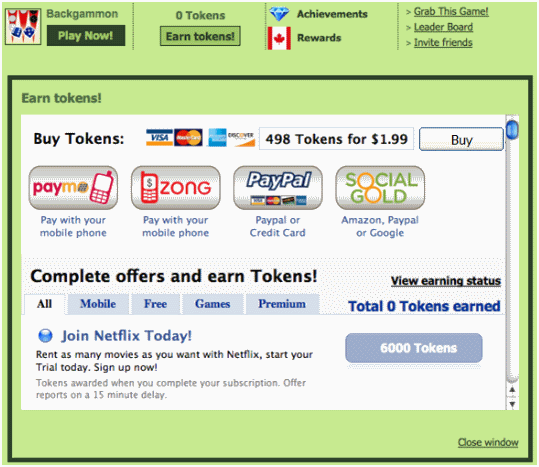
The games encourage users to buy tokens ($1=1000 tokens)—via Paypal, Social Gold, Zong, credit cards or CPA offers—by allowing users to challenge one another with the winner taking the token bounty. Players can also use tokens to redeem rewards, such as game badges. Come2Play maintains a wallet-like account for the user which can be used in any game on its network, at any publisher site.
Come2Play built its virtual economy platform themselves and has gone ahead and integrated it into its open source multi-player API it released a year ago. Developers wishing to distribute their games through Come2Play’s network will need to integrate with this API, and the token monetization will come included. Since the monetization comes as a sort of wrapper around the game, developers won’t need to make any in-game code changes.