Digg Starts Nofollow-ing Links That It Doesn’t Trust
by MG Siegler on September 2, 2009

screen-shot-2009-09-02-at-44704-pmDigg announced a seemingly small, but rather interesting change on its blog today: It has added a “rel=nofollow” tag to every link on the site that it doesn’t trust. What this means is that all the spammers who submit their stories to Digg, are now basically out of luck.

Sure, all spammer who submit something to Digg hope that it hits the frontpage and brings a rush of traffic. But more important to them are the links associated with Digg. If a story is popular on Digg, it will also likely garner quite a few links back to it. But even if it doesn’t become popular, the link coming from Digg itself gives some weight to the spammy URL in a search engine crawler’s eyes.

Digg using nofollow has been a subject of debate since at least 2007, when the service was exploding with popularity. Around that time, Wikipedia decided to use nofollow for all of its outbound links. But what’s interesting here is that Digg isn’t adding nofollow to all of its links, and instead is only doing it for the untrusted ones.

This work was done in consultation with leading experts from the SEO/SEM and link spam fields, in an effort to lookout for the interests of content providers and the Digg community,” Digg’s John Quinn writes today. This would seem to suggest that company realizes it’s still in the interest of most content providers to get the link juice that comes from Digg. It would also seem to suggest that it doesn’t want firestorm of controversy similar to the one it created with the DiggBar.

This move comes at an interesting time for Digg, as sites like Bit.ly look to be setting up to battle for who has the most interesting link data on the Internet. Twitter itself has been testing out the tracking of links from its site, though it claims to be just doing so for internal product purposes.

How Digg judges which sites they trust, they don’t say. But one would have to assume that these sites are different from the ones that are straight-up blocked from the service for being spammy. Untrusted links in comments, profiles and story pages will also get the nofollow tag as well.

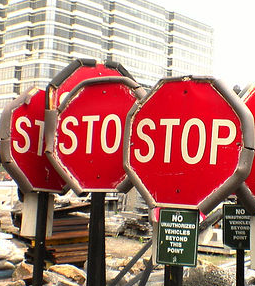
[photo: flickr/brianware3000]

Advertisement

Comments rss icon

  • I wonder how they determine trust? Blacklist?

    • I would assume so. But imagine the problem of someone spamming YOUR website on Digg and getting it blacklisted. What appeals process will be in place?

    • Digg isn’t doing it on a site-by-site basis but on a post-by-post basis, which is about as stupid as I’d expect from them.

      Compare these two:
      digg.com/search?s=site%3Awnd.com&fltdigg=o50&sort=digg&fltdate=l60
      digg.com/search/page4?s=site%3Ahuffingtonpost.com&sort=digg&fltdigg=o50&fltdate=l30

      At the first, the page with 256 diggs gets nofollow’ed while the one above it with 624 diggs isn’t nofollow’ed. The cutoff for the second is lower. The one with 178 diggs is nofollow’ed, but the one with 247 is not. And, at least one of the non-nofollow’ed stories on the earlier pages is marked as inaccurate, and one of the ones that isn’t so marked appears to have been a hoax.

  • Yeah I’m interested in knowing what their “trust metric” is.

  • Ultimately, it doesn’t matter how “trust” is decided. Digg can do what Digg wants on its own site. I’m glad to see this, and it certainly is better than using nofollow on ALL outgoing links.

  • Pretty easy to see where the line is drawn

    If a story goes popular, it gets a followed link

    I did a quick search for cracked.com
    http://digg.com...amp;sort=newest

    All the links are nofollowed except stories that are popular.

    There are potentially better ways to do it than the current implementation, depending on how Google are really treating “evaporating PageRank” from nofollowed links, dangling pages and reset vectors.

    • I am all for nuking spam, never-the-less it puts new sites in a quandry…

      How to get popular if you need to be popular to get popularity… (geez, that was a convoluted statement. Even so, it makes sense, I swear)

      I remember the old days when it was actually rare to get spam in your email… Google ranked pages on keyword density only and captcha made you think of some kind of Turkish Hashish.

      All of a sudden I feel kinda old…

      Alas I digress. This is a sword that cuts both ways. It was nice to post legitmate ramblings and benefit from the obligitory traffic as a result.

      At least it should cut down on the spammers.

      • You know, though, there’s a problem even in your “at least it cuts down on the spammers” hope-fest; who decides what a spammer IS?

        Example: I posted this following comment, replete with link, yesterday on Gizmodo:

        http://gizmodo....-kids#c15126580

        Because I had commented honestly and in context to what my company does, I felt it fair (even informative) that I include the link. And I got accused publicly of being a spammer.

        Please. I applaud whatever part of digg’s effort is pointed at reducing “bad stuff”, but with no clear consensus on what bad stuff IS, the effort is . . . masturbatory. Which I hear leads to blindness.

        OOH! Here’s a link!:

        Jeff Yablon
        President & CEO
        Virtual VIP Business Coaching and Virtual Assistant Services

        • Yes, I’m replying to myself, and yes, I’m including another link, because this is an important enough subject that I just blogged it:

          http://answergu...r-media-gizmodo

        • To be fair, it wasn’t relevant to the story at all and it had no reason to be there. Yes, you were spamming. Funny how your moral compass sways when your monetary interests get involved.

        • That comment you made on gizmodo was spam. It was a blatant attempt at self promotion

          • You really think so? I’m genuinely confused/surprised. Here are my words:

            >>
            Let’s be clear, folks: even if it’s stalker-like, meant as stalking, or full-out stalking, this is the way the world communicates now. Why NOT get w/ your kids this way?

            Change requires changed approaches . . .<<

            It expressed an opinion on the subject being discussed, and also stated a possible way to think about the issue. I presume that absent the link back to my blog you’d not call that spam, so are you saying that even if I join a conversation I don’t have the right to site my (related) activity and expertise?

            Seriously, I’m shocked. And NOT taking this as another opportunity to post the link.

            -Jeff

          • Jeff,

            Does it matter whether or not you think you spammed a message board? If you are posting a comment in a public space, then doesn’t the determination of its merits fall to your audience? If your audience calls it spam, then it is spam, whether you agree or not. It is similar to the group thinking that causes runs on perfectly healthy banks or people to slaughter pigs to avoid the swine flu. No matter what you were trying to communicate, people read and think what they want.

    • that was some search Andy, but I am quite eager to know the exact theory behind how they judge pages for trust and non-trust. I know it won’t come out at the least from Digg itself.

      I have not done much exploration as yet but I submit a lot of material and would notice some trend if any. I would be the first one to post back any trend if I find. :)

      Sonal Maheshwari
      USourceIT your single source for all IT needs

  • LOL, there’s always an underlying conspiracy on techcrunch. How about they finally got around to making this change and it just so happens that is .

    On the plus side Digg will dissuade spammers. Spam will still benefit from sites that syndicate stories on Digg.

  • How about they finally got around to making this change and it just so happens that -insert company here- is -doing something-.

    (brackets removed…)

  • Won’t matter much. It blows my mind that people still believe the nofollow propaganda despite the overwhelming evidence suggesting it makes little difference.

  • Might be some algorithm that checks for duplicate sites or by checking the amount of content? Who knows

  • I think it’s a good move. I would guess either they subscribe to some spam-blacklist of domains that are lame, or, they whitelist sites they know and trust, and everyone else is blacklisted.

  • Is digg still relevant in the social news space? I can’t remember the last time I visited digg for news content.

    • digg is dying. It’s gone downhill very fast over the last 18 months. The comment pages are full of rubbish, the submissions are always the same “type” of thing, there’s no real value to digg, and no reason why any discerning person would visit digg. Compare it to reddit where you have actual INTELLIGENT discussions taking place and digg looks pathetic. I’d give it another 6 months before the media start reporting on the death of digg.

  • I didn’t realise external links from digg.com WEREN’T nofollowed before. I thought all major social networks that allowed easy user submissions nofollowed all links as standard?

  • It’s going to be interesting to see how this pans out on Digg. If it’s true that only popular stories that are getting certain amounts of diggs is the gage then they are missing the mark. Most likely it’s a combination of the profile, how active it is, quality/context of the content among other things. Otherwise it’s just like a popularity contest and everyone is excluded except for a select few.

    My Two Cents!

  • It seems to make sense to do this, but why link to the site at all if you don’t trust them, or think it’s spam?

  • Nice move by digg but I think they will loose traffic in this way..Those spammers who submit their links, wont come back now >.< technical but fact :p

  • Democratizing media ya right, Kevin Rose became an asshole he forgot why he started digg, all digg became is a an aggregator of only top sites that they like and are “white listed”, if you look at the front page its only from sources like: the LA Times, NY TImes, HuffPost, Break, cracked etc.
    We all grew to love digg and spend hours on it because it gave media and exposure back to the people, now its just another unoriginal crapy site.

  • Its good move by Digg, i should say at least it can now prevent futile links clogging..

  • Anyone here know how Raptr.com comes up as Maltese.com with Alexa? Anyone know if you can fool alexa??

    Sorry but it seems really weird. Check it out:

    http://www.alex...einfo/raptr.com

    The url will change, jest look.

  • hmm, this new announcement is too bad for nubie blogger that have a hope to become a succesful people with blogging job ., its very bad , im so sad with this new announcement, why

  • I dont digg much but I am really concerned about my links out there. Is the trust level based on the no of diggs you get or the actual content you submit.

    But the good thing is it will demotivate spammers and make more room for genuine diggers.

  • It´s a logical step, digg must consider trusted links all frontpage links, and as SPAM all not promoted stories

  • Actually they say quite clearly which sites they don’t trust:

    “This includes all external links from comments, user profiles and story pages below a certain threshold of popularity.”

    How hard is it to actually read a 2 paragraph blog post?

  • Let’s hope this will make digg have less spammers in the near future…

  • DIGG = DEAD!

  • Wow, Digg really does think it is “all that”! LOL

    RT
    http://www.anonymous-web.be.tc

  • Title should read “Digg introduces Barrior to New Websites”. This is a class system for websites, not allowing the lower class websites to do better for themselves. A Glass Cealing if you will

  • Although before this Digg set “do follow” on all links in their story links including spam site , why is Digg still has high PR? Google usually penalized site like this ( except Digg)?

  • Anything that makes Digg better will have my support. Well have to see the end results.

Leave Comment

Commenting Options

Enter your personal information to the left, or sign in with your Facebook account by clicking the button below.

Alternatively, you can create an avatar that will appear whenever you leave a comment on a Gravatar-enabled blog.

Trackback URL
Short URL
bugbugbugbug
Techcrunch on Facebook