Android and iPhone Apps Cost About The Same, Except For Games And Dictionaries
by Erick Schonfeld on August 6, 2009

android-app-charts

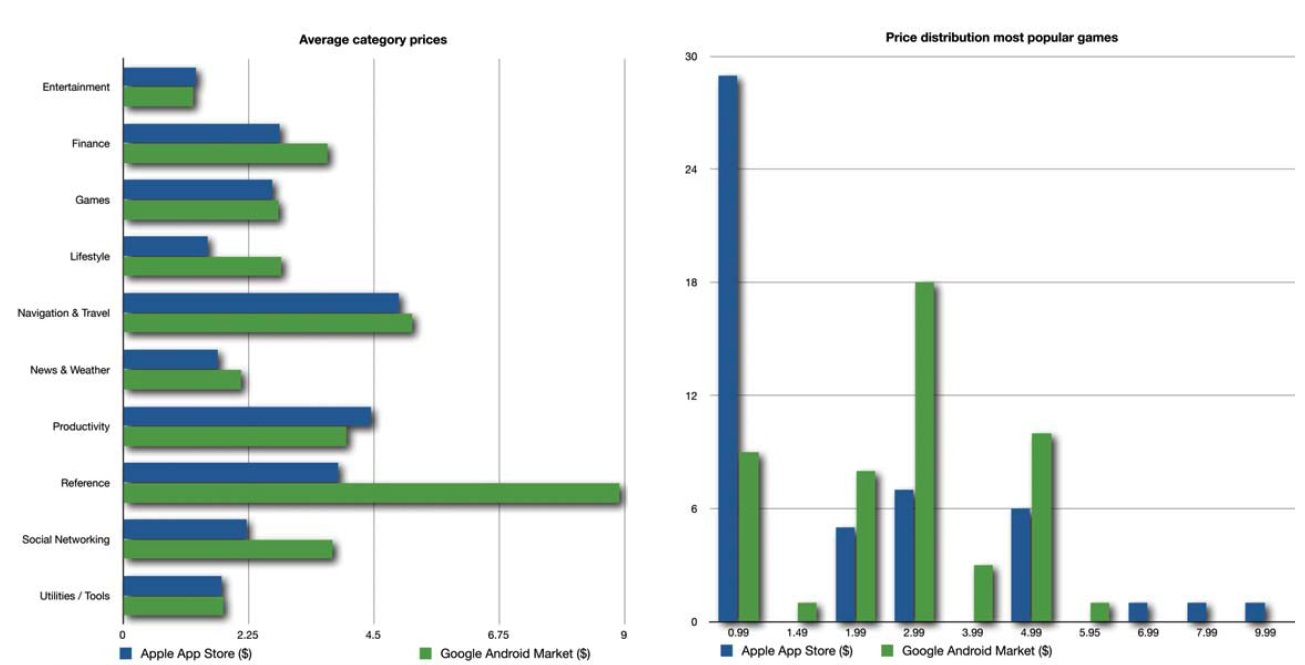
Do the prices people are willing to pay for a phone app depend on the device or the type of app? A comparison of July prices in the iPhone App Store and the Android Market by app analytics firm Distimo found that across broad categories such as entertainment, navigation, and tools the average price for the Top 100 paid apps was very similar for both mobile computing platforms.
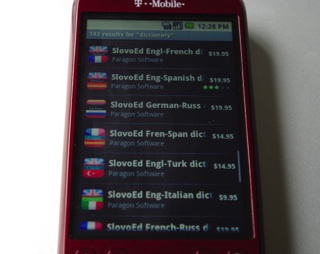
There were a few exceptions. The average price for a paid reference app on Android is close to $9, which is more than twice the average price for the same category on the iPhone. This disparity is mostly due to some dictionary apps on Android priced between $15 and $30 (mostly from Paragon Software). I’m not sure those are big sellers, but it bumps up the average. Finance and social networking apps are also slightly more expensive on average.

Games are on average about the same as on the iPhone, around $2.50. But if you look at the price distribution, that tells you a different story. While most of the top paid games on the iPhone go for $0.99, on Android many more games are priced between $1.99 and $4.99.

Are Android games better than iPhone games? Hardly. This might just be a function of the relative immaturity of the android Market. Early on, iPhone apps were priced all over the place, but then they started to drift en masse towards the golden $0.99 price point. I suspect the same will happen with Android apps as the devices hit a critical mass of users this year.
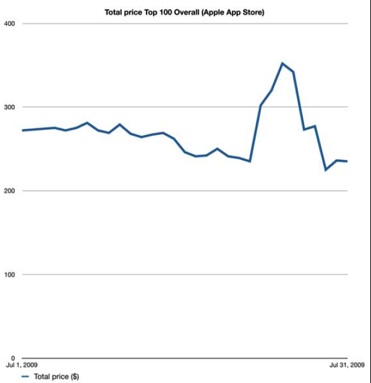
Over time, these prices revert to the mean. Look at what has happened to the average price of the Top 100 apps in the iPhone app store in just the last month (see chart at right). When OS 3.0 came out for the iPhone at the beginning of the month month, many app developers took advantage of the new features and prices fluctuated as they experimented to see if they could charge more as a result. So we saw prices rise, especially among navigation apps.

But the average price quickly came back to the norm. Even when a pricey app breaks into the Top 100, it doesn’t stay there for long. For instance, the $69.99 MobileNavigator North America, caused a spike in the average price for the month, but when it dropped out of the Top 100 paid apps on July 27, so did the average. Over time, mobile app prices keep coming back towards $0.99. Call it the Steve Jobs effect.

Advertisement

Comments rss icon

  • This is completely misleading.

    It may be accurate as far as the top 100 PAID apps from each are concerned, but there’s no mention of the fact that the VAST proportion of Android apps are free.

    And free doesn’t mean rubbish. Apps like Locale are amazing.

  • News Corp? Murdoch’s announcement yesterday? Supposed end of free news? Biggest mass media gamble of all time? Anyone interested in writing about this? Anyone?

    • why? techcrunch covers enough celebs already. why cover more? – plus when did techcrunch become a newspaper that needs to report on everything? it’s a blog

      • Er… because I would have thought one of the world’s largest media conglomerates – one that has shaped the news landscape over the last 30 years – taking an avowed leap into the digital abyss wouldn’t exactly constitute a topic of marginal interest.

        Oh wait, are you saying “tipping points” are no longer de rigueur?

    • That’s actual news. TechCrunch is for Apple, Google and Twitter related gossip only. Also, insert some nonsense about shifting paradigms and the death of newspapers here.

      • TC is giving their audience what they want.

      • Sure thing, something like this?

        “Murdoch’s retrograde initiative – leaving News Corp floating as a signifier without a signified, eternally displaced – is representative of the outmoded hierarchical structures of a prelapsarian print world. It neglects the emergent power of social networks that are without impediment (eclipsing any sense of Euclidean time and space) and their citizen journalists who are fast reaching a point of singularity: shining white orbs of blissful self-righteousness floating mere feet above their desks and boldly creating new, ever fascintating worlds of solipsistic angst.”

    • In my opinion the move is dangerous for Rupert.

  • that’s because dictionaries on android are UNCENSORED

  • Why should we call it the Steve Jobs effect?

  • Well of course Android’s dictionaries cost more — they include more words!

  • So how big will Google and the Android have to get before we hear people complaining about bad apps and trying to monopolize the market?

    And if you’re planning to reply with “Google wouldn’t do that”, grow up.

  • @Dave the point is it doesn’t matter if google tries because there are other markets too like slideme that got oem deals with phone manufacturers.

    Besides google already removed apps from the market in case they are illegal or violate the android market terms (which are pretty standard for third party content publishing… not much different than those of youtube for example).

  • Its probably supply/demand driven. Greater consumer choice forces app publishers to drop prices. I would be interested to know how many apps exist in the different categories on the two platforms.

  • Just for laughs they should’ve included WinMo. That would really throw off the charts and make apps on the other 2 look free, in comparison.

  • Price comparisons doesn’t mean a whole lot unless you’re comparing identical applications acrosss different platforms. What’s important is what you can do with the apps on each and if they are actually worth what you pay. Like if you want to have a remote desktop (RDP) app, how much do they cost for each platform and how well do they work? And how good are the apps on each platform for different users? Maybe what’s classified under ‘productivity’ for one isn’t as good for actual business users as on the other. Most apps are pretty useless so if there are hundreds of free ‘productivity’ apps for one it doesn’t mean any of them will help you be more productive.

  • There is infect no comparison of Android with iPhone apps, Android is based on Open source platform but lot of developers has start developing the iPhone apps clone for Android and charge the same for them. Examples are Vopium, truphone and other services which have their iPhone clients as well as Android and charging same against them.

Leave Comment

Commenting Options

Enter your personal information to the left, or sign in with your Facebook account by clicking the button below.

Alternatively, you can create an avatar that will appear whenever you leave a comment on a Gravatar-enabled blog.

Trackback URL
Short URL
bugbugbugbug
Techcrunch on Facebook