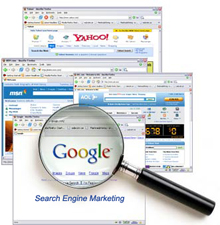
The Time Has Come To Regulate Search Engine Marketing And SEO
by Guest Author on July 13, 2009

The following post was written by a well known executive at one of the largest sites on the Internet. The author has requested to remain anonymous – not for dramatic effect, but because of the backlash he would receive from the SEO industry and possibly Google itself. He also doesn’t want his company associated with the post.

He is starting a discussion on the need for government regulation of the organic and paid search policies of Google, which maintains a commanding lead in search market share today. Or at least transparency in how search results are determined. There is clearly growing frustration on the constantly changing “border policies” that are created and enforced by Google and other search engines. It is a fascinating read.

Imagine, if you will, that the entire Internet is contained within a single continent. That continent is filled with countries, states and cities. Each jurisdiction is autonomous, relying on visitors to cross on to their turf to engage in commerce. Now, imagine if the only way to get into this continent involved just two methods: SEO and SEM. Let’s further imagine that the borders to this continent were controlled by a single company. Let’s also hold that the rules for search engine optimization listings and search engine marketing were not only defined but were completely controlled at the whim of this single company. Of course, we all realize that word-of-mouth marketing and viral marketing also contribute to traffic to individual websites. That said, the primary methodology for all users to reach any individual website destination is still search, of either paid or organic listings.

Or suppose the paradigm is the streets of Los Angeles. Let’s imagine that in order to enter the city you had to pass through a single gate. And once you entered that gate, the streets you were or were not allowed to go down — and thus the businesses you were or were not allowed to visit — could be randomly blocked from your access. Blocked to a point where you might not even know they exist; whatever streets were available for you to traverse were in essence the only streets you knew where business could be transacted.

Whatever the scenario, it’s unsettlingly close to the situation that prevails today in search. It’s now conventional wisdom that search engine optimization, representing the organic result sets on any search query, is more voodoo than science. Through an uncontrolled set of factors search engines determine which listings appear at the top and bottom of any individual query. In addition, consumer behavior dictates the top three results on any search page are all that matter. If you happen to own an online business, unless you exist within those top three, the amount of individual traffic you will obtain from organic listings is very, very low. As the proprietor of that business you may hire search engine optimization companies to assist in increasing your rankings on organic results, with or without success. And at any one time, the controller of these borders (that is, the search engine itself) can change and manipulate those rules – and that can substantially decrease or destroy all organic traffic coming to your website, without notice and without your knowledge.

Search engine marketing now faces a similar challenge. Although anyone can open an account to buy paid search listings, the rules on each account are arbitrary. Accounts can be shut down at any time, without notice to the website owner. In other words, if you haven’t successfully obtained enough traffic to your site from organic listings and you decide to rely on paid search, you still face a situation where regardless of how much you bid per click you may or may not show up at the top of the paid results. That’s because paid results that are displayed on any query are not only determined based on the price the buyer is willing to pay. Unlike other auctions that are completely priced-based, these results are determined and sequenced not only on price but also on quality of advertising and click-through volume. For example, if company A was willing to pay $1 per click on a certain term and company B was willing to pay 10 cents but company B’s ad generated ten times as many clicks as company A’s, the yield to the search engine would be identical between the two.

The second factor is that the search engine can, at any time, determine that either company A or company B may or may not buy traffic within its index. And without notifying the company and with no path toward recourse and statement, the search engine can disable the paid search account from either business. Returning to the continent metaphor, this ends up looking quite a bit like free trade. Various businesses (call them sellers), operating within this continent, wish to conduct business with the rest of the world (that is, the population of buyers). The border — which in this case is the search engine — thus has complete control of who can transact and how often. And at its discretion, the search engine can decide to increase, decrease or completely disable access between buyers and sellers. Because search is the dominant methodology for consumers to find what they are looking for, whether a product or a service, the unilateral control that search engines wield enables them to control billions upon billions of dollars of consumer spend every year. It also gives them the ability to completely determine which companies become more successful — or less so.

The situation we face today is unique. Due to Google’s dominance — and the fact that it controls such an enormous amount of consumer behavior through paid and organic search listings – the company in essence governs commerce on the web. And any company that falls out of favor with Google, whether for reasons of bad practice or simple disagreement, can find itself at risk of going out of business.

This system also benefits the few in a host of other ways. Because the rules of organic and paid search change frequently – and remain undefined — agencies and other traffic brokers can win big; through their experience, they’re capable of reverse-engineering these rules. This means that, as this market matures, individual businesses have a diminishing chance to actually compete and gain search market share. That, in turn, puts them in a position of not only needing to hire an agency in order to find any traffic, but also making it more expensive overall to build businesses on the web.

I’ve worked with many businesses who feel they are playing in Google’s world — behaviors from product decisions to marketing strategies rely completely on appeasing these undocumented and often mystical Google desires. I’ve seen companies choose to not work with Google’s competitors for fear that by building those relationships, they’re damaging the ability to be indexed properly on Google and are anxious that result sets will be compromised. Many likewise believe that by having a monetization relationship through Google, they will somehow achieve higher quality listings through organic search. I’ve also witnessed companies who, in addition to using Google for monetization, have preferred relationships with purchasing traffic through Google Adwords. By supporting this dual relationship, they appear to want to live by two sets of rules – those that exist within the Adwords marketplace and those that apply to the Adsense product. And because they’re walking on both sides of the (Google) street, they feel they have a strategic advantage — as though the Adwords product will enable them to acquire traffic at both a lower cost and with a looser rule set than their competitors.

Here’s where the parallel to free trade breaks down. There are no perfect paradigms looking at free trade and import/export laws that exactly define or address this challenge. Neither would a secret relationship between the government and the search engines solve the problem. The only real solution is disclosure. Transparency. Those traffic generators that use rule-based algorithms to determine result sets must publicly disclose their methodologies. That is the means by which all businesses can compete freely in the organic and paid search marketplaces. If we lived in a world where Google didn’t hold sway over such a significant portion of consumer behavior, this kind of regulation wouldn’t be necessary. The market would be self-correcting, and we could trust the individual decisions of a healthy and competitive search industry. Regrettably, due to search dominance, the industry can’t be left to its own devices.

Advertisement

Responses

Comments rss icon

  • This will definitely be good to reduce gaming and abuse of search engine marketing / SEO. Simply having guidelines are not enough, there should be some technical mechanism to set these limitations by default. Anyway, let’s see what will happen next :D

    - Darren at AdExcel dot Com

    • While I agree with the post overall, I disagree with Darren’s conclusion – by making the rules transparent, it would be easier for black hat marketers to game the results so that trash is on the top of SERPs.

      • I am always open to ideas. It’s exciting to see what the future brings.

        • Disclosure doesn’t solve the problem. If everyone knew how Google’s algo worked, then it would simply lead to a race among SEO agencies to uncover the specific techniques to manipulate results for their clients.

          Good you say, that means no SEO agency will have the inside track. Au contraire… the complexity of the algo is so great that it’s likely only the largest and most sophisticated agencies will have the resources to effectively model and simulate the effects of their strategies, which would lead to a massive consolidation among SEO agencies.

          And moreover, what about the clients… how will you feel if this happens and a select handful of early sites who hired expensive agencies gain a permanent advantage in organic search that cannot be overcome by new entrants. This is likely to happen since Google’s algorithms tend to trust older, more established sites.

          And if you get that, a lot of innovation and valuable content would cease to exist.

          For example, I built and sold a site with 15M UV/yr ENTIRELY via organic SEO traffic. We helped consumers avoid making 5 digit mistakes in the housing market. Google absolutely loved our site. Could we afford to compete with the other sites in our industry to hire SEO agencies? No way. I learned this stuff myself and set about to promote my site via link building and PR. That got a positive feedback cycle started, which Google reinforced.

          Google may not be perfect, but it’s the best system for finding content the world has yet to create. Disclosure simply leads to an auction-like environment for SEO which will squelch innovation.

          • The beauty of really great algorithms is that they still hold when they are open. This makes them even stronger. PGP is a great example.
            Obviously search is not cryptography, and the perfect algo isn’t there yet, but we shouldn’t lose hope ;-)

          • “promote my site via link building and PR”

            That’s blackhat SEO, and Google has stomped out thousands of sites that followed your playbook (and allowed thousands of others). You got lucky, and you should be thankful you cashed out when you did.

          • @Josiah

            Link building and PR is not blackhat SEO.

            Direct purchase of optimized text links for the sole purpose of increasing SERP’s is frowned upon, by Google. Thus the direct purchase of optimized text links for the sole purpose of increasing SERP’s could be deemed as black hat.

            But link buying is not link building. In fact, Google supports the “write/make something great and tell people about it so they might link to it” process that most people use towards link building.

          • Link-building is blackhat? You’re thinking of link-buying. And PR stands for public relations. But thanks for charging to the defense of the entire free world!

          • JB, your reply gives the lie to the author of the article.

            Hiring people (SEO ninja) to wave a magic wand and make your business more visible doesn’t make it better, nor does it make the SEO guy’s tactics honest.

          • “Google may not be perfect, but it’s the best system for finding content the world has yet to create.”

            It’s the *only* system. Of course there are other search engines but we know better than to assume they have nearly as much influence as it does.

            “Disclosure simply leads to an auction-like environment for SEO which will squelch innovation.”

            The OP was pointing out that that is the situation now: an auction-like environment for SEO which is currently squelching innovation.

            You might forget (or not know, which is understandable, since not many people do) that Google search has editors that monitor website content and placement in search results. The last time I read anything about them, maybe a year ago, the number of editors was unofficially estimated around 18,000. I do not have the link where I read this. I can’t tell you where to look for such a fact. Let’s assume just for the sake of discussion that it’s true. If so Google can boot out a lot of the blackhat SEOs themselves by keeping an eye on things, and users could be made responsible for reporting anything else that slips by them, by establishing a reporting mechanism and a transparent process for reviewing/suspending suspected blackhat ads/sites/content.

            If you think the current system is preventing such gaming it’s not. I could spend a week just finding, screen capping, and publishing what’s going on right now, all the garbage ad and organic results that 1) harm your computer and 2) sell you stuff that isn’t only useless but possibly illegal since nothing of value is offered in place of what you could get for free and after 24/7 research for a week I wouldn’t have hit the tip of the iceberg. It’s an ongoing problem that needs to be solved – not a new problem that will be created if the ideas in the OP are implemented.

          • @Marah:

            Google already has a method to report bad links via webmaster tools. It might not be perfect but at least it is there. I use it quite a bit when I see link/blog farms promoting competitors.

            I think they could keep their algorithm secret but the review/reporting process transparent. That way the community could learn what not to do.

            Let me restate this: the algorithm is google’s trade secret and we don’t have a right to see it. Related tangent- If Exxon can keep their oil-to-gas refining procedure (how many gallons of gas in a barrel of oil and how much does it cost to produce) a secret even when they use oil that belongs to the US then why can’t google keep its secret??

          • Duh. Because Google’s secret has the power to harm every single one of us while Exxon’s does not?

            *pretending I’m you by wiping the drool off of my face*

          • BTW… double-duh:

            http://www.newt...99/eng99288.htm

            Maybe Exxon itself does not specifically say how many gallons of gas it it can squeeze out per barrel (I wouldn’t know since I have not researched Exxon’s disclosures or lack of them in my lifetime) but who cares – how far off can its figure be from those figures?

          • I said I couldn’t produce a link to prove the existence of Google editors…never mind. I just got energized enough to go find one which took me about three seconds:

            http://ezineart...es&id=81607

          • @Marah

            Please point out where I was personally offensive or bitchy to the point to deserve the “drool” comment (or is that just how you talk to people)?

            Although it was a tangent, I will engage you on the oil analogy: it varies greatly depending on the quality of the crude and the specific refining process itself..all of which are kept a secret. If you read that site in detail you would notice that they give approximate %’s…which mean major differences in $$$ from one extreme to the other when dealing in the volume that is involved.

            And Big Oil does have the ability to harm everyone of us…remember that giant gas spike that precluded the recession?

            And there is one more safe-guard against the spam sites…bounce rate. People click back enough and the website falls in rank.

      • I agree that transparency in how the search engines do things would only make it easier for the black hat marketers.

        If you are going to regulate the search engine results you have to regulate the content within those results. My opinion is that the reason for the search engine results problem isn’t the search engines, but the content within the results.

        Just because someone has a web site and can get someone else to write your content for your or that you can copy and paste a product description that everyone else has used and that you can pay as much as everyone else a click on a word that doesn’t mean you deserve results. Isn’t it about relevance anyways? Why can’t the pay ads be about relevance too.

        • Is it just me, or is this article not even about SEO at all? Seems it’s really just a plea for a search-ranking bailout from some massive CEO who’s getting beaten fair and square.

          • A thousand times yes. I think stories like these are extended whines by people who are being beaten in the marketplace. If businesses are finding success through Google (and many are), then it follows that businesses who are not finding success through Google are doing something wrong. Blaming Google is no way to run a business.

          • Agreed. If your company has either the know-how, the desire to go out and learn the basic rules, or the resources to hire someone who keeps track of the trends, you can find success in Google. Making the process look like black magic that needs the unwieldy hand of the government for correction is disingenuous.

        • The government should regulate all who use the word ‘within’ too much ya commie.

      • What? A business exists to make money. Millions of people get what they want from google, and so do the advertisers. If someone else wants to play in this field, then solve a problem that has not yet been solved by google. Don’t ask me what it is, that’s up to you, you’re the one choosing to sell ads. If you want to sell something, you need to find something people want to buy… if there is no reason to buy yours over some other guys, why on earth do you think that it’s your right to just take some customers from someone else without having done a damned thing to earn them? Hard work isn’t what gets you a reward, it’s the RIGHT hard work. If you choose to work hard at the wrong thing, that was your bad decision. This is how the winners are rewarded, and the losers are made to go home and try something else. It’s good for you, and everyone else to fail if you have nothing new to add. Someone will kick google’s ass eventually, but it will be because they have a good idea. Not because someone forced their foot in the door.

        • Free markets also require aggressive anti-trust to keep them competitive and make sure monopolies aren’t shutting out the smaller players in the market.

          • gunbarrel force - July 13th, 2009 at 1:41 pm PDT

            Free markets would be regulated by consumers. Stop being all scared that people don’t know what they’re doing; give a little power to individual responsibility.

            Not only that, but the smaller players would do well to study the markets they enter, BEFORE they enter them. Punishing successful large companies for being successful and forcing them to compete on a certain scale, just so the little guy has a chance, isn’t a free market at all.

          • anti-trust? define what is a trust. What’s anti-competative, what’s ‘too big,’ what is ‘fair?’ in this case? unless you can spell it out, nobody knows they’ve violated the law until after they’ve done it, been injoined and the judge/jury/whomever finds them guilty of it. The constitution specifically speaks against ex post facto laws, but I guess they should have been more specific to say that you can’t be punished for a crime that isn’t defined at all until after you commit it. This “I know it when i see it” junk is actually unconstitutional, it’s just not interpreted that way, because it’s more politically expedient for whomever is holding the sledge hammer behind the scenes of government lobbying firms.

          • They don’t. Monopolies don’t last, just like historical empires didn’t. Look at Internet Explorer being beaten by opensource Firefox. No antitrust regulations are necessary, on an unregulated market big Goliaths slide down themselves often before they meet their Davids. And Davids are far from scarce:
            http://www.nyti...d-is-43003.html

      • Revealing algorithms for SEO ranking is not a good idea as many others have pointed out. However, SEM does needs to be made more transparent. Just has newspapers and magazines and billboards have a set rate for advertising, so should SEM. Google uses similar algorithms for SEO and SEM ranking which means that older, more established sites have an unfair advantage in both rankings.

        Given the unprecedented power that Google enjoys in controlling traffic to various web sites, it is indeed time to look into some of these practices.

    • Leading search engines should submit exact ranking method to govt confidentially.

      And unfair it may seem, sponsored links should not be listed in main column, but restricted to right narrow column. I seen most novice users click on first link in results..

    • What about consumer responsibility? There are other search engines out there (Yahoo and Bing notably) if you feel Google is unfairly managing their organic and paid results. The yellow pages still exist and they still work pretty well.

      And do you really think the government will do a better job?

      Sounds to me like a sour-puss SEO who would rather have the government force Google to reveal it’s algo than put in the work to get a site ranked using established “white-hat” methods.

      • Scarlet Pimpernel - July 13th, 2009 at 9:24 am PDT

        Agree 100%. Getting the govt involved would probably wind up with them invading Google.

      • What about consumer responsibility when it comes to operating systems? I didn’t see you riding to Microsoft’s rescue when they used their massive leverage to kill Netscape and the ‘network computer’ idea.

        Oh right, it’s only bad when MS does it … gotcha.

        • @josiah — per your comment about link building and PR being black hat (I can’t reply directly to it due to TC’s comments).

          Matt Cutts of at Google tells webmasters to focus on getting links. In fact, he specifically says, “Get an article written about you.” Most people call that PR.

          http://www.matt...-getting-links/

          There are some link building tactics that are spammy (buying links, link exchanges, article marketing), but if you stick to earning links by creating quality resources people want to link to, promoting your work, PR, etc. those are all fully whitehat and 100% Google endorsed.

        • @josiah – If you’re so anti-Google, go use Bling hehe

          Microsoft was reducing consumer options when they forced manufacturers to carry their products exclusively. Google isn’t doing anything to keep you from using other search engines.

      • Consumers can always click something else. By the way, we would love them if it is AAfter Search.

    • Although the author has good intentions behind suggesting these changes to regulate the way search engines work. But it will be very difficult and at times quite impossible to implement them. http://bit.ly/3ynI9

    • This author is an over-blown CEO moron who’s upset that he doesn’t understand how search engines work enough and is too lazy to find out. He’s the typical reason why the big companies of the world are going to fail and why new young entrepreneurs are going to put them out of their misery.

      While I do understand where he’s coming from, to me it’s the equivalent of liberal political ideals that don’t play out in reality.

      The problem is that if Google fully explained how their algorithm worked, it would be spammed 1000 times more. Period.

      Calling SEO “voodoo” and not a “science” was just a bad move. He was write that the SEO community wouldn’t like what he has to say–the reason is because he’s not qualified to say what he has to say. We all see the point: GOOGLE HAS TOO MUCH CONTROL. The author doesn’t say anything profound to prove it and doesn’t have enough experience to back it up.

      He’s a stupid exec who’s company will fail because of his entire victim stance. If getting this guest post on TC is the sort of thing he pursues in his free time, he’s just a victim-role-playing loser.

      One of his big points was how evil paid search is because winners of the auctions are not just based on price, they’re based on quality too. He had a problem with the fact that quality was taken into consideration as well. I guess his point was that no matter where you go, a mystical undisclosed algorithm is at play. He should have have written it that way.

      So the real question is: WHAT TRULY WOULD HAPPEN IF GOOGLE AND OTHER SEARCH ENGINES HAD TO DISCLOSE HOW THEIR ALGORITHM WORKS? TO WHAT DEGREE DOT HEY HAVE TO DO IT? DO THEY HAVE TO GO ALL THE WAY TO OPEN SOURCING IT? OR IS JUST A WRITTEN EXPLANATION OF IT GOOD ENOUGH? WHAT WOULD THE LAW SAY SEARCH ENGINES HAVE TO RELEASE? HOW DO WE VERIFY IT’S TRUE? DOES THIS APPLY TO ALL INVENTIVE INDUSTRIES? DO ALL INVENTORS HAVE TO RELEASE THEIR SECRET SAUCE? OR IS GOVERNMENT JUST GOING TO BRUTE FORCE GOOGLE INTO GIVING UP THE GOODS AND FORCE THEM TO MAKE A SITE THAT CONSTANTLY UPDATES EVERY LITTLE ALGORITHMIC CHANGE THEY PROBABLY MAKE ON A DAILY BASIS?

      Instead of investing millions and billions into regulation and battling regulation, etc, the government should invest in other search engines or something like that. I rather that than know that if I make a big company based on my inventions that I will have to give up all my secrets.

      • “This author is an over-blown CEO moron who’s upset that he doesn’t understand how search engines work enough and is too lazy to find out. He’s the typical reason why the big companies of the world are going to fail and why new young entrepreneurs are going to put them out of their misery.”

        I agree with this statement 110%, I have out SEOed the largest million dollar companies, this gives me (the small guys) a chance to be able to run a business.

      • What is extermely interesting to me is not where we are today is where we are going. In 2011 Googles contract with Stanford University is over and the page rank algo will be released.
        If we look at the history of search you can see it is and always will be in flux. It is very early in its infancy at present you can see the development of real time search and how Google is trying to index material in near real time. It must be very disconconcerning for them after spending millions developing an algo that is soon be dated.
        Yes, the net is changing and the semantic storing of data will emerge throwing all the marketers in a tizzy scambling to play catch up again with a bemouth but this time in a structured environment.
        Start understanding the new technologies that are sure going to cause a disruption in the way we navigate the web.

    • How do I tactfully say that this the most totally absurd, horrendously flawed argument I’ve seen in a very long time?

      How about a true-to-life scenario where there are many different avenues into a city but people tend to choose the same route over and over again because it takes them to the best places? Maybe we should also place regulations on real cities, since people tend to drive the street that give them the best stores, restaurants and entertainment.

      I’m not at all surprised the author wanted to remain anonymous.

    • Need to learn google SEO for my web .

    • After reading the article, appearantly you don’t really understand the industry behind. SEO and SEM, in fact, is not what you should worry for, but the dominance of the internet itself by companies that call themselves not-evil i.e. like Google.

      Search Engine is being developed towards a goal very much like artificial intelligence. When you ask it a qustion, it replies with proper answers. And I do believe Google is doing their best to make it as accurate as it could, as long as you follow some rules that allows proper indexing of pages.

      SEM (or more accurately, paid search) ranking is affected quality score or quality index in a way to avoid people, who has alot of money like you, to buy a tons of keywords, sets a “higher” bid and dominate the rankings with a bunch of ADs that doesn’t concern searchers.

      It maybe unfair to you as a traditional businessman, who favour “money-is-the-key” concept. The kind of unfairness to you is more like the unfairness we face as a SME, that we cannot afford ADs on TV channels.

      Live with it. The world is changing.

      And Like I’ve said, the thing you should worry is “what if” some huge internet company basically dominates the Internet, providing all kind of services you need in your daily life. They kills all the existing businesses by acquiring them, and provide the services for free at the very beginning.

      When the “free model” is not sustainable, they start to charge you, and you have to pay them. And because they are so “huge”, no one can compete with them any more. And then you enjoy the service like a citizen using public health care, and paying tax to them every damn year.

  • “…written by a well known executive at one of the largest sites on the Internet. The author has requested to remain anonymous – not for dramatic effect, but because of the backlash he would receive from the SEO industry and possibly Google itself…”

    It’s the Locator Guy isn’t it…

    • A Network of Natural Language Location Engines will kill the googl “result spam algorithm” and “addense” as we know it. “locationengines” will take over and provide premium filtered content and 1 page results so you will never have to get your hands dirty reaching in googl’s spam pages and garbled ad results. it’s called “inevitable evolution.” whom ever creates the greatest location engine network just might be on to something. who knew?

      • And you are still a self-promoting a-hole who has once again proven that self promotion is the business you are really in. Why don’t you go back to scraping the gum off the bottom of the seats in the “adult movie” booths, where you were conceived.

      • just another shameless “self professing prophecy.”
        Prophecy describes the disclosing of information that is not known to the prophet by any ordinary means.[1] In general, this can mean divine inspiration, revelation, or interpretation. More specifically, it can refer to professed psychic predictions.
        Profess: To make open declaration of, as of one’s knowledge, belief, action, etc.; to avow or acknowledge; to confess publicly; to own or admit freely.

        • douche bag

          –noun
          a small syringe having detachable nozzles for fluid injections, used chiefly for vaginal lavage and for enemas.

          -see also “locator guy”

    • Who is the locator guy? :) )

  • There are so many other options to build traffic in the social web. It’s 2009 dude

    “The industry can’t be left to its own devices” – Sure it would be great if a few media outlets had complete control so basically you would shift from lobbying google’s algorithms to lobbying real PR people.

    You ‘re all moaning like kids because Google always gets ahead of SEO tricks.

    What we need is more search engines, not more regulation.

    • @igniguy – It is completely obvious you have no real experience in paid online marketing.

      Apart from that, your comment “What we need is more search engines, not more regulation.” is both idiotic and ironic.

      • whatthe ihaveagita - July 13th, 2009 at 5:25 am PDT

        @greg – what are his comments “both idiotic and ironic?”

        No one is forcing you to buy ads on google just like no one is forcing anyone to use google to search.

        If you don’t like the service you get at a restaurant, do you take your business elsewhere or do you stomp your feet and cry that it is not fair?

        • When 90% of people use a service to find something on the web, it is ridiculous and ludicrous to state “no one is forcing you…”.

          Google search market share is forcing everyone.

          I’d like to see you in front of a client :
          “It’s 2009 dude, let’s only use facebook and twitter and forget about google, it’s so two thousand and late mate” :D

          • @yahel: i ‘m a social app developer, and yes, 100% of my traffic is non-google. i understand the frustration for people into SEO. there is no better solution other than building up competing traffic sources (search engines or not)

            Seriously, no one is forcing you to use a SEO ‘expert’, other than the SEO experts themselves. A serious competitor to google is what you need.

        • @whatthe ihaveagita

          there becomes a point when natural monopolies need to be controlled

          you are correct for the restaurant example, they are not close to industry controlling monopolies

          research the microsoft antitrust case for more understanding on it

          • Monopolies get controlled in order to benefit consumers. A competitive market is not an end, only a means to an end. If a nigh-monopoly is benefiting consumers because they rationally and individually all choose to use one company, that’s not a problem, that’s consumer choice in action. No corrective action required.

      • dude, your arguments are so self-evident. also, do you know what ‘ironic’ means?

        • @iginiguy, I actually didn’t think you would understand the relevance of the word ironic in my reply to your post, that was for other more clued up readers

          Maybe a clue about the context might help you

          How would it (in reality) be at all likely possible to create more Google competitive search engines any time in the near future when you say “What we need is more search engines” ?

          • do you even know what ‘irony’ means? i do (i ‘m Greek). Clue: I wasn’t being ironic.

            and if you’re the author of the article: why do you think that what you’re suggesting is more feasible/reasonable/lawful/effective/useful ? show us just how “clued up” you are

          • @igniguy

            oh i didn’t realize you were greek

            you should continue further study of all words with greek origins then, until you know them all. only then tell me that you’re greek:)

            the ironic element of your original post was a call for more search competition for google, and a simultaneous call for no govt intervention

            the search market in its normal form has demonstrated itself to have strong tendencies towards a natural monopoly.

            its just a part of the search market that everybody likes using the best search engine available, your suggestion “What we need is more search engines” is absolutely pointless when the vast majority of people use the very best search engine available

      • @TechCrunch this crosses the line: You give this mister Greg the opportunity to write a clueless article anonymously and then mock everyone else in the comments. Way to go…

      • @greg – you are an idiot.

        more search engines = more competition = Google would have to offer more transparency and better customer service to attract business

        • Aussiewebmaster - July 13th, 2009 at 9:06 am PDT

          again it is not the number of engines but users using them…. people just prefer Google… we created the monster and now hate when it does not follow our commands

        • @frank

          saying we need more search engines is great in theory, and i’d love to see that happen along with everybody else except google stock holders

          in reality its much more difficult. you cant just start a search engine nowdays. look at cuil, the had great financing and great guys working on it

          i called the comment before ironic because the only likely way new competition would come in is with govt intervention

    • @igniguy – well said, we do need more search engines to keep things competitive for Google, because they have ZERO transparency and it pisses me off.

      now, about the article, it’s crap. the only point I agree with is the fact that it’s hard to start new online businesses because SEO is hard starting out.

      People are afraid to do business with Google’s competitors because they are afraid of the backslash from Google? Are you f’ing stupid?

    • Aussiewebmaster - July 13th, 2009 at 9:04 am PDT

      It is not more engines that are needed but searchers who actually use them. Google has the loyalty of the users that we market to and thus own the lion’s share of the market.

    • There are already thousands and thousands of search engines. How many more do we need?

  • I dont think the solution that is being discussed is practical or even “a solution”. Its like any other business where if a company has an initial mover advantage, they do control a lot of things and its only when some real competetion comes in, can the rules of the game change.

    Till then Google would continue to call the shots. Ofcourse the more evil it becomes, more are the chances that people will move to some other company when any opportunity arise.

    The article makes it look as if Google is really evil though why they have succeeded till now is that they are able to answer queries of an average Joe and people like me think that the results are always relevant and am sure others also think the same.

    Even if they make it open that why they are using for indexing, I doubt that you can actually compare 2 sites and say this one should have been higher. There are just too many parameters. Its better if they keep it a secrete to prevent people from spending more $$ in Search Engine Advertising (which is again akin to promotion in regular business parlance — I dont see any difference).

    • ‘Initial mover’? ROFL. When were you born? :)

      • Alex, by initial mover I actually meant one of the first Search Engines to really get popular and then has clung on. Ofcourse you might like to argue with that but that is not the point.

        What I mentioned was that Google has done pretty well to reach here and somewhere general people are convinced that they give a pretty decent search result. The point is that if Google would start using its monopolistic power to skew things in a direction that is not natural then the monopoly would not survive for too long. This is where I meant it is just like another business and I dont see much value in what the author was trying to address here.

        • You need to start selling something on the Internet (BS and other similar ‘content’ doesn’t count), merchandise, paid services, anything VALUABLE, you know. You will know IMMEDIATELY what the author means. I would say, you will know EXACTLY what he means in a matter of days (when your keywords will get deactivated and you will be suggested to pay $5 for a click… just BECAUSE).

          As to the SE, Alta-Vista was really dominant and strong when these ‘first-movers’ dropped out of their alma mater. :) I’m not even talking about the rest 10 or so search engines.

          • Aussiewebmaster - July 13th, 2009 at 9:10 am PDT

            funny how people are screaming now when this was discussed a few years ago people called us heretics to challenge the all mighty Google

  • I am sorry but TechCrunch uses SEO all the time. In your article this morning about Office Online, the writer states “The web has been abuzz about Office Online” and then backs up that statement with a link to a Techcrunch article!

    Come one on, professionals cannot cite their own points as evidence in another piece of writing. It’s like declaring that the world is flat, and then citing a previous text you wrote in which you declared the world was flat as evidence.

    Techcrunch regularly links to itself up to a dozen times or more in a single post. That’s pure search engine optimization.

    • Ummm… how is that search engine optimization?

      • Because EVERY link wheter internal or external is counted by Google (and other engines). Internal links obviously are ‘dampened’ in the Google Algo but they are counted nonetheless and the more their are the better.

        Internal linking structures form a core for search marketers.

        • And indeed if you take a look at the EXTERNAL links offered by techcrunch you will find they are ‘nofollows’ which instruct the search engine to ignore these site for evaluation purposes.

          The long and short of this techniques means that here I am adding content to techcrunch and they refuse to allow me to add a link to my own twitter page or website legitimately. That’s all SEO.

          Fair enough, they own their site and can do as they please. However, their linking structure is highly optimised and any three words from any title usually sees them in the top three in North America and the UK, Australia etc. Its the same internal linking structure used by Tripadvisor amongst others.

          Google even allow ads to be populated into such sites in HTML rather than Javascript thus aiding the site in its SEO. This essentially steals brand and domain based traffic from the original advertisers who is a ‘customer’ of Google. Talk about biting the hand that feeds you!

    • That has very, very little to do with search engine optimization.

      It keeps a little link juice flowing around the site, but otherwise it’s just plain everyday common sense to link to your own relevant pages.

  • Stumpedia.com, a global democratic search engine powered by the people, for the people.

  • Initially you seem to be suggesting that Google is regulated and then you suggest that the industry is regulated. I’m not sure how anybody can regulate an industry that is built around the unknown Google algorithm?

    I run an SEO agency and while we can guess at the factors Google uses we can never know for sure – to have somebody regulate us isn’t really a problem but what would they actually regulate? We have no rules based algorithms for organic SEO and the tactics we use are probably totally different to another agency even though we both deliver good results.

    Transparency is fine but it’s Google that needs more transparency, not agencies.

    • Patrick,

      As you and I both know ‘Giants’ of the web are usually just creating a large space which will be filled by another giant after their demise. Do you Remember HotBot, Altavista etc. Can you remember when Google listings started to appear in Hotbot and Altavista? Wasn’t that a little cheeky…

      There doesn’t need to be transparency, Google does its job, and it will do so until it dies. On the internet the death of a search engine is more likely than not!

      I’d give Google three years at which point the technology will be so ubiquitous that another Google could be built in some kids bedroom. My guess is thats what will happen and all the trandsparency in the world won’t aid the incumbant at that point.

      • “I’d give Google three years at which point the technology will be so ubiquitous that another Google could be built in some kids bedroom.”

        You’re assuming that during those 3 years Google’s technology will be standing still while everyone else moves forward. That’s just not going to happen. The thing that made Google what it is today is a constantly evolving algo, which has also made it extremely difficult to ‘pin down,’ hence, the whole point of the anonymous waste of electrons above that sparked our discussion in the first place.

  • Anybody in the paid search marketing game for any length of time will be able to come up with example after example of companies they know of who have had their adwords account cut without any reason at all being given by google.

    Google is almighty in search, so powerful they don’t even need to justify themselves.

  • Haha I remember people making almost the EXACT SAME ARGUMENT about the email inbox and a handful of large ISPs (at the time AOL Hotmail Yahoo Gmail) controlling who gets through and who doesn’t, with often arbitrary rules that change all the time.

    We often made the analogy to driving a car and trying to avoid a speeding ticket – except that you don’t have a speedometer and the speed limit is not posted. You just drive as fast as you can without getting pulled over but it is very hard to learn from your mistakes or improve your performance over time.

    While I’m sympathetic to this argument, I think that government regulation would be a mistake. It’s very hard for the government to keep up with the technology. Chances are that by the time we had a low, Google and SEM will be eclipsed by something else.

    I already use Twitter search more than Google search and we’re seeing a surprising rally by Bing. Time will solve this problem better than any government can.

    • “Time will solve this problem better than any government can.”

      +5 :) Well Said

    • I agree.

      Also, from the article: “Those traffic generators that use rule-based algorithms to determine result sets must publicly disclose their methodologies.”

      Whoever wrote this article is obviously ignoring the results of this, which is total destruction of any meaningful results from Google, or any other search engine, as the quality markers would be gamed by everybody and their dog.

      If government dictates the rules based search engines in the U.S. as open source, the end result is that foreign companies will take over very quickly, and will not disclose their rules based engines, due to not being U.S. based.

  • Dear Guest Author, you forgot to mention THE main problem:

    PageRank algorithm relying on the number of external links to the page :as if they were votes” (© Page) – DOESN’T WORK for the commercial sites selling products and services. It is only moderately relevant for the content web-sites, publishing texts.

    I more or less agree with the rest. Just my $0.02

  • I think that regulation of this industry will happen in our lifetimes, but I hope it doesn’t happen soon. I fear that those with the power to regulate do not understand SEO and SEM enough to make the best decisions.

    Also -

    Unless the anonymous author used a ghost writer, I bet the large comments thread to follow will reveal the true identity of our author.

  • ” Let’s imagine that in order to enter the city you had to pass through a single gate.”

    But if you’re site is on the internet aren’t you already in the city? Yeah, I think you are. And if you don’t want to pay Google for listings, can’t you go to Bing or Yahoo instead? Yes, you can. Or can’t you use the thousand other services designed to generate traffic for your website? Yes, you can.

    Google has 3% of advertising market in the USA. How lame is it for a “well known executive at one of the largest sites” to write an anonymous article whining about Google. Guest Author = Sore Loser.

    • whatthe ihaveagita - July 13th, 2009 at 5:32 am PDT

      give this person a prize!

    • What a whiner……

      Basically the writer is saying “it’s not fair” because he does not know how to perform SEO or SEM properly and use it as a market advantage.

      Last I checked, this is a free market. Google is a company that out-performed its competition, gained in-house expertise and created new technologies. Then they went on a campaign to hire the best and brightest talent out there.

      In the writer’s world, Bing should be given just
      as much market share as Google because….well just because that would be “fair”.

      Yea, Google should disclose it’s algorithm and Coca-Cola should post the recipe online so everybody can make it at home rather than buy it from the innovator.

      I bet he would not advocate this same level of “fairness” for his nameless business, because
      that would not be “fair”, to him or his shareholders.

      What this writer is advocating is called nationalism or communism. Seems to be a lot of that these days. Too bad there is no living example where those concepts succeeded.

      This writer is a sore loser.

      • a little off topic and more directly a response to your reply. the call for Marxism under the name of communism or nationalism is something very common in an economy that has had a huge down turn. true communism has worked in human society but it is not what everyone wants it to be when they ask for it, it was a great for of governance used by native American indians at the time of Columbus.

        back to SEO/SEM, I can concide that it is more then a little nieve to say “if you dont like googles rules then dont play their game” they control 80+% of the market and the only way to force that change would be to force users to use a specific search engine. i don’t know about anyone here but i would hate to have to used bing simple because i was told to do so to keep the numbers in balance.

        google has a good product and their users are happy with it. so if we concede that to play in this game you have to play with google then you have to decide on a way to play with them and not get beat.

        As long as no one has access to the rules the playing field is just as level as they would be in the article authors proposed world where everyone knows the rules. the sighted king rules in the land of the blind but when there is no sighted king all the blind are equal.

        just my thoughts

      • Well said.

        The free market system will weed out the losers and those that adapt will survive, even in the SEO and SEM markets.

        Whoever wrote this article is probably not going to be in the survivors camp, as evidenced by looking for government for a bailout for his own lack of skills.

  • whatthe ihaveagita - July 13th, 2009 at 5:20 am PDT

    Brilliant! But I have a better idea. Instead of the government regulating a business that is in such demand from the people, let’s regulate the people’s demand.

    It would work like this:

    People with a last name that starts with a letter between A and M are only allowed to use Google on Mondays, Bing on Tuesdays, Yahoo on Wednesdays, Ask on Thursdays.

    For those N-Z people, it would be Bing on Mondays, Google on Tuesdays, Ask on Wednesdays, and Yahoo on Thursdays.

    From Friday to Sunday, people can use can use any search engine other than the big 4.

    For those in the United States, they will be permitted to use whatever search engine they so choose on July 4th; regardless of what day of the week it falls.

    • Great idea, and right where the anonymous schmuck who wrote the piece wants it to go.

      “Hey — I can’t get my site up in the ratings and the people who paid me to do so are PO’d, so I think I’ll bribe (er, lobby — still getting used to this new way of doing business) some people in Congress.”

      The idiotic rant whining about SEO reads like something from Atlas Shrugged, where when the government started bailing out banks but leaving consumers on their own everybody started to want government intervention. Let’s all get our own government guy!

      T/C — you’re not doing any favors republishing this garbage. Whether we’re politically liberal or conservative, I don’t know of any REAL site owners (read: not V/C basket-cases that underperformed, but rather sites that organically attract people) who would be in favor of this.

  • Speaking of transparency, why doesn’t TechCrunch declare at the top of this post that they accepted cash for this pay-for-play post written by someone at Bing.

  • Would links to gov regulation of search get buried?

  • Bad idea.

    Government regulation is the absolute last resort. It might start with good intentions and the Government might have a light touch, but it would open the floodgates. Regulation only becomes more onerous and cumbersome over time. It stifles businesses ability to innovate, it slows progress and it takes some of the fun out of business.

    In the free market, if Google screws up, we can go to Yahoo or Bing or another search engine. If they all screw up, a new competitor will rise. It is a self regulating system.

    I trust an honest company (such as Google) more than any government, sadly.

    • This is exactly right. I do wish more shared your view.

      • Yeah I think as a reflection of how a true free market works letting it regulate itself is okay at present. If this idiot autor put his mind to writing an article on cleaning up the idiot email spammers that might be time better spent!

    • Yup, agreed. Regulation is like a freight train. Even a light touch will carry the momentum of the full weight of the government behind it.

      This market will regulate itself: Google will have to keep advertisers by and large happy, in addition to having consistent and regular algorithm rules to keep searchers happy. If they start mucking about, advertisers and users will leave.

      SEO/SEM is a fact of life – if you want to sell via the internet. Otherwise get creative and use some other sales channel – you know, like before the internet existed?

    • and who’s to say which government should “police” the Internet?

    • No kidding… why is the government not seen as a “gatekeeper” in this article? Is government not subject to the same corruption that a corporation is? What is to prevent a Google lobby from screwing with regulations the same way health care lobbies have screwed our health care system? If Google is unfair, people can leave Google. It might be painful, it at least it’s an option. If the government is unfair, then too freakin’ bad – it’s the government.

  • Ultimately “unknown author”, I think the argument goes back to managing your digital assets, instead of making it a contention about the fairness of SEM or SEO.

    Competition exists, pure and simple and any advantage that they can get to acquire the most coveted click through traffic from the top 3 spots on any given search or keyword they will use or exploit to leverage that advantage (regardless of the medium).

    Why, because the rewards are higher and worth overcoming the barrier to entry (whatever that is at the time).

    To change SEO or SEM means changing search behavior, and that isn’t going to happen any time soon.

    The top 10 will always be the top 10, regardless of how many new pages get added (hence it is a commodity). As such, you have to look past the appendages and address the root (language and relevance).

    The root of SEO/SEM is relevance (relevance score and quality score) which is based on language, the sites digital footprint and popularity/authority via peer review.

    If you can acquire a higher percentage of relevance or authority, you can exceed the criteria search engines use to eliminate a high percentage or irrelevant results and stave off fluctuations with domain authority.

    Sure, there will always be fluctuations (it is after all an algorithm that must react to something), but that is beside the point.

    Google is in a touch situation, it must due to its size prevent abuse, but often many websites fall prey to vast algorithms shifts and lose all bearings in the search engine result pages.

    It goes back to quality (for the searched) and search behavior (for those searching) not to disagree, I just think that the approach suggested is a moot point.

  • No. This makes me nervous.

    You may want to look up “public choice theory”. Create a regulatory body with real power and you’ve also created a power centre which the biggest (Google), best-funded (Google), and entrenched (Google) business interests have an incentive to take control of. That is the nature of regulatory agencies: create power and you’ll attract the people (Google, and hmmm, perhaps people at “one of the largest sites on the Internet”) who want to abuse it for their own ends. No, “we’ll just make sure that doesn’t happen” is not a valid response to that.

    • Excellent point. In the US (and undoubtedly other governments), this process forms what are called “iron triangles” composed of the regulatory agency, the big players in the industry supposedly being regulated, and the congressmen that the big players pay off to support them.

      Once formed, this ad-hoc organization is a powerful force dedicated to preserving the status quo. Witness the failure of any outside force to date that has tried to end subsidies of the influential tobacco industry here in the US.

  • There is so much FUD in this article I don’t even know where to begin. If you are going to publish anonymous content atleast make sure it is good.

    The only worthy point made is that Google has a lot of market share (maybe too much)…way to state the obvious.

  • Being a relatively small time Web developer and SEO professional, I can completely understand the current problems with SEO/SEM and the major search engines and major SEO players. For me I have to work twice,three times as hard to get any where near good results.

    Some form of regulation, would surely even the playing fields, so that If I as a small timer, do everything correctly when it comes to SEO, I will stand the same chance in the SERP as any other SEO.

    • Being at the top of the SERPs is a privilege, not a right.

      You DO stand the exact same chance in the SERP as any other SEO. Google does not care who you are personally. If you launch a new site and a much larger firm launches a similar site at the same time do you think Google unfairly gives the other site an advantage? You will both be ranked equally based on your in-links, content, domain, age, internal linking, and page rank.

      We’d all like to be in the top-3 but there are only three spots available. If you have to work two or three times “as hard” (however that is determined) to get the same results then you are not doing the same work. Either buy better domains, get better in-links on launch, or do a real PR-launch campaign like a larger firm might. Those are the equalizing factors for initial rankings.

  • No good can come from government regulation of search rankings. Google is popular because free people choose to use it. They use it because they derive value from it. If the author wants to create change, let them create something that has more value to the marketplace rather than interupt a free and fair transaction.

    • Exactly.

      The only problem I see is that there is still lots of company hiring SEM agency and they just don’t know/understand what those guys are doing. This industry will regulate itself over time.

      Lots of hot air it that article…

  • I just love how ‘…a well known executive at one of the largest sites on the Internet… has requested to remain anonymous…’ and then talks about transparency.

    Sounds like a whole lot of hot air to me.

    Government regulation? groan! a) it’d never work – technology moves to fast, and
    b) who’s going to regulate the regulators? – Those with the deepest pockets…

  • How about an open source search algorithm?

    Google seems to be championing open source at the moment, perhaps it should put its money where its mouth is?

  • I don’t really understand the problem.

    I have a simple and humble soccer-forum in Dutch (http://www.VoetbalPortaal.nl) and as a one-man admin I’m able to get on the first page of Google with some keywords/sentences…
    And some people actually click the banners and I can pay my host and make some change.

    If I can do this, a big co. should be able to do it also, one would expect.

  • If Google had to give away their algorithms, not only would every webmaster in the world game the system, ruining the search rankings, but every other search company would simply copy their algorithm that they spent millions or billions on to develope over the last 10 years.

  • The whining from the SEO folks is intolerable. “I want transparency because I have to WORK HARDER”? Give me a break.

    Ultimately, it is the ability to use alternative search engines that restrains Google. Transparency in its algorithms is just going to result in further gaming around exploitable rules rather than the logical rules that currently govern it. If we weren’t getting good results from Google’s current implementation, we’d switch. Google’s algorithm ought to be protected as a trade secret; if GOOG publishes it, any idiot can copy them and generate the same quality product.

    Really, the SEO industry ought to be happy there’s a degree of mystery, increasing the value of their experience. It’s a huge barrier to entry into their industry. If I had access to GOOG’s algorithm, I have an SEO firm setup tomorrow… I can play with an equation just as good as the next guy (and talk about an easy-to-bootstrap business model.)

    • The author doesn’t speak for the SEO industry. I can’t claim that honor either, but as an SEO I think the algos should absolutely be trade secrets. Government should not be involved because it’s a slippery slope once they get their fingers into something.

  • so build your own search engine and shut up

  • This has got to be the most FUD-laden, whiny screed I’ve seen in a long time. If you don’t like the way Google does business, do business with someone else. Find alternative methods of getting your site out to the masses.

    If enough people think like you, any would-be competition might actually succeed. Crying “we don’t like the fact that Google can change their rules at a whim, please come in and regulate them” demonstrates a fundamental lack of understanding of the market, and how to succeed in business.

    Or maybe not. Maybe business today consists of a bunch of incompetent executives who’s idea of competition is to see who can get their lobbyists to push for legislation and regulation that hurts their competitors most.

    Let’s summarize this entire article:

    “OH NOEZ! GOOGLE CAN CHANGE THE WAY THEY RANK LINKS SO THAT I CAN’T KEEP MY SITE IN THE TOP 10 SEARCH RESULTS EVEN THOUGH I DON’T GENERATE ENOUGH PAGE HITS TO REMAIN RELEVANT! EVERYBODY PANIC!1!ONE1ELEVENTYBILLION MOAR RULEZ PLZ, KK THX.”

    Let’s make it simple. Build a website that doesn’t suck, and that does something that users might actually find… useful, and they will come.

  • Of course when you talk about ‘government regulation’ you mean ‘American regulation’. If the Whitehouse was dictating what the search results should look like then we have two very interesting problems:

    1) All other national governments would start to regulate how search results are displayed and will have their IPS start to filter results.

    2) In the ‘interests of the country’ the government will start to expect a ‘patriotic’ weighting to the search results. Looking for a new car? Just boost the GM results and push down the ‘unpatriotic’ results. Sex education? Abstinence up, condoms down.

    I can assure you there are people in congress just waiting for this opportunity, beware what you ask for.

  • This idea breaks down from the start.

    Let innovation run its course. If/when Google abuses its post then lets start attacking its position of integrity in the market.

    Please, the government regulating the market… our government? Thats delusional.

    • Good point, just look how well they have regulated the financial sector. And they have had centuries to understand banking works.

      I’m sure that they will come to a deep understanding after only a few days then they will be in a position to regulate all the tubes.

    • “If/when Google abuses its post”

      Goose started ‘abusing’ or leveraging their power years ago. Ask any AdWords/AdSense advertiser or legit SEO guy and they’ll tell you the same story.

      When people cry foul, everyone assumes they were ‘breaking the rules’ and deserved what they got.

      The honeymoon with GOOG has got to end.

  • As a small business owner with a company website, I agree with these comments. Trying to develop strong SEO on your own is a nightmare. The options are to pay an SEO company who, from all I have checked, are all driven by Google products.

    • Is this unlike creating a business logo, a website, a marketing plan, a television ad, a radio ad, or a magazine ad? Is it so much easier to compete in all other advertising realms? Every aspect of getting your business found in the world involves experts in what they do.

  • If you build your business based on search rankings you are doomed.

  • i don’t understand the point of this article. He/She mentions that if you’re site is not in the top 3, traffic is low. Well, instead of complaining, why not come up with a better solution as to who should be the top 3 for a given search amongst the millions of candidates.

    If Google was transparent and did not adjust their rules, all SERPS would be dominated by affiliate marketers.

  • Like Matt said, if Google had to give away their algorithms, this could actually be abused by “SEO spammers”.

  • If you don’t like Google use another search engine. If you don’t like Google’s advertising model, use another company to do business with.

    Do not ask for regulation on a business because it doesn’t suit your way of doing business.

    No one forces anyone to use Google, if you don’t like the service just choose another search engine, there are plenty.

  • Make content that is relevant for visitors. There… problem solved. Google will reward you with traffic, which will convert to customers. Anonymous author… really?

    • You can have 1000 articles of keyword rich content and it won’t amount to a hill of beans without inbound links from ‘respected’ sites. I’m sorry but links-in more than content is what drives your rank (even after GOOG ‘fixed’ the whole “google bomb” fiasco).

      • If the respected sites don’t feel that your content is worthy of a link, why would you expect Google to feel any different?

        Build quality content, present it to people, encourage them to link to you, and watch your Google rank go up.

    • Hi, I work for Google … we’d like you to apply for a job in our AdWords unit. We like your attitude!

      You have the perfect qualifications; snarky attitude, the ‘use Google or else” mentality and a blinding loyalty to giant corporations.

  • This must be a joke – was this written by Bill Gates because he just can’t take out Google??

    I have two issues with this article: 1. A C-level executive begging for Government regulation? Please – that’s not capitalism, it’s socialism. This must not be the entrepreneur that created the company, but some silver-spoon wimp brought in after it was large. 2. In a capitalistic society it’s not the government’s role to regulate a business because it is too successful. They got successful by being the best at what they do, regardless if this guy likes the rules. If he doesn’t like the game, he should go invest in Bing or some other competitor and take out the giant.

    Also, I can tell that this guy has no actual idea how the search engine algos work. In his “SEO is voodoo” paragraph he describes the algos as “an uncontrolled set of factors.” HA! I’ve been a professional SEO for 12 years and I can tell you there’s a specific method to what I do. There is an exact approach that I follow to get results. The approach is NOT mixing magic potions or stabbing dolls. I take offense that this “man” has basically called my colleges and me con artists.

    • Those not-in-the-know think it is ‘voodoo’ because they’ve been trying to get to the top 3 and have heard nothing but excuses from their SEM/SEO hires when they’re unable to get where they want.

      It is easier to tell the client that “Google works in mysterious ways” rather than say “build more quality content that users will link to naturally”.

  • I don’t know if I agree with the headline when considering the author’s post. At first I was thinking this was a call to regulate the agencies and consultants in the industry but it seems like this is more certainly a call to action with regards to Google itself.

    That said, Google preventing an organization from getting visibility in paid or organic search does not (imo) necessarily lead to a call for regulation.

    Google’s algorithms for paid and organic listings are what differentiates itself from the competition.

    It would only be if Google were abusing it’s (dominant) position in the search marketplace that some other form of power would look to step in and investigate. In comparison to other historic examples, I don’t believe a 70% or so marketshare would even be close to qualifying

  • I call BS.

    And I think the (flawed) analogy is is a straw man argument. Instead of thinking for a moment that Google is attacking free trade… ahem… let’s instead think of the analogy of a farmer’s market, where farmers bring their produce to a centralized square for sale.

    What you’re really saying is, in effect, “I want to be able to BUY the stall closest to the front door so I can sell my produce first.”

    But what if your produce sucks?!

    Isn’t that what this is really about… you ‘wanting’ better positioning without demonstrating that you have better quality fruits and veggies?

    I don’t think the free market guarantees anyone the ‘right’ to buy their way to the top.

    But keep trying the fertilizer (BS) approach ;-) Sooner or later your veggies will grow!

    • Its more he is saying you can buy the right to have your stand at the entrance to the market and to have a curtain put up blocking anyone else from seeing the other vendors. The only way for the customer to see them would be to use a different entrance. Even if your products suck, if they are the only ones they can see they will still get purchased.

      “Man I really need tomatoes but these don’t look very good. Well I see no other tomatoes for sell in the market so I will buy these and cut off the black spots”

  • In my experience building web presence for small business – websites, apps and marketing -, the author’s initial premise does not match how my websites attract visitors. He states “the primary methodology for all users to reach any individual website destination is still search, of either paid or organic listings”

    Google does send some nice targeted traffic to my clients, however the majority of visitors come from other sources. Typically, for every 3,000 unique visits, about only 600-700 come from Google.

    My client base is small business with well-defined target markets. We are not simply looking for lots of visitors, we are looking for the right visitors. I use only organic SEO/SEM, not paid, and keep in track with the changing Google guidelines – those written by Google and others that try to guess what Google’s doing.

    I would be interested in the stats that the author used to reach his initial statement that search is the only way people find websites.

    • ” I use only organic SEO/SEM, not paid”

      what is organic SEM???

    • >>however the majority of visitors come from other sources

      Imagine the traffic you’re missing from not being the top 3 for the relevant terms. While the sites you’re building may be getting middling results from Google, rest assured there are those in the top 3 for the terms you’re after and they are getting much more organic traffic from Google than they do from referrals.

      So while you may not see the flood of traffic from natural SERPs, someone in your client’s industry is getting it.

  • This an interesting article…it would be a COULD be a very powerful article if it wasn’t anonymous. I understand that IF this was written by someone close to the the real action they would feel a need to shield themselves… However, this could also just be a good writer with an agenda.

    Good article anyway…

  • RE: Regulation by the government

    Right. They’ve done such an outstanding job with the banking and securities industries, let’s put them in charge of the internet too!

  • Interesting read indeed.

    “Those traffic generators that use rule-based algorithms to determine result sets must publicly disclose their methodologies.”

    There are people that would abuse that knowledge and finds ways to send sites higher than they should be. For example, link farms used to be an issue but then Google cracked down on them, but not before people benefited from cheating the system.

    I can’t imagine how much extra work Google would have on their hands to stop abusers of their system if they made their algorithm entirely public.

    I really don’t think making the “rules” public would be a solution. In fact, I’m of the opinion the system works. The exception is when Google changes the rules, but then it affects everyone and usually people work out what’s changed.

    SEO is like coding and designing websites. A good design and a well coded site requires research, knowledge, skill and effort and I don’t see why people think the same shouldn’t apply to SEO.

    It’s really not hard to to see why low ranked pages are so. Many sites don’t include things essential to SEO such as proper page titles. If a site just says the company name for the title on all it’s pages, of course it’s going to rank low, just like a shop would never get customers if it had no window display.

    Finding out about SEO isn’t hard. It’s easier than coding or designing a site (of course SEO is incorporated into those two parts, but I’m sure, anyone reading this, you know what I mean).

    It is completely ridiculous that a company can go out of business based on how another business ranks it (read sarcasm in that please). What about, for example, reviews of restaurants? One bad review of a restaurant could be enough to put it out of business. Are you going to tell those critics they have to change how their business runs? That they should only do good reviews and promote smaller, less advertised businesses the most? Of course not.

  • Developpers, developpers, developpers, developpers…. !!!!!!!!!! ouououououo!!!

    We got’ya!!

  • Over the years, I have found that Paid Search Advertising is by far the most effective method of getting your name out to prospective customers.

    • We have a winnar! Low and behold on a post about search engines and how Google’s ranking is crap we have … an SEO spammer (a bad one at that) trying to gain an edge!

      And look people, he didn’t even need to see the algorithms to ‘game’ the system. The horror.

  • How is it that nobody has called the author on his invalid premise? SEO is not more voodoo than science. It’s a collection of observations of cause/effect, tested and validated by numerous professionals repeatedly, and re-tested as new developments occur. It is very much a science, with the only difference to other sciences being that the target can (and does) change whenever Google adjusts the algorithm.

    Complain all you want, but at the end of the day a good page title will get you better SERP placement than a bloody chicken sacrifice.

  • Sorry! That’s a poor (just because I’m trying to be politically correct) metaphor.

    Nobody impedes another company to build “alternative accesses” to the “cities”.

    It’s a completely different situation than financial market where the government MUST regulate.

    Why anybody else creates an alternative SEO? Google’s critical mass were given through the years and exploring competence faults.

    Why don’t ask how to do better than Google does?

  • So I am supposed to feel bad for an executive from “one of the largest sites on the Internet” complaining about traffic from Google? Give me a break.

    Google already does enough to benefit large brands. (see Google’s “Vince” update.)

    I’d be more inclined to read or care what this person says, if they were one of the millions of small, mom-and-pop sites that have to compete against these huge brands and sites. For them, getting to the top 3 or even first page for valuable keywords, much less being able to afford bidding on those keywords, is near impossible.

    For most of us, it’s probably best to focus on the long tail (since more and more queries are falling into the ‘never been seen before’ camp – 25% is the last number I saw a couple years ago.)

  • So the author, “a well known executive at one of the largest sites on the Internet”, is suggesting that Google basically be forced to give up its trade secrets and thus the means to its competitive advantage.

    Hmmm…I could think of a few of the “largest sites on the Internet” that would stand to gain a whooollleeee lot if that happened.

    • I agree with the Lyle above however, this shouldn’t stop them from publishing a document listing things that they frown upon, that they reward and that are gray area.

      I know this might take away from their number of users who don’t work with the competition (e.g. bing) in order to keep good relations with google. But that is a small price to pay for the overall web getting clarity to this misleading paradigm.

      • Google already does that. Just read their “quality guidelines”.

        • But but, Google says you’re supposed to build your site as if search engines didn’t exist. Does .. not … compute.

          Why does Google publish extensive guidelines and whore out their employees to share tips and tricks if they wish we all behaved like they didn’t exist?

          • No they don’t. Google publishes a guide for web designers that provides very specific suggestions about how to structure a site, group content, layout pages, and design HTML. It’s actually fairly in-depth.

            http://www.goog...arter-guide.pdf

          • They actually changed that statement in their guidelines, and called attention to that fact. It now says “Make pages *primarily* for users, not for search engines. ” (my emphasis) Furthermore, this statement is made in reference to cloaking, which is an important distinction.

            And how exactly is it “whoring” out their employees to have them provide free information about how to better meet their requirements?

Leave Comment

Commenting Options

Enter your personal information to the left, or sign in with your Facebook account by clicking the button below.

Alternatively, you can create an avatar that will appear whenever you leave a comment on a Gravatar-enabled blog.

Trackback URL
Short URL
bugbugbug
Techcrunch on Facebook