It looks like PayPal is rolling out a more flexible payments API called Adaptive Payments. We’ve obtained a confidential document, which is embedded below, explaining the details of the new system. Basically the API is designed to give developers full access to PayPal’s features, allowing them a lot more freedom in building applications which include the ability to accept and distribute payments.
Very similar to Amazon’s Flexible Payments Service (FPS), the Adaptive Payments API handles payments between a sender of a payment and one or more receivers of the payment.  Adaptive Payments allows almost the same functionality as FPS. The new API lets developers become a payment aggregator, which we are told is something against PayPal’s current Terms of Service. Amazon’s FPS also lets developers aggregate payments. Moreover, Paypal’s Adaptive Payments has built in micropayments support, another feature of FPS.
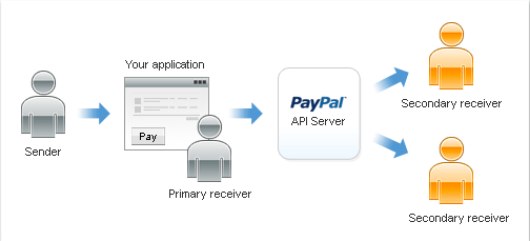
Some of the offerings of Adaptive Payments are sure to be attractive to developers. In what PayPal calls “Chained Payments,” developers can create applications that enable a sender to send a single payment to a primary receiver who may keep part of the payment and pay other, secondary receivers with the remainder of the funds. For example, an application might be an online travel agency that handles bookings for airfare, hotel reservations, and car rentals. The sender sees only the travel site as the primary receiver. But that site could allocate the payment for its commission and the actual cost of services provided by other merchants. PayPal would deduct the money from the sender’s account and deposit it in both the primary travel site’s account and the secondary receivers’ accounts.
Adaptive Payments will also offer “Parallel Payments,” which would let a sender send a single payment to multiple receivers. An example of this type of application might be a shopping cart that lets a buyer pay for items from several merchants with one payment. The shopping cart would allocate the payment to the merchants who actually provided the items. PayPal would then deduct money from the sender’s account and deposits it in the receivers’ accounts.
It’s unclear what PayPal’s pricing plan will be for Adaptive Payments and if it will be competitive with Amazon’s FPS pricing. Amazon has slowly been rolling out its competition to PayPal over the past few years, launching Amazon Payments and unveiling the beta of FPS. It isn’t easy for Amazon to replace PayPal, but it is going after developers to become the preferred payment mechanism on the Web. Perhaps PayPal is starting to feel the heat from FPS, which allows much more flexibility than PayPal’s Direct Payments API. Now, with its Adaptive Payments API in the works, PayPal is about to strike back.


Very cool.
This will really open up custom, configurable eCommerce solutions for larger companies/services.
Excited to check this out.
compitition is good – for customers.
Interesting to see how Google will respond, so far, they haven’t got much traction in this area with PayPal being the defacto standard for online payments.
Jon
Very cool.
This will really open up custom, configurable eCommerce solutions for larger companies/services.
Excited to check this out.
I suppose it’s time for eBay to spin-off PayPal, ala Skype.
Fuck paypal and its evil monopoly.
How is it a monopoly if it has many (Amazon, Google Checkout, Authorize.net) viable and successful competitors?
Like ebay(paypal’s parent company) not allowing other payment options on ebay.
Like ebay threatening to take away the biz they send to google if google checkout didn’t play nice with ebay’s competition-crushing policy.
Like making the debit account the default account on paypal…so uh “you can keep the money you have in paypal in paypal”(translation: so ebay can make more off interest).
1, There ARE other payment options on eBay. Such as Visa, MC, AMEX…etc. Just because Google Checkout is not good enough to be listed as a payment option doesn’t mean eBay is a monopoly.
2, It’s funny how you think Google is not doing the same thing with their Advertising system. I don’t see Google offering the same discount on their Ads to PayPal users. This is just how many business works. I don’t see why eBay needs to give up their business to help Google take over the world.
3, Every business have their terms and conditions. It’s so the business can make money. There’s no reason why the company should stop making money but still provide you service. You don’t have to use PayPal if you have so much issue with their policy. Go mail a check every time you buy something or give out your CC # to random company. There’s trade off. You pay a premium for a secure and reliable service.
1. You are comparing Google Checkout to Visa, Amex etc.? Google Checkout and PayPal are not credit cards. They process credit cards and get a cut in the middle.
2. Discounts? What are you talking about, lol? Monopoly would be if google bans paypal merchants from using adwords. They don’t.
I do have other problems with google in general. But the topic here is ebay and its anti-competitive practices, not google. Simply because I’m going against ebay does not mean i don’t have issues with some of google’s doings.
3. “Every business have their terms and conditions. ”
Uhu, but all terms and conditions have to be within the laws, no? Simply saying that “it’s in their terms” is like having a TOS that says I can rob my user’s home whenever I wish. Yes it’s in the terms. But no, it’s not legal.
4. “You pay a premium for a secure and reliable service.”
Hello PayPal shill.
1. Google Checkout is as good or better than PayPal for simple online purchases.
2. The AdWords comparison is dumb. In one case, Google *incents* users to use Google Checkout in the other Ebay requires users to use PayPal.
3. “Just don’t use it” is kinda silly, don’t you think?
So that’s completely unlike how you *can’t* use PayPal to pay for purchase on Amazon? The ‘monopoly’ claim here is solely based on the fact that eBay wants you to use PayPal (and not Amazon’s, Google’s, or whatever’s payment services)?
I think Amazon’s payment method choices are just as limited as eBay’s, yes? But I don’t see you complaining about them.
That word you keep using? “Monopoly”? I do not think it means what you think it means.
AFAIK, eBay only allows PayPal on its site (eBay owns PayPal) and this essentially locks out all of the other online payment methods you mention from the largest auction site in the world. Tastes rather like monopoly to me
Monopoly? Are you guys joking? There is no monopoly in this field! Besides if your business model is centered around ebay then your business model needs serious revamping.
For subscription based business models which rely on services with micropayents to multiple partners this new PayPal API is a dream come true!
Imagine earning $2 per transaction with 10,000+ payments a month! Now were talking!
So umm yeah… not a monopoly as far as I am concerned!
Love Ya!
Your post is full of irrelavance to the discussion of Paypal being a monopoly.
Simply because a product is of benefit does not automatically make it a non-monopoly. The railroad tracks back in the days also helped carry loads of people but they were rule a monopoly. Internet Explorer helped millions browse the internet…but it was a monopoly.
@Hmm That’s like saying the concession stand a high school football game is a monopoly. eBay is entitled to a business model & PayPal represents that stream of income. It’s their football league, let them play by their league rules.
Do you even know what a monopoly is? Taking marketshare of your company transactions is not a monopoly my friend.
Hmm, no need to be so proactive and f… them, they will f… up by themself (on this one, btw).
So if you’ve got this confidential document and posted it to docstoc. I am guessing somebody is either getting sued or fired over this.
Yes you have that for sure, it seems someone is trying to steal from us: http://retailzi...com/?page_id=47
Wait, you have a pending patent for splitting profits? Seriously? Wow, good luck defending that.
Wait – I have actual prior art. If anyone needs it, give me a shout.
I think I can find a ‘prior art’ dated approximately 1000 a.d. for this one. ROFL
Show us another application in the world that does this today.
And we was doing this before Amazon FPS was released.
Our applications are known for this feature. Again, show may anything in the world that split payments to unlimited multiple recipients at the point of sale, i will show you another:
Here is our STR3EM product for release in August: http://www.str3...om/?page_id=147
So that’s 2 split payment applications and a replacement for DVD and Blu-ray.
We patent everything we do.
Because nobody needs this shit at the moment of the transaction, PERIOD. Affiliate relationship is different in it’s nature, it is LASTING by the definition.
Keep patenting.
Apparently by the looks of this API, someone thinks its viable.
Keep posting in secret.
ROFL. Go make some money off your ‘invention’, kid. Don’t forget to split it with Venecian traders… Oh! They are dead for at least 5 hundred years… What a pity! Then you are the man.
In fact here is another part of our split payments setup: http://retailzi...com/?page_id=49
Called “Viral Payments” which splits payments between owners and affiliates at the point-of-sale.
Show me that in another app?
thank you for information for may. it is appreciated and knowledgeable. your patents seem likeable! i will blog about your information and tell the world about your wonderful contribution to mankend.
Someone just suggested a great idea,
how about we place the patent up on eBay for assignee rights, the rights to place in additional continuations. It covers both this PayPal API and Amazon FPS. I will be thinking about this one, could be a good idea.
I suggest you gouge those profits while you can. SCOTUS has a methods patent on its docket this term, and all money says that they’re going to invalidate method patents like yours.
The Supreme Court’s 1981 decision in Diamond v. Diehr, which affirmed that it is permissible to patent a physical process that is controlled by software.
I New York we only deal with smart money.
It also seems like you only CARE about money, which is sad… Get a life ?
I only care about not having non talented programmers and companies who can’t come up with an idea steal ours.
I’ll give it a try but it sound very scarily confusing.
Our PayTC has many other features than both Paypal and Amazon. First, there is no disclosure of credit card or chequing account: only the issuer online bank knows the PayTC holder. Second, It does also online access with two-factor authentication, and third, it does fill online forms with its new FormTC feature.
It’s time consumers don’t disclose their credit and or chequing account to nobody and avoid identity theft altogether.
Hernan
PS: see video at kanatait.com
I watched the video. Have to say I don’t like the product at all. I think it’s just not a very modern product. Watching the interface and video didn’t give the impression of simplicity. PayPal’s system may seem complicated but it’s actually very streamlined and organized.
Plus, who wants to get a physical device in order to make online purchases. That sounds kind of stupid to me. Yes, I’ll give you the fact that this is a very secure method. I just don’t think it’s very practical. Consumers aren’t necessarily going to buy into that.
The back-end of your payment system seems very week. Merchants practically everywhere would have to utilize this system for it to be of any use. Wouldn’t it be better for you to just create a front-end system that communicates with existing services like PayPal or credit card based systems? What is your main concept?
I love Amazon but they have been giving the middle finger to non-US based developers who want to use FPS. Competition is good (as much as I hate Paypal in general).
oh thank god they’re going for multiple recipients, I love you Paypal.
Well needed and awaited service if it works properly and easy to integrate
Excellent news for Scred if true. I’m just hoping this is not going to be US-only.
This looks very cool. I’m looking forward to giving it a try.
However, I’m not a huge PayPal fan. I would way rather use Amazon’s services.
I guess I will just have to see for myself.
If it is really confidential document and you just threw in on the internet then paypal should sue you and take you to court.
of course it isn’t that confidential, but who wants to read “here’s a document some guy leaked to us”? I want a document that’s IMPORTANT!
The outstanding problem with the Amazon payment systems is that it is unavailable outside of the United States. There are businesses located in other countries who might like to use it, but are still ineligible.
That’s not a problem at all. The US is a plenty big market and payment systems are notoriously country-specific.
This may well enable the missing piece for one of my solutions. I’d been brainstorming how to get paid without getting hit with Paypal fees twice.
Leonid:
I’m not sure I understand your comment. If some one pays you through PayPal, you pay the (exorbitant) amount of 3% and that’s that.
Are you saying you want to a) receive initial payment and b) transfer the payment to a separate PayPal account (without second transaction payment).
Digital Doctor
I’m glad to see Paypal finally start to ‘open up’ a bit and include an API. I’m sure we’ll begin to see many new startups whose business model will be based on this new API.
Being able to pay multiple recipients in one payment is kind of interesting (just playing catch-up to credit cards). But the rest of the project is a big waste of time for PayPal.
I haven’t found anything fascinating in this ‘breakthrough’ offered to us by a ‘leader in online payments’.
Firstly, it all had been done… like 10 years ago by: e-gold.com, moneybookers.com, webmoney.ru and other guys in other countries.
Secondly, how is it ‘opening up the platform’ I wonder? It’s just a pathetic slogan and nothing more.
Dead cat’s leap.
Thank god for competition. If not for FPS PayPal would be sitting on their thumbs. Watch out for PayPal giving it’s own “credit” and circumventing MasterCard/Visa/Amex – they are almost there. Hopefully they won’t be the only ones or they will rip off merchants the same way they are ripped off now.
Alex, PayPal is and has always been just a parasite (on the American banking system and credit card associations). Or you can also think about it as a pick for the hackers who want to unlock the American banking system. Every crook on Earth uses it! Just think about this fact alone. I repeat: EVERY CROOK ON EARTH uses it, I’m not kidding.
I guess you missed the Bill Me Later acquisition.
Did techcrunch had the permissions to reproduce the document:
A notice embedded in the document:
“© 2009 PayPal, Inc. All rights reserved. PayPal is a registered trademark of PayPal, Inc. The PayPal logo is a trademark of PayPal, Inc. Other trademarks and brands are the property of their respective owners.The information in this document belongs to PayPal, Inc. It may not be used, reproduced or disclosed without the written approval of PayPal, Inc.PayPal (Europe) Ltd. is authorised and regulated by the Financial Services Authority in the United Kingdom as an electronic money institution. PayPal FSA Register Number: 226056″
+1
What part of the “may not be used, reproduced or disclosed without the written approval of PayPal, Inc.” clause was unclear? There’s journalism and then there’s just ignoring legality because you want the scoop.
Somehow I still don’t believe nor trust Paypal as much as Amazon on this one. The one key to this might the SLA that each has. Amazon says that customers paying through its system are THEIR customers. Maybe the PP API will motivate some change?
Interesting that googPay is stuck in alpha
Just like Amazon, PayPal faces some limitations and hurdles to adoption with this new offering. For Adaptive Payments “The payment sender, receiver(s), and application owner must each have a PayPal account. Senders and receivers may have personal accounts; however, application owners must have business accounts.”
So in order for this service to work, all participating members need to have a PayPal account. Fortunately for PayPal, they have the user base that makes this feasible. Unfortunately for PayPal, this requirement could create a significant problem when not all users have PayPal accounts and ultimately discourages the completion of transactions.
The payment processing industry was built based upon a 1:1 relationship between a credit card transaction and deposit. PayPal and Amazon can offer a service like this because they can complete transactions internally, outside of the Card processing networks.
It’s a great competitive advantage but also has some significant limitations.
It’s great ..! i love it . new features on Paypal.
The main reason I’d use Amazon over PayPal is that PayPals API and developer documentation are woefully inadequate, frustrating and counter-intuitive…
Don’t forget that these payment services are not regulated and none of these companies offer any sort of protection for their seller accounts. They aren’t even subject to the lax rules currently governing credit cards. PP takes up to a year to resolve disputes between the seller and buyer, and immediately removes the dollar amount in question from the sellers’ account. And then they charge a $10 fee for each dispute. A YEAR! In the meantime, the owner of the account has no where to go for help.
Unless protections are implemented along with any additional payment options – I am forced to use these providers, but my money is ALWAYS AT RISK. Enough with throwing all the expenses at the consumers, and enough with taking my money away for up to an entire year! Even cc companies don’t do that to their poor customers.
Don’t forget that these payment services are not regulated and none of these companies offer any sort of protection for their seller accounts. They aren’t even subject to the lax rules currently governing credit cards. PP takes up to a year to resolve disputes between the seller and buyer, and immediately removes the dollar amount in question from the sellers’ account. And then they charge a $10 fee for each dispute. A YEAR! In the meantime, the owner of the account has no where to go for help.
Unless protections are implemented along with any additional payment options – I am forced to use these providers, but my money is ALWAYS AT RISK. Enough with throwing all the expenses at the consumers, and enough with taking my money away for up to an entire year! Even cc companies don’t do that to their poor customers.
BTW I love your blog!
Why can’t you post the PDF as a file? Using this atrocious docstoc viewer makes my eyes hurt, the window’s tiny, the scrollbar’s broken, search doesn’t work, and I can’t print.
Hooray for docstoc and scribd: Putting quasi-standardized document formats back in their walled gardens, where they belong.
Not surprised that Paypal is trying to push off their services some more. It’s not about enabling people. It’s about reaching in people’s pockets to make more money. People lose their Paypal account everyday over frivolous reasons. Better off using RME [short for Revolution Money Exchange]. No fees with RME and they do have a debit card. They the closest to being similar to “Preypal” without the hassles.
People, eBay allows online payment services on eBay.
PayPal is not a monopoly on eBay. You can use moneybookers, propay, etc…
In the six years I’ve had my online shopping cart and accepted payments from them, we’ve never had a single problem with Paypal. Their customer service has been top drawer. They are no more expensive than the banks and credit card companies with whom I do business either. So I don’t understand some of the negative comments about paypal, the company. That may just come down to personal preference or personal experience.
As for retailzip, if the head of paypal or Ebay for that matter were on techcrunch claiming that their product or service was better than someone else’s I’d be wondering as much about Paypal as I now am about retailzip.
With all that said, I think this could be a very interesting development for store owners, especially those of us using open source shopping carts. It will certainly allow customers of mine an easier ability to simply flow-through payments for drop-ship products and affiliate programs. Let’s see how quickly this can be rolled out.
The point was Retail Zip is the only and first application to provide the features you see in this Adaptive API. Why is this so? Because we invented it.
Doesnt surprise me that Paypal is still owning this type of market…
Lots of interesting aspects to this service.
Requiring the a credit card holder pay the fees associated with a transaction is a violation of association rules. Either this means that Paypal plans to flaunt the rules or credit card payments won’t be supported under this model.
Linked or chained payments sound great but what happens if one of the suppliers in the chain doesn’t live up to their end of the bargain? Does everyone in the process lose out (and the buyer refunded), or is Paypal going to start acting as an arbitrator in business disputes now?
I must say Tina that you need to look at your payment options. On your website it states that orders paid by Paypal take 9 business days for payment to clear before shipment. You state that you have never had Paypal issues and that the terms are better than credit card companies?! 9 business days?!
I am an independent mobile application developer located in Japan.
The application is commercially available in US, Europe, Japan and Singapore.
Does any one know if the following things are possible for the new Paypay service?
1. Billing through mobile devices using PayPal
2. Can senders use their credit card issued outside of USA?
3. It is possible to do a weekly or monthly recurring payments
4. Billing using different currencies (users choise)
My limitations are…
1. my company is located in Japan and no other place
2. I only have an bank account in Japan
Please help me out!! Thank you very much
Yes to all of these.
Great for travel agents?? I beg to differ.
Here is an example of PP’s fee rip off. A client makes advance payment for a trip of $ 900. PP deducts a $ 18 fee. Fait enough. THEN we transfer $ 470 to a service provider with PP account and PP deducts him a fee of $15.30.
WE are going to close our PP account down asap.
So, any news when this feature comes out?