What’s Right and Wrong with Media Now
by Sarah Lacy on July 4, 2009

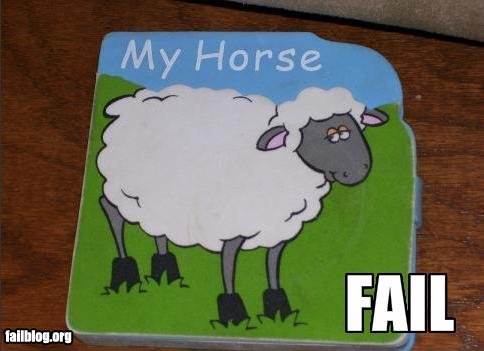
fail-owned-book-my-horse-failLike most things on the Internet, there’s a good side and a dark side to where the media business is headed.

The good side is very good: thousands of layers of mostly needless middlemen and processes are being eliminated as journalists get a direct channel to their readers. And, because it’s a two way medium, readers get that channel right back. And in the cases where the subject of an article has been wronged, the Web gives them powerful megaphones to fight back. In short, the more everyone has a voice, the more reporters are challenged to make sure they are right, because they will be called out.

Look at what happened with the plagiarism scandal around Chris Anderson’s new book. Anderson says it was a mistake around a change in how they were going to use citations, and I take him at his word. But it’s safe to say any author who’d considered borrowing heavily from Wikipedia won’t now. We like to think that we act virtuously because of personal or professional pride, but nothing enforces those ethics like the real possibility of getting caught and hugely embarrassed.

But the bad side is also very bad. The elimination of those layers – typically fact checkers, editors, lawyers and just time to make sure a work is fully baked—also allows mistakes, lazy reporting, a dependence on rumors, and hot-headed, unfair treatment to subjects. Worse: The metrics around the Web make it crystal clear which kinds of stories drive the most traffic. That leads to salacious reporting for the sake of clicks and comments.

It’s easy to point the finger at blogs, especially by certain members of old media losing money quarter-after-quarter. (Cough, cough.) But this is not just a technology change as most corners of media are fighting for survival, it’s become a cultural change. And this week, I’ve been struck by two non-blog examples that reflect the tension.

Right about now most people reading this probably have guessed the example of salacious reporting and unfair treatment I’m driving at is Ben Mezrich’s new book on Facebook. I’ll say upfront I haven’t read it. Galleys have been very closely guarded. Once I do read it, if everything everyone who has read it has told me is wrong, I’ll apologize for what I’m about to say. But, on a professional level, I find the ethics behind this project disgusting.

It’s essentially a book based on talking to one source who had a falling out with the company just as it was moving to California and becoming more than a dorm room project. That’s like someone writing a book about you based solely on what your old college ex-girlfriend or ex-boyfriend said.

Mezrich has been clear to say he’s never met or talked to Mark Zuckerberg in the intro and in interviews, but that doesn’t stop him from drawing potentially damaging conclusions about his character and selling it as a non-fiction book that’s getting made into a movie that people will take as fact.

In contrast, I spent years and hundreds of hours interviewing and following the subjects of my last book, which as most people know, included Zuckerberg amid other Web 2.0 figures. And I’m about one-third of the way through research for my next book, which includes spending 40 weeks in other countries following entrepreneurs. It’d be a lot easier to write a narrative without that whole burden of actual reporting. If I could sit in Silicon Valley and make up what I think entrepreneurs in Africa are like, that’d sure help out on my bank account, my health and my neglected personal relationships.

To be clear, I have no doubt Mezrich’s book will sell better than mine and make a juicier movie. But I wouldn’t swap the karma points. I don’t know how you call yourself a non-fiction writer and publish a book about a living person that’s based on you “imagining” what they are like. And let me tell you, having first interviewed him when he was 19 and spent countless hours with him since, the idea that Zuckerberg is some kind of sexed-up lethario is laughable fiction.

Why didn’t Mezrich write a novel or a different non-fiction book that he actually knew something about? It just seems like a cheap way to get a film deal and sales since the “imagined” subject is also leading the hottest private tech company in the world right now. (Indeed, the film rights were reportedly sold before the book was written.)

Even Mezrich’s publicist admits as much, according to a New York Times Blog post where he said, “The book isn’t reportage. It’s big juicy fun.” I’m guessing it’s not fun for the people trying to build a company who Mezrich essentially calls womanizers, drug addicts and backstabbers. Probably not fun for their families, employees and investors either. If this is where media is going on a book level, magazine level or blog level—I want out.

Contrast that to what’s playing out with another hot non-fiction book that was also optioned for a film: Moneyball. Some people accuse Michael Lewis of taking some liberties with facts here or there, but I’ve never met one of his subjects who felt he was treated unfairly, including the subject of Moneyball, Billy Beane. Like his style or not, Lewis did his job: He invested countless hours reporting and wrote a book that told a dramatic story that also happened to be true.

Recently, that book was also being made into a movie, to star Brad Pitt and be directed by Steven Soderbergh. The plug unexpectedly got pulled. It seemed Soderbergh reworked the script to be less a feature film version of things and more a real-life reenactment with some of the actual people playing themselves. Quippy anecdotes and funny lines were cut because they weren’t actually said in real life.

I’ve not been a huge fan of some of Soderbergh’s more experimental work, and I don’t know if his treatment would have made a better movie. But imagine: The people who are allowed to take the most liberties with a “true story”—the filmmakers—hewing more to the truth than an author who ostensibly gets paid to write the truth.

The media world is upside down these days, and I hope when all the volatility is done we wind up on the Soderbergh side of things.

Image by failblog.org

Advertisement

Comments rss icon

  • I completely agree with your sentiments… but you did criticize Mezrich’s book without reading it. Yes, your provided some conditional apologies, but that’s kind of a cop-out, no? Would it be fair for me to say, “Sarah is a nasty person, or so I hear, but if it turns out that she’s a nice person, I apologize”?

    Also, in keeping with the premise of your article, shouldn’t you have interviewed Mezrich and Soderbergh to get their sides of their stories?

    • @Phreddy Tran: It’s not about the baby but about how online babies are conceived. Sarah is not judging a book here mister Tran.

      • No, she’s judging its cover.

        • Pheddy, while I hear the merit of your criticism of Sarah, I think that a fundamental difference exists between Mezrich’s writing and Sarah’s. Mezrich admitted that he never spoke with the individuals on the other side of the story. In fact, he declared, “The book isn’t reportage. It’s big juicy fun.” When somebody makes those comments, they are saying that their book is just gossip. Sarah, therefore, was well sourced when she used Mezrich’s book as example of how journalism has become more salacious than investigative.

        • The mezrech book is sensationalized and its not meant to be a dry, fair and balanced history book; but a dramatic movie. It is a bit unfair, maybe he should have fictionalized it to prevent lawsuits. He fictionalized or composited much of bringing down the house, which was actually enteratining.

  • I can only imagine to what degree they’ll spin the story of that ‘Asteroids’ game in that upcoming movie based on it.

  • as @Phreddy implied, it would be great artistic framing to just write this article from the 3rd person, panning across Mezrich’s efforts to sell movierights for an unwritten/unresearched book. Very Kaufman

  • blinded by the gilded light - July 4th, 2009 at 12:55 am PDT

    In 2005, at the height of MySpace, if a book and a movie about DeWolfe and Anderson were to come out, some might knit their eyebrows, some might gladly pay for the book and the movie, and then 4 years later, these “tales of golden boys” could only be found at the bottom of the discount bins.

    Internet moves fast, and the said writer and director must move faster in order to scrape off some of that gold dust from the “Golden Boy of the Day”, namely Mark Z.

    Mark Z. is probably smarter than we all think, and keenly aware that all these media adulation ought not be taken seriously, because if one thing the history of Internet has taught us, we can say for certain that some teenager out there is working on the next big thing that might just eclipse Facebook, the way the rules of digital evolution always reign.

  • A cursory search on “history of apple computers” on Amazon portend seasonal tell all blooms for any company or cult of merit.

    It won’t matter in the long run. Not mattering is a far worse fate than risk of embarrassment over being dismantled over a lack of ethics.

  • So you are blaming this guy for writing a story without doing proper research yet you write a blog post without doing proper research (reading the book). Interesting way of doing things…

    • comments like these seem like a zinger but there is just really poor logic flow.

      • Agree Michael…. ignores the fact that Sarah discusses the approach taken and the need for journalistic integrity and not the content of the book as the core theme of her article…. (and this despite the fact Sarah was generous enough to make abundant caveats earlier in her article).

      • Mike please diagram the mistake in the logic.

        Both use qualifiers, then assumptions without research to reach a point the writer apparently wishes to make.

        BTW, Sarah’s kick ass, why wouldn’t she just save this post until she read the damn thing? You don’t need to defend her, though it is charming.

      • Fake Mike Arrington - July 4th, 2009 at 11:54 am PDT

        Mike, this is a very poor excuse for a Techcrunch article. There is no deep analysis here. She didn’t even read the book she is complaining about. Rather, she delivers stream-of-conscious babble about reporting, while bragging about her own book-writing prowess (which appears to me to be plugging her own titles).

        Why was this even published on Techcrunch? Can’t your editors say “no” to half-baked posts and self-promotion like this?

      • This post and many like it come from Arrington’s personal crusade against so called “old media” – i.e. the New York Times. I’d like to see TC expand on what is wrong with “Old Media” and write something in depth. To date the most thorough breakdown I’ve read comes from Scoble http://bit.ly/4pp3Pf.

    • @Bobby:
      So you are blaming this girl for writing a story without doing proper research yet you write a comment post without doing proper research (reading the article). Interesting way of doing things…

      • Bobby’s not a blogger or self-proclaimed journalist who’s claiming to do “actual reporting.”

        • If the film/book is entertaining without truth then it is an entertaining film/book.

          If the content is based on mistruth then Facebook can always sue, no need to have Sarah stick-up for them or the blog community.

          Content is king though.

  • Since the subjects of popular books, articles, posts, … the way those are covered, … are all more and more based on readers trends and less and less on ethics, I guess we have what we deserved as a group.

    Media and consumers have the same responsibilities.

  • oh sarah….

    pot kettle damn near very black!!!

    you write for a blog, who’s owner has admitted, getting facts takes too much time, and that “progressive” journalism” is ok, as iit allows the story to get out, where others can then comment on it…

    if you guys are going to start this crap, then you’re going to have to realize that others are going to decide were to draw the line…

    you see, what you fail to really realize, is that good jouranlism costs, because it has a number of levels that really have nothing to do with writing, but everything to do with making sure that true/factual stories are indeed, based on these things called facts. and even then, sometimes the system has screwed up…

    so.. if you (being TC) is going to continue to engage/practice in progressive journalism, please don’t try to take the holier than thou attitude..

    jesus!

    • I have no idea what you’re talking about here. I think TC does an awesome job reporting on the happenings of Silicon Valley. The best part about it is it’s straight to the point. I don’t want lots of fluff, just quick details. Old media wastes my time and frankly makes my fucking fingers dirty. How archaic is that?

      You want to know why old media is failing? Because their stories aren’t compelling. Most act as a mouth piece for government or PR firms regurgitating what’s in a press release. They’re not being journalists. There being nothing more than glorified gossipers writing mostly he said / she said crap.

      When I’m done reading TC articles, I’ve gained some sort of knowledge that I care about. When I read an old media article I gain knowledge in something they want me to care about. Do I really care that some governor fucked a young hottie in Brazil? Like you wouldn’t want to be in his shoes. Please.

    • I agree with Sarah and timy11 here. Good journalism entails research and fact checking. Some journalistic institutions are better than others at it.

  • In terms of worn-out metaphors, like “there’s a good side and a dark side”, new media is as bad, if not worse, than old (western “black hat”) media.

    To the writers’ credit she did say ‘bad side’, instead of ‘dark side’, later in the article… so thats worth some ‘karma points’ in a universe, beyond the ‘Western World’, where 97% of everything is dark matter or dark energy.

  • This is propoganda not journalism. I don’t think many people understand what journalism is since it has fallen so far from what it needs to be. Love it or loathe it, we need it. Journalists do not start a story that they have a personal interest in. Journalists don’t sell you things, that’s what advertising is for. We need regulation to redefine journalism and it is not websites that are businesses that have bolted on content called journalism.

  • Your 4th paragraph, it’s referring to you, TwitCrunch, right? The problem with blogs is they can’t live without it.

    Maybe you should take some time criticizing the sorry state of blog reporting too

  • I enjoyed the post and was thinking maybe you didn’t buy the book because it wasn’t worth buying.
    I didn’t have to fly to Alaska yesterday to write that I thought Saran Palin is an idiot.
    What I think is bad about the internet in only one year of ” blogging” and the premise of my blog is why do WE idolize and respect scumbags, and disregard good people I don’t get it. I see it all over. In blogging as far as notoriety it seems the scummier and pathetic self centered etc you are the more people look up to you I don’t get it.
    Same can be said for our celebrities WAKE UP people. Nice article thanks

  • Excellent, excellent article Sarah!!

  • I don’t understand why he couldn’t just change the names and sell it as fiction. Maybe I’m just old fashioned.

  • It seems a little odd and unethical that you write this blog about a book you have not read, then go on to attack the process of writing a book where you have no idea what that process actually was. i’ve read one of the coveted galleys and there’s no way it written from one source. And also it doesn’t characterize mark the way you described him. he is painted to be a hero and a genius. So relax, and sorry that your book will go unread because he probably scooped your story.

  • There is this anecdotal phrase from the Stalinist Russia times, when one of the ‘workers’ (instructed by KGB) said about Boris Pasternak: “I haven’t read any of Boris Pasternak’s books, but I reject and denounce what he said!”

    You are getting closer and closer to this anecdote with your biases, Sarah. It’s just fun to watch. You repeated it almost literally in this article, congratulations!

  • why don’t you just shut up.

  • really nice i enjoyed it a lot

  • I know it’s really not the point, but I read and enjoyed Moneyball but I can’t believe there is a movie to be made from that book.

  • Great article Sarah – awesome articulation of the issue you are concerned with and very well explained, including the full disclosure of your personal perspective/experience.

    I don’t think you need to “read the book” to have issue with someone who claims to have gleaned a full story from one or two non-essential interviews, and think that any criticism of you to that effect is simply people missing your point.

    I worked in the music industry for years and numerous times really famous or “hot” artists had to deal with “unauthorized biographies” and such that were simply one irresponsible journalist running to print with the goal of getting something published with the artist’s name on it….authenticity be damned. Frequently they did no substantive interviews and their “research’ simply drew from previously existing press stories and quotes, ie material that was already in the public realm. Blanks were filled in by casting aspersions and including photos that were also already in the public realm. Using the word “unauthorized” made for a more salacious implication as opposed to “this is unsubstantiated crap”. Unfortunately, there’s a whole world of smart lawyers who know exactly down the word how to stay on the safe side of libel.

    Really looking forward to your new book.

  • The media is scared to death, period. They have no idea how to adapt to the changing information economy.

    This IS the information revolution. Similar to the industrial revolution, our lives will never be the same.

    And the Facebook “book” is fucking bullshit.

  • sucks how easy it is to plagarize nowadays, I’ve had a couple of my sites plagarized and its not fun. not much you could do about it eaither

  • great points Sarah. you might want to print out this post and tape it up on the wall at work.

  • 1. If you AGREE with the author, then any amount of sloppiness seems to be acceptable for them to make the point one agrees with

    2. If you might DISAGREE with the author, or you just don’t like them, then any breach of appropriate research or bias is unacceptable

    This has got to be one of the most hypocritical and poorly written articles I have ever seen. It in fact perfectly typifies “the problem with the media”.

    Maybe you should read your own article Sarah.

    Alas… if you had a track record of stellar writing, I might think this was an ironic work of brilliance in which one purposefully creates hypocrisy and debate to make a point.

  • Sarah, it’s not totally true that traditional media are being taken away by bloggers. In fact, the big media have now more readers than ever before. Kind of tricky, I know.

  • Didn’t someone at TC say ‘getting it right is expensive, getting it fast is cheap.’ That’s where I see most of the online media going: to attract lots of viewers, and get advertisers to pay, you need new content daily; of course it’s hard to research good stories daily.

    Perhaps someone will come out with more in depth reporting with a business model that does not rely on advertising, and thus will be able to afford to publish less, better researched stories. Though I wonder whether such a media outlet will ever be able to specialize in some area, (eg start ups) and maintain a mainstream audience.

  • The dig about the NYTimes money woes wasn’t needed, IMHO. It very likely is not the source of any bias you’re feeling.

  • sarah, no mention of your own “reporting” based on rumors, innuendos and without talking to the subject of your writing? remember sequoia, zhang fan and the apology you had to issue?
    http://www.tech...30;..n-trouble/

  • Hi Sarah,

    I can clearly see where you are coming from but I think it would have been better if you had actually read the book even if it would not have changed your mind. It would be difficult to get people to see your own side if you do the EXACT same thing. Of course the implication of your accusations against Mezrich are not as grave as Mezrich’s against Zucky.

    There is also the emotional aspect to it considering you have known and covered Zucky for a while. I’ll be seeing you tomorrow so I guess I’ll hear more from you.

    Cheers!!

    Oo

  • The problem with the socialization of news (blogs, etc) is that it completely eviscerates objectivity whether we admit it or not. Even when we ‘disclose’ — it’s complete bullshit because we’re human and inherently biased

    Add to that the fact that it’s now almost completely popularity based -not qualitatively- Pageviews, Page Rank are the single most important things to focus on. This is really, really dangerous. The wisdom of the ever-increasing mob, is starting to trump the wisdom of the editors.

    It so bad that in even in “bad behavior examples” for stories like these, we have to link to the perpetrators vacuous defense & apology -instead of a credible, independent 3rd party post explaining without spin what his journalist/literary sins actually are.

  • Sarah referred to Zuckerburg as Zuck in her book. Would it be fair to suggest that Zuck is a friend of Sarah’s? By her professed familiarity with Zuck and her admission that she has not read Mezrich’s book, this is just a friend preemptively defending her friend. The bigger the journalist, the bigger their friends. And once the journalist is an entity unto themselves, the reporting is no longer objective. They have too many interests to protect including their own economic interest. Sarah’s primary asset is her access to Silicon Valley’s top entrepreneurs. Her defense just upped her rank in the elite entrepreneurs’ eyes. This is why her rant can’t be taken as objective.

  • It’s not being a bad writer, it’s Process Authoring, and the numbers show, the readers love it! If he’s totally wrong about anything, later he’ll write another book!

    It’s everything TC represents and more!

  • In the UK certain tabloid newspapers check their facts by tapping into mobile phones, but I think most of the other tabloids just make it up to get more readers. So maybe things aren’t so different between the traditional media and the new media – i.e. blogs looking for more clicks.

    ‘Truth’ is in short supply!

Leave Comment

Commenting Options

Enter your personal information to the left, or sign in with your Facebook account by clicking the button below.

Alternatively, you can create an avatar that will appear whenever you leave a comment on a Gravatar-enabled blog.

Trackback URL
Short URL

RealTime CrunchUp Sponsors:

bugbugbugbug
Techcrunch on Facebook