Is Twitter The CNN Of The New Media Generation?
by Brian Solis on June 17, 2009

This past weekend the Twitterverse spoke-out in exasperation and opposition against traditional media networks (CNN specifically) and the absence of instantaneous coverage of the Iranian election and the resulting fallout. “We the people” wanted real-time information regarding the violent protests that erupted on the streets of Iran and the stories probing potential foul play in the results. We took to Twitter to express discontent and to also uncover the real story as it was unfolding live through citizen journalism.

The world was watching . . . and it did so on Twitter, not on CNN or any other news network.

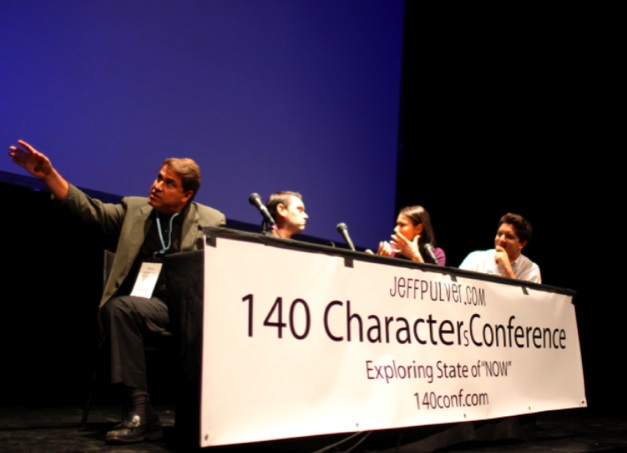
At the 140 Characters Conference (#140conf) in New York, Robert Scoble hosted a fervent discussion with social-media-savvy traditional news personalities to explore how Twitter was transforming the process of news gathering and lead sourcing. Joining Scoble was Ann Curry (@AnnCurry)—News Anchor on NBC’s Today Show and host of Dateline NBC, Rick Sanchez (@ricksanchezcnn)—host of the 3PM weekday edition of CNN Newsroom, Ryan Osborn (@todayshow)—producer, NBC Today Show, and Clayton Morris (@claytonmorris)—anchor, Fox News.

In the case of Iran’s election, Twitter once again served as the lifeline to news and information for a monumental and historical event. Conference organizer Jeff Pulver calls this the era of “now” media, fueled by new and social media and the people who power Twitter and other popular networks. The pursuit of “now” is conditioning us to expect information as it happens, whether it’s accurate or developing.

The question is, how will this latest example of community-powered news consumption and distribution effect how traditional news organizations gather and report on news.

Robert Scoble said of his inspiration for the session, “I wanted to learn more about the election in Iran and the crisis and the violence that was spilling onto the streets. I couldn’t find anything on CNN. In fact, all I could find was Larry King talking to motorcycle mechanics.”

His frustration was shared by many, which served as the groundswell for the powerful Twitter storm that ensued. In the words of Twitter creator and co-founder Jack Dorsey during his morning keynote, “Twitter is about approach, transparency, and immediacy.”

If media is fragmented and distributed, perhaps what we’re now witnessing is that the framework for publishing news is physically and financially constraining its ability to evolve and adapt in “Twitter time.” Rick Sanchez expressed frustration with his fixed time schedule for reporting news. As an avid user of Twitter, he also acknowledged that things have to adapt: “Is news judgment changing? Yes!” He continued, “This is the first time we can connect directly with citizens who could be a reliable source aside from the talking heads and pretty faces that serve as news anchors.”

The crowd booed and hissed in response. While he’s partially correct about Twitter serving as the catalyst for the evolution of news judgment and connecting directly with citizens, the methodology associated with embracing Twitter or social media in general is actually in direct response to its insurgence and the competitive threat it represents. Media is reacting simply because of the authority associated with Twitter and other emerging social networks.

Ann Curry cleverly countered, “While I may not be another ‘a pretty face,’ we have to look at whether or not mainstream media is covering the world fast enough and the answer is no.” She then concluded, “Should we be? Yes. But, right now, we can’t keep pace.”

She’s right.

News media can’t keep pace with the new world of media consumption and the insatiable appetite for information—especially when it has yet to understand the true promise and opportunity that Social Media represents. This isn’t about adapting an existing model to new, popular broadcast channels. It’s about expanding and forcing a fundamental renaissance within the news machine itself—transforming and creating how these media giants can monetize new streams and platforms.

Ann also echoed Dorsey’s tenet of approach, “With social media, we can empathize with our subjects in order to see and report on a story truthfully.”

Her next statement made us stop and reflect, and earned Curry enthusiastic applause, “My mandate for news teams is that I want them to shoot every story like it’s about their mother, brother, sister, father, and cousin. Tell it that way. That’s the road to clarity, truth, understanding and fully becoming global.”

What she is saying celebrates not only the foundation for exceptional journalism, but also the spirit of social media.

It’s about real people.

It’s about emotion.

It’s about empathy.

News is global and Twitter is one of the leading social networks that connects us to other human beings through the stories that affect them and us.

Clayton Morris of Fox News injected reality into the discussion and emphasized a point that underpinned Andrew Keen’s highly debated book, “The Cult of the Amateur.” “There’s a tipping point right now with new, traditional, and social media. It’s conversation versus fact checking. No one has answers to where this convergence is leading,” he exclaimed.

Fact checking is a vital part of the news business and is ultimately what separates amateurs from experts. But researching fact from hearsay or even opinion is almost impossible on Twitter for most users.

Keen believed that citizen media is corrupting the very institution of news media because most of the individuals publishing information using social tools, he argues in his book, are “grossly misinformed.” While Morris didn’t make the sweeping assertion that Keen expressed, his point is noteworthy and deserves further examination.

But we have the power as consumers to also become informed fact checkers to intelligently sort fact from fiction.

Perhaps however, what Twitter represents has less to do with the integrity of information and more to do with the culture it’s defining. As I wrote in a previous post, Can the Statusphere Save Journalism:

What eludes publishers is the very thing that can save them: the new model for not only surviving the evolution, but also thriving in the future ecosystem of publishing and connecting content with audiences–where they congregate online. The new media economy will embrace a shift in content creation and revenue generation from a top-down model to a bottom-up groundswell.

This is particularly significant as it starts to redefine the parameters and platforms for creating and distributing information and in turn, monetizing that content.

Scoble again asked, “Where was CNN on that day, at that time?”

Rick Sanchez, responded, “We had people in Iran watching the events unfold, live. Our people were tear-gassed. We were there.”

And here’s my point as stated by Scoble in response to Sanchez, “How would we know that? Why didn’t you share that side of the story with us as it was happening? You couldn’t because your show wasn’t on!”

Curry agreed, “There are other stories that are important for people to hear, but don’t make broadcast.”

This is true. We are seeking more human stories and aspects of news that connect with us as individuals. However, these other stories don’t necessarily fall within formulas and packages that represent sellable or subsidized media products.

Curry demonstrated the opportunity for media to create entirely new channels that augment traditional news reporting, “I learned about the last missile test in North Korea on Twitter. I turned on the TV and no one was reporting the story. I thought to myself, ‘this sucks.’ So, I jumped on Twitter and reported the facts as I found them in real time.”

As her story continued, she also unearthed one of the factors why traditional media is hesitant to expand participation and engagement through social channels, “I had to be careful however. I was receiving reactions and questions. The trick is communicating solid information without misleading anyone. One word can change how people interpret anything. I feel a great obligation to never twitter something that is wrong.”

Credibility counts for everything and as Curry noted, “once you lose that, you’ve lost.”

Fear is an obstruction. Guidance and experience is the only way to establish the rules of engagement in order to cultivate a vibrant, monetizable community associated with these promising new channels for mainstream and unpublished content.

The panel then traversed into a tense, but necessary discussion of traditional journalism versus citizen media. Now the audience was involved and outbursts and comments were escalating.

Curry captured the essence of the debate by shedding light on the middle ground that exists between traditional and new media producers, “Judgment is not taught in ‘J’ school. Judgment is learned. Judgment has to change with the times.” As she observed, reporting news is a service job and also a business. But ultimately, reporters and bloggers serve the people.

The session went into overtime and continued to explore this new ecosystem where traditional media, new media, and citizens could create a valuable and collaborative ecosystem.

In the end, conviction, passion, investigation, accuracy, diligence, and striving for truth are the attributes of any good journalist, blogger, or micro-blogger. Crusading for higher standards in reporting and championing them into creating and growing new channels represents our collective crusade.

In revisiting Dorey’s keynote, he spotlighted “transparency.”

Understanding who we’re trying to reach and how they discover and share information not only makes us more empathetic as content creators and story tellers and participants, but it also inspires sincerity and a genuine approach to what we say and how we say it.

As each panelist professed, it is this transparency that is missing from so many media organizations as it’s deeply misunderstood and underestimated.

Sanchez observed the lack of transparency across Twitter and media in general, “I’m bothered by people who use Twitter as shtick and people who think they’re going to change the world just because they’re using it. The race with Ashton, news teams that ‘go to the twitter boards’ while on TV to see what’s happening, it all seems contrived, like they’re trying to be part of the community, but instead they’re cheapening it.”

Curry jumped in and held nothing back, “Here’s what’s pissing me off. The reason I fight to go to places that are struggling and in need of help is to tell these stories, to get to the truth and to get people to care!”

Clayton added, “There are old parts of new media that they [publishers and broadcasters] are comfortable with and aspects of new media that represent new ways to seem like they ‘get it.” It all feels disingenuous though. Somewhere in the middle is the future. There was a point where fax bulletins were part of the breaking story.”

Sanchez quipped, “Companies that don’t assign managers for social media will fail!”

Ultimately the panel and audience agreed that strong passionate journalism was needed now and that Twitter and social media represent a new, powerful platform to broadcast news, crowdsource leads and stories, and expand the media’s role and earned relevance in the new age of media.

If you can’t get it on the air or in print, use Twitter, blogs, and social networks to get information out there. Curry declared, “My [Twitter] followers give me a newspaper to publish stories I care about. We have a responsibility to not only tell stories for financial gain, but we need to publish information that people need to know.”

Who’s to say what “we” want or need to know? The answer is: All of us.

As a community, we wield power that the media has yet to fully grasp and holistically embraced. Traditional media as an industry, one that is represented by individuals for individuals, is not largely part of the community it wishes to serve. Instead it uses these tools mostly as extensions of its broadcast networks.

For some, on the other hand, Twitter and social media helps create a more “media-literate” society, including those classically trained journalists diligently seeking to understand the new media landscape. Sanchez expressed his gratitude for what the community has taught him, “Twitter has made me a better journalist.”

While the panel explored the disruptive nature of Twitter, it also exposed its weaknesses and opportunities. Scoble compared this disruption to that of CNN’s impact on the news industry when it first debuted. All concurred that citizen media was going to push journalism to transform and adapt.

Just now as I write this, CNN Live is reporting that people in the U.S. are increasingly getting their news and information from Twitter, Facebook and other social networks and are crediting the escalating and influential online conversation with forcing a deeper examination of the results in the Iran election.

As Paul Saffo recently said, “News doesn’t break, it tweets.”

(Photo credit: Brian Solis)

Advertisement

Responses

Comments rss icon

  • If you guys like news/politics, follow @capitolcircle on twitter. Invites are coming soon to followers.

  • Incredible post Brian. This is why I love new media and social media so much. There are amazing events unfolding across the globe and we can all be right there with them, supporting them during what could be one of the most pivotal periods in their recent history. Thanks for the write up.

  • Makes me glad for the BBC, who were/are doing a superb job on reporting it. My opinion is that Twitter and other realtime web stuff is for notification, for indication that something is happening. For stuff that is not affecting me directly, I’ll take that as a lead into more mainstream media, who are providing a little more analysis.

    • Funny you should say that, and I agree with you, but have seen and heard and read about complaints that the BBC is using its unique position to monopolise itself as a news gathering organisation.

      Those outside the UK might not fully understand this.

      But any news service that has “ticker tape” software still needs to be fed its stories from somewhere.

    • Rachel , i agreed with you .

  • First I am looking at this well written post from start to end.

  • I think yes twitter is jointly attched to the cnn for media romotion.

  • Tweeting is fast becoming the new way of throwing a pebble in the water and hope people are looking at the ripples and applies just as much for personal announcements and chatter as it does for journalism and news media.

    It’s like information is going out to more and more people via a binary path, as I see it, if everybody tells one more person, 1,2,4,8,16, 32 etc. the news will be seen and read by enough people when it’s important enough…

  • Excellent forum discussion and translation. Watching Twitter coverage this weekend was historical and what transpired seemed to ignite global debate. Twitter is not journalism, but it does represent a goldmine of leads for journalists and thinkers around the world. The weekend’s tweets helped fuel a global conscious for the crisis in Iran. Until this weekend, I had no real connection to Iranians, but I do now. Reminds me of Laurie Anderson’s statement that “Technology is the campfire which we gather around.” Twitter is telling a story about Iran and it’s changed my opinion about this situation – I care.

  • FREE TWITTER TOOL WORTH US$97!
    For a Limited time only, click here to claim yours today..
    ==> http://bit.ly/1kJOa

  • I am glad that social media has helped spread the word about what is going on and can do so rather quickly. But one problem still remains and that is that we still have a need for real journalism and people who are trained journalist who do real in-depth reporting.

    Twitter, friendfeed, Facebook, blogs, and whatever else ou can come up with is cool and important, but the isue of journalism and its death should not be ignored.

  • As i always said: Social Media will change Politics sphere for every. It is just early stages. A long way has to come. But the transformation is emerging.

    For enormous amount of tweets on how politics use social media follow @iPolitics

  • I’ve been following the events in Iran, via Twitter, and found CNN to be a fail in comparison (commented on here http://tinyurl.com/mggpwr).

    The problem with Twitter I found was that the more people became interested the higher the noise to signal ratio, which made following something like #IranElection rather frustrating, though still interesting. So, while Twitter is a great input device, there is noise, possibly incorrect/misleading tweets, and so cross checking and all that great journalistic stuff still needs to be done…. which some news outlets (like ABC) seem to be doing better and more quickly than CNN at this point.

    If anyone is interested, I have started to assemble some of my own sources of info at this point, including feeds from Twitter, here to get more signal, and cut down on some of the noise:

    http://blog.mar...ts-in-iran.html

    I’m limited in time, but plan to update and improve this list.

  • another twitter conference? yawn…

    now that the books are out, you know it’s going the way of blogging within about one or so year(s)…

  • Brian
    Great blog post. This panel was really amazing and quite heated. It was interesting to hear the media personalities perspectives about twitter.

    They can’t keep up with the speed. the news cycle just got compressed to 10 seconds.

    While they talk about fact checking you can easily verify “facts” of images Tweeted. ;-)

    http://www.twee...to.com/19852zpe

  • Isn’t anyone else a little skeptical? Can anyone point to a demonstrable instance where Twitter proved superior to CNN in breadth, timeliness, and accuracy of coverage? It takes you what, 5 seconds to go to CNN.com and see what’s up? Twitter? I don’t know; there are maybe three actual Iranians who’ve posted about this (Twitter’s blocked there, no?), and probably only two of them substantially and/or in English. The resulting noise makes it impossible to find what you want without spending hours on Twitter. It’s simply not efficient. Add to that innumerable language barriers, the fact that in many places of interest hardly anyone uses the internet (they’re still working up to CNN, guys), and the reluctance of the average Joe to invest time in reporting original news*, and you have reason to be extremely suspicious of claims that a proprietary blogging platform each of whose posts can be no longer than 140 characters is the future of news

    Remember how it used to be that blogs were the future of the internet? That posts written by average people on the ground would create a web of media and content that would replace traditional news? Hasn’t happened. In fact, for a trend so supposedly irreversible, one might reasonably expect at least a partial takeover of media, especially after 5 freaking years of blogging. These ridiculous, masturbatory “citizen journalism” fantasies aren’t even reality in the United States; how can we expect otherwise for Iran?

    *Wikipedia is the counter-example. But Wikinews, the more accurate comparison, has gone absolutely nowhere. It seems there is a limit to our willingness to contribute free content.

    • Don’t point out the obvious. The emperor is looking dandy in his clothes indeed.

      Not to mention the fact that the service completely relies on everything else. Facebook, given the right update, is inches away from making Twitter useless.

      I love how desperately everyone is attempting to make the brand into a medium. Sorry, that only happens to companies that actually know what they’re doing.

    • We have many many examples of when twitter has beaten CNN. Here’s my favorite: Twitter knew about China’s big earthquake 45 minutes before CNN reported it. Did CNN deliver more news in that first report than Twitter had? No. By then Twitter already had photos and blogs and USGS links and many first hand reports. CNN was late. On Saturday CNN did a horrid job of covering the Iranian Elections (now they are in full force covering the elections the way only a news organization can).

      I told Jim Long, who runs camera for NBC at the White House that the reason I turn on TV news now is to see the news in the full glorious HDTV that only they can deliver. He carries around a $150,000 video camera. Twitter can NOT compete with THAT!

      But if TV news networks decide not to cover the important news of the world, they will hand over their news brands and, more importantly, their most important audiences, to Twitter and friendfeed and Facebook. Hint: the money will follow too.

      The Twitter News Network sure beat the Cable No News network on Saturday.

      • I just wouldn’t confuse timeliness with quality – notification of an event is different from truly understanding it.

        Iran is a perfect exception because they have done their darndest to shut down the media, and Twitter is a hole they cannot plug. In many cases, it’s the only reliable source of information (and note that reliable does not always mean accurate).

        In these instances where each individual voice is less important than the combined whole, Twitter shines brightly and deserves the accolades it’s received.

        But in many cases individual voices *are* more important. Sometimes the collective opionions of random people add nothing but distraction and noise, and do little more than drown out the more important voices.

        I’m completely in agreement that the old media must adapt or die – that model just doesn’t seem viable long term no matter how they try and spin it.

        But, cherry picking instances where Twitter has been “first” is a somewhat meaningless metric in my opinion. I can carry around a police scanner radio and have “first” notification of all sorts of things…before Twitter even!…but what does that really mean?

      • I just wouldn’t confuse timeliness with quality – notification of an event is different from truly understanding it.

        Iran is a perfect exception because they have tried very hard to shut down the media, and Twitter is a hole they cannot plug. In many cases, it’s the only reliable source of information (and note that reliable does not always mean accurate).

        In these instances where each individual voice is less important than the combined whole, Twitter shines brightly and deserves the accolades it’s received.

        But in many cases individual voices *are* more important. Sometimes the collective opinions of random people add nothing but distraction and noise – armchair economists vs The Economist for example. These are situations where Twitter is hardly useful at all.

        I’m completely in agreement that the old media must adapt or die – that model just doesn’t seem viable long term no matter how they try and spin it…but I don’t think raw speed is the core of their problems.

        Cherry picking instances where Twitter has been “first” is a somewhat meaningless metric in my opinion. I can carry around a police scanner radio and have “first” notification of all sorts of things…before Twitter even!…but what does that really mean?

  • Is this the dawning of the age of confusion?

  • Don’t confuse credibility with the changing economics of news {seesmic_video:{”url_thumbnail”:{”value”:”http://t.seesmic.com/thumbnail/LFhuablUi8_th1.jpg”}”title”:{”value”:”Don’t confuse credibility with the changing economics of news ”}”videoUri”:{”value”:”http://www.seesmic.com/video/CZYaSGE1Hn”}}}

  • Brilliant, Brian. Absolutely great article.

  • Excellent post, Brian! I have been glued to http://iran.twazzup.com, watching the real-time tweets as they come in regarding the protests in Iran. The unfiltered stream has an immediacy and transparency that is breathtaking.

  • Great post, thanks. I think there are some problems with relying solely on tweets for news, as I mention in my post, http://bit.ly/UVPmW.

  • Yeah that was an awesome post! Really enjoyable to read. Thaanks!

  • Great piece of reporting! Thanks.

    I’ve been on the inside of mainstream news journalism and though I am now largely a citizen spectator, I still know how it works.

    Every news organisation has an agenda of some sort, even if it is one of stated neutrality (like the BBC). Similarly everyone who Tweets also has an agenda, whether they’re conscious of it or not.

    The big difference is that journalists – well, good journalists working for reputable news organisations – have the training and experience to spot the join when something doesn’t quite add up; citizen reporters, in the main, do not because they’re driven by different imperatives. When a professional journalist of integrity produces a story, there may still be a spin but the basic ingredients are largely sound.

    For this key reason I’d be very, very uneasy about a world in which the main source of information was an un-nuanced stream like Twitter. This is not to denigrate Twitter’s role in disseminating information rapidly and effectively, and in raising awareness, but to get a clear overview there has to be a filter.

    At the moment that filter remains reputable broadcast news organisations like the BBC, CNN, and print media with a fast-response online presence, such as The Guardian in the UK. As social media matures, that may change but for now I’ll continue to use Twitter to get a heads up on breaking new and turn to the pros to find out what’s actually happening!

  • No. Why is everyone picking on CNN anyway? There are other networks in the world.

  • It’s starting to look that way since CNN gets most of their stories and updates from Twitter and Facebook.

  • Brian, I find it interesting that you felt compelled to describe what Ann Curry was wearing, but declined to comment on the men’s style of dress. Do not get me wrong, I am accusing you nothing. I understand that it isn’t really a big deal, but this sort of writing a small reason why people consider the media to be unfair towards women.

  • You know, I can’t agree with this notion of twitter being the new CNN at all. How can 140 characters per post go up against a proper news report? Not to mention that most the times you might #event, whatever the event, it’s just a lot of white noise. So no, I can’t sit easy with that notion at all. Besides – twitter almost always links to some other website for the ‘full’ article. As Ivan Lazarte and Eugenie Verney pointed out, it’s all about the emperor’s new clothes and just…. no.

    Wake up, people! The internet is changing our lives – you only have to look at DubLi.com to see that – but saying twitter is the New Media? C’mon….

  • No question, Twitter is becoming America’s leading source for latest breaking news as it happens. Interesting to see how Twitter develops over time.

  • This is the very reality that makes true, professional journalists shudder.

  • Great article, Brian!

    I was just thinking yesterday that the Iran election could be for Twitter what the gulf war (1) was for CNN – a defining moment that increased awareness of the medium’s power.

    As others have said, Twitter is less authoritative and comprehensive, but it’s more “Real” and down to earth. That’s the basis of the user-generated-content model of the 21st century, no?

  • Excellent analysis and analogies, Brian. +1 on all points.

    It seems to me that what’s happening with Twitter now is an even more accelerated version of what we first saw happening with blogging, and before that with the rise of CNN itself.

    As your post and the comments, the comments of the conference participants, and the entire #CNNFail trope illustrate, the critical success factor in any news medium these days is the speed at which information can be retrieved, distributed and acted on.

    First, fast and factual – in that order.

    In fact, we’re all attention-challenged but we’re also engaged, discerning and savvy: let’s have it first, fast and unfiltered – we’ll figure out the factual ourselves.

    I’m exaggerating for effect, of course. Yes, we’ll still want editors and filters – but speed is of the essence and we’d rather do a lot of that filtering ourselves.

    @johnpeltier’s comment, above, about CNN’s role in the Gulf War got me thinking.

    Here’s something I quoted on my blog back in 2003, just as Iraq 2.0 was kicking off:

    “The military…manipulated the packaging of information so as to favor television over other news media. Military briefings at allied Central Command in Riyadh and at the Joint Information Bureau in Dhahran were always televised briefings, and were broadcast live twice each day for the first two weeks of the war…

    “At the same time, military censors in Saudi Arabia often delayed stories submitted by print journalists until well past home-office filing deadlines in the US, thereby rendering the stories hopelessly dated even before they were set in print.

    “Thus by controlling the information through time, military authorities successfully maintained television’s supportive role…The live television briefings from Saudi Arabia effectively circumvented critical journalism, and ensured the war would be portrayed in the desired manner”

    (Source: Susan Jeffords and Lauren Rabinovitz. Seeing Through the Media: The Persian Gulf War. Rutgers University Press, 1994, p. 103).

    Think about it.

    As I wrote back then – the critical dimension in which bloggers absolutely have old media (both print and broadcast) smacked down cold is time.

    It’s about blogspeed. Or these days, perhaps: twitspeed.

    The rate of info flow directly from the news scene via the tweetstream is exponentially faster than the rate of news dispersal via ‘traditional’ media.

    The Obama administration clearly recognizes this – hence the State Dept’s outreach to ask Twitter to postpone their planned maintenance. They understand the importance of Twitter as a real-time unfiltered news stream.

    CNN wasn’t radically different from the older TV news systems it surpassed – it was just faster, always on, and able to cover more ground.

    Similarly, weblog-based reporting is not that much different from grass-roots journalism – it’s just faster, less filtered, always on, and covers more ground.

    The Twitter News Network takes this evolution to the next level (all the way up to 11).

    It’s faster (instantaneous, real-time, 24/7).
    Un-filtered (in most cases)
    Always on (we tolerate Fail Whale)
    Covers more ground (global, from almost any cellphone).

    Does this mean it kills traditional media (or accelerates its impending demise, depending on one’s POV)? No. That’s entirely not the point.

    All forms of news media currently exist in a logical AND relationship. It’s not NOT or OR. That may (will) change over time, but Twitter didn’t kill the radio star.

    For now, what we’re really seeing is yet another fine example of what the splendid John Gilmore once said: “The Net treats censorship as damage and routes around it.”

    News will always find its path. Twitter is helping pave the way.

  • what a ridiculous article! i didn’t even read it. i looked at the title and how short it made my scrollbar slider and immediately decided to post this comment!

  • Just wondering if people really want the real news? News in most cases is negative: accident, war, pain, death, …
    Much interested (paid printed magazines) goes to the gossip about stars and idols.

Leave Comment

Commenting Options

Enter your personal information to the left, or sign in with your Facebook account by clicking the button below.

Alternatively, you can create an avatar that will appear whenever you leave a comment on a Gravatar-enabled blog.

Trackback URL
Short URL
bugbugbug