About Those iPhone App Store Revenue Numbers
by MG Siegler on May 14, 2009

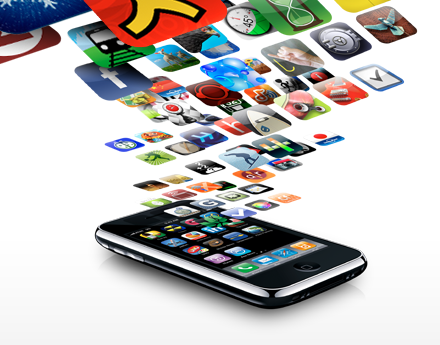
picture-114I don’t think it’s a stretch to say that Apple’s App Store has been more successful than even Apple ever imagined. It entered a market that had been completely controlled by carriers and handed the keys over to third-party developers to make their own apps. Just over nine months later, over 35,000 of those apps had been made which have been downloaded over a billion times. So it’s surprising when you see numbers like the ones Lightspeed Venture Partners published yesterday, estimating that Apple had made only somewhere between $20 and $45 million dollars in revenue off of the App Store. Surprising, until you dig deeper.

First, I’m not convinced these numbers are sound. While the author, Jeremy Liew, makes some good calculations, the numbers are still drawn largely from a survey. He did this because Apple doesn’t release actual numbers for App Store sales beyond the big numbers like a billion downloads. But Apple has given out what are probably better numbers than the survey results numbers over the past year. For example, back in August, none other than Steve Jobs himself said the App Store was pulling in $1 million a day in sales.  Now, that was a long time ago, and the App Store has grown tremendously since then, but let’s go with that figure for argument’s sake.

$1 million a day means that Apple would be making $300,000 a day (its 30% cut). Extrapolated out over 10 months (the approximate age of the App Store), that would be about $90 million. That’s already double Liew’s high-end estimate. And Jobs would not throw a number like this out there lightly. Apple, if anything, likes to set expectations low and exceed them. For Jobs to throw out that figure and say that the App Store could one day be a billion dollar a year industry, to me means that he thinks it will at least be that big of a business.

Yes, it seems likely that the average price of apps have fallen since August given the rise of $0.99 apps, and probably that the ratio of free-to-paid apps has grown, but that’s why the daily sales angle is an interesting one to look at. No matter what ratios changed, there are also a ton more apps being downloaded — both paid and free — than there were in the first 30 days. And so if anything, this $1 million a day sales mark is probably low compared to what it’s at now.
picture-95And there are other numbers that suggest this as well. Back in March, one analyst cut into Apple’s December quarter numbers and came out with $200 million in app sales just for that quarter. That’s probably way too high for a number of reasons — namely that it’s hard to know the ratio of iTunes/App Store/iPod accessory sales, which are all clumped together. But even if it’s way off, that’s just for the quarter, and it’s another sign that Liew’s numbers are probably way too low.

But even at $100 million, the App Store would still be a small drop in Apple’s bucket when it comes to revenue. But what Liew only indirectly hints at in his report is that this is what Apple has always been expecting. Since day one of its unveiling, Apple has said that it did not plan to make a lot of money off of the App Store. Sure, that may have been slightly disingenuous (again, Apple likes to set expectations low), but Apple’s stated rationale behind taking a 30% cut was to be able to keep the App Store up and running — not to make money.

Apple is a company notoriously mindful of its high margins, so why doesn’t it care about making a lot of money with the App Store? Dan Frommer of Silicon Alley Insider has this exactly right: it’s because the App Store is one of the, if not the, key driver of two products that are very high margin: The iPhone and the iPod touch. The App Store is based around the exact same model as its parent iTunes Store, which sells music at a very small markup in order to sell iPods. I don’t think I have to explain how well that has worked.

Another thing to think about is even with the success of the iPhone, Apple still has a very small percentage of the mobile market. Depending on the moves it makes over the next couple of years — namely getting into China and getting off of its exclusive AT&T deal in the U.S. — this percentage could grow by leaps and bounds. When that happens, App Store sales will continue to grow and thus, revenue from the App Store will continue to grow. Remember, the App Store is still not even a year old, and for much of that time, the number of iPhones and iPod touches in the market was nowhere near what it is today. The download pace is quickening, and the revenue pace should be as well.

Yet another variable is that Apple takes $99 a year from developers who develop for the App Store. There are tens of thousands of those. Again, not a huge chunk of money, but it all adds up.picture-122
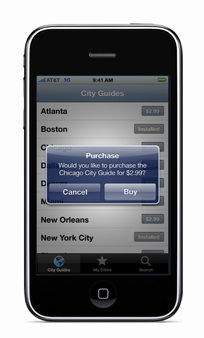
But the biggest thing that these numbers draw attention away from is the true potential of the App Store. The reason for that is, it’s not here yet. When in-app payments launch with the iPhone 3.0 software this summer, the sky could literally be the limit in terms of how much both developers and Apple could make off of this. Yes, Apple will still take a 30% cut of these sales. And given that it has to do basically nothing more than it’s already doing to get that extra 30% — it’s pure gravy.

I think Liew’s numbers are well below the actual revenue numbers, but no matter if its $50 million, $100 million or $200 million, that’s not a huge amount of money for a company that has nearly $30 billion in cash in the bank. But going forward, that number is only going to increase both as the platform expands and as in-app purchases come into play. That’s not bad for a company that just wanted to make enough money to keep the App Store running.

Advertisement

Responses

Comments rss icon

  • When iPhone come to China, these numbers will easily be freshed!

    • I’d be surprised if China didn’t create its own.

      MG:
      Why base estimates off of what a company owner says?

      Why not just use the average cost of an iPhone app to estimate the revenue? Sure, there are some free but you can include those in your estimate as well.

      • Cause a company owner would be in deep shit if he lied about something like that. Paid to free ratio is all over the place depending on what data you look at. Only Apple knows for sure.

        • Yes Apple knows the figures for sure.

          Apple also wants developers to develop for the iphone – thus it wants developers to think there is as much money in development as possible.

          If the actual figures were more than the market thought Apple would likely release real figures and create extra incentive as well as certainty for developers.

        • Jobs was only throwing out an AVERAGE number for a short period of time that included launch day. Apple has been silent about App Store revenue since, which indicates the numbers are not impressive.

          And sure, estimates vary. That’s why the author includes a range. Paid-to-free may be all over the place, but there’s always a low estimate and a high estimate. If you disagree with the range, plug your own figure in. It’s common sense that there should be a significant preference for the free, and 15-to-1 doesn’t sound unreasonable to me; if anything, I’d lean more toward the 40-to-1.

        • MG:
          The potential risk of lying about revenue numbers has never stopped any company owner from doing such a thing. Bernard Madoff did a pretty good job at it and he too was so well respected that no one questioned his success. :)

        • revenue for indie devs matters more to platform. more people on platform better.

      • China already has dozens of knock-offs, but apple is developing the OS as well …

      • china has …. it is called sipPhone $90
        No data plan required.
        has video and can play fm also :)

    • I smell evil …. Why do I have the feeling that Apple is the next Microsoft??

      http://www.livbit.com

  • You know what would be excellent? If I could get an iPhone! I need to take the dive one of these days! hehe.

  • Re: Jobs giving the $1 million per day quote.

    This is a very high confidence number.

    A CEO at a Fortune 500 company simply can not misrepresent this type of financial data. If Jobs did so, and an investor was mislead, invested, and lost money == BIG lawsuit.

    • I would put a bow around this one too (the historical $1M number referenced by Jobs).

      Anyone who follows Apple knows that while the company is not shy on marketing hype, they pretty much always under-hype the numbers, from the way they account for revenue on iPhone to margin expectations to forward looking projections in earnings calls.

      And on any measure, the App Store is without comparison in the mobile realm; namely because there is a really solid platform and SDK underneath – not to mention iPhone/iPod touch.

      My only quibble is that Apple will need to better segment its approach between how it supports developers of “99 cent only apps” versus how it supports “high dollar” app developers, as I believe that this is key to growing a verticals strategy, something that I blogged about in:

      Is the iPhone Platform Destined to Disrupt the Packaged Software Industry?

      URL: http://bit.ly/CnjMm

      Check it out if interested.

      Mark

    • Keep in mind that the $1M/day figure was an AVERAGE that included launch day. They could have sold $30M the first day and zero every day after that and the statement would still be truthful. It’s entirely possible—even likely—that the average declined after that first month.

    • Is that some kind of joke? Have you been living in a cave for the past several years? Have you just not been paying attention as the CEOs for several Fortune 500 companies in the financial sector have misrepresented their companies’ financial health to give themselves bonuses, while the company was actually going bankrupt? Did you miss the Silicon Valley backdating scandals where executives of several high-profile tech companies were misreporting their stock purchases to give themselves better compensation, without informing the stockholders? Not noticed the billions of dollars Haliburton has inexplicably just lost? Have you not heard of WorldCom, Enron, or KBR?

      If you think that you must be able to trust what a CEO says, because a CEO would never lie, then you are the worst kind of fool. Mind you, that is a normal CEO. Steve jobs, on the other hand, is one of the few CEOs who has actually been caught perjuring himself under oath in a court of law. Yeah, you can trust him, because he would never lie, well not unless it was to his advantage at least.

  • app store is the most over hyped piece of crap, android, blackberry, palm & ovi (when out) are just as good

    get off the west cost apple bandwagon and start talking to real americans

    • Try again Bill; Palm and Blackberry have had their “equivalent” of the AppStore for years, and with not a fraction of the traction. As for “talking to real americans”, I can attest as someone who does business on both coasts equally, and spends time with family back in Chicago, that the popularity of the iPhone and associated apps is surprisingly high, even to a west-coaster like me. Interestingly enough, on a visit to Chicago earlier this month, my near-Luddite cousins (who barely know how to navigate the web by my standards) were *all* over their respective iPhones, showing off recent app purchases to one another, et cetera.

      I’m confident they’d resent being considered anything less than “real americans”.

  • in 3-5 years all apps will be completely transferable, recordable, downloadable and free.

    GeniusLocator.com – smart azz

    • Why dont you finally leave us alone LocatorGuy with your dozen of cheap locator websites.

    • Locator.com douchebag. Can’t you see no one wants you here.

      everyonehatesyoulocator.com — that’s the site you should start — and the logo should be your picture.

  • You should also consider that the top selling iphone apps probably are iFart, iBurp, iBeer and that useless star wars sword thing. Basically people mostly use iphone apps as gimmicks to show off to their friends. Apple is selling replacement to the joke or trick which people would otherwise do in a bar or in other circumstances where you have to show off something to friends.

    Just as with the benefits of iTunes to the music industry are totally over-rated. Apple does in fact not change a lot. A billion downloads is nothing. Consider there are 13 billion iphones on the worldwide market, or something like that. And most of those iphone app downloads are free ones that iphone users download and try 50 of them and mostly never go back to use any of them again.

    Try looking at some real statistics for how much actual time is being spent using iphone apps. Very few iphone apps are actually useful and used.

    • For some yes, but I bet it shifts even father to games, social networking and books with the iPhone 3.0 and new hardware.

      Time being used has no relevance on sales data. But if you’re suggesting sales will start falling because no one uses apps, that hasn’t been true at all after 10 months. The pace has accelerated.

    • Actually theconsistently top selling apps are ones like Pandora, SimCity, Google Earth, Facebook etc etc. In other words very useful apps.

      Also Apple billion downloads ARE in fact a big deal. In its first 3 months of existence, there were more App downloads than the enter rest of the mobile industry does in an entire year.

      Likewise, considering the iTunes Music store is the largest music retailer in in the world, it most definitely IS also a very big deal for the music industry.

      Also there are now 40 million iPhones and iPod Touches out there – a very significant mobile platform.

      You have a bad case of denial don’t you?

      -Mart

  • 13 billion? :) outside of that you pretty much just said all that needs to be said.
    appitis is gonna be worse than cancer. whats a company to do? better think of something.

    PocketLocator.com – whats in your hand?

    • Your Ex-wifes kitty kat, thats whats in my hand, or should I say my hand is in the kitty kat…

      Just visit BangingTheSpammersWifeLocator.com to see for your self

  • Its really surprising to see iPhone making big moolah with their appstore, in India the iphone was a big failure.

  • “First, I’m not convinced these numbers are sound. ”

    I suspect they are accurate. I disagree with you.

    • As Enron and AIG showed us, statistics are often in the eye of the beholder, and there is some guck when you peel back the layers of marketing.

      TC is one to pump n dump, so I would take articles here with a grain of salt.

  • MG,

    The key variable is the assumption of free:paid apps and I based this by talking to developers who were on the list of top apps for both free and paid apps. I’d welcome any better sources of data on this.

    For clarity though, I did actually say that Apple was using the app store was driving demand for their hardware (ie that is the point/plan)

    Cheers

    J

  • Funny how VCs are going nuts over startups that are making no money and burning cash like crazy and saying no big deal with 20M profit doing nothing other than approving apps.

    • How is that funny?

      It’s all borrowed money. I think very little people on Techcrunch understand the principle of hedge funds.

      They think that these people honestly believe in these startups they are funding or think that the business plans have a shot.

      First of all no good programmers, managers, or any other type of employee is going to work at one of these companies. No benefits and lousy work conditions are to blame. Not even in this economy.

      The really good people are still at IBM, HP, Microsoft, ect….

      People that are in the pipeline are simply doing their one task. They don’t necessarily care or want to know if the company will be successful or not.

      Many of them have no real understanding of technology and invest on claims, manufactured graphs and hope. Hope that it will do as well as their NYSE picks or other ventures that were grounded in stable markets.

      It doesn’t really matter if they have fundamentals or not. That’s why it all crashes, 2000, 2008. Probably 2012.

  • One of the most apple fanboi articles i’ve ever read on TC.

    Plus, you know the $100-$200million dollars you reckon Apple have made? That isn’t profit, infrastructure, people and hardware to keep the app store live and working would no doubt drawf the total amount made so far.

    The app store has LOST apple money so far. A billion downloads is great, but without Apple determining a stupidly high price for every app, theyre not hitting their normal margins. They have market share for once, but its costing them money, no a position Jobs has been in before.

    • Retail stores originally ran at a loss. iTMS ran at a loss. Both are breakeven or “slightly profitable” now.

      Apple insists on “Apple margins” for products it understands as discrete products without ancillary network effects. With services that benefit the company as platforms, “Apple margins” are breakeven or a slight profit. If the App Store isn’t there yet, it will be eventually.

    • I think you’re wrong. The only expenses Apple has for the app store are bandwidth and maintenance and app reviewers (all pretty much fixed costs). Their margins on their 30% commission will be extremely high – probably much higher than even for their hardware.

  • Even if Apple has a higher revenue currently, 3 things we need to take into account:
    - The current users of the iPhone are a specific social market segment that needs to brag about their iPhone. This social segment is limited.
    - The novelty of useless ‘joke’ like applications will wear off soon.
    - Most iPhone owners are in the US, the rest of the world might not be so interested in these gimmick applications as there a huge cultural differences.

    It is very likely the Appstore will encounter problems in increasing revenue.

  • As a developer who launched his first app this week for business users, at present much of the focus is on the games and gizmos.

    Consumers are driving uptake of those kinds of Apps such as iFart etc. Hopefully over time adoption will move wider. Having recently come back from Nokia’s developers forum the focus there was on messaging and maps as the key drivers for Apps on Ovi and enterprise was hardly mentioned so you can see where the battle lines are shaping up.

  • It’s all about the Whole Product

  • Let’s use some real hard stats here.

    The largest single revenue generator on iPhone is a French company (gameloft – ticker GFT) and they did about $10m of consumer revenue (aapl gets a cut, GFT gets a cut) in 2008. This year’s # is expected to be above $30m as they already did about $6.5m in Q1. long and strong GFT.

    Facebook said one third of all their mobile usage is from iPhones (Jan 09), and roughly the same % from Blackberry and the remaining third is all the others together.

    Clearly iPhone is having an impact, much the same way AOL did in 1994.

  • How about some high value apps? While these numbers are low, they are probably representative, which has been my point as to why service to developers will not improve. Face it, Apple is not making that much money off of the App Store. Nor, are they making that much money off of the iTMS. Remember, they make a hell of a lot off of the iPhone and iPod, but they treat these business lines as both lose leaders, but maintain profitability.

    Apple has a problem. My business model is to allow people to create lots-and-lots of marketing like apps. How about a hundred templated brochure apps for GM? Free, with video. Apple essentially has to pay for that bandwidth with their model. Everybody we talk to loves this idea, but the free apps will increase, which is why Apple won’t allow us to push a button and deploy an app. It’s too bad because it’s possible.

    Apple needs to be both more restrictive and more open. They need more high value applications like the album experiences that Apple won’t allow into the store to the dismay of the record labels paying for them. They need television shows that have additional materials. They need skate videos with cuts and photos, with the high res version in the iTMS.

    These are growing pains, and sadly we won’t have anything until the golden plan arrives at one of the main events. We built a subscription model, and can’t actually release anything until Apple provides the subscription base. Innovation does not come from above!

  • OMG this was probably one of the worst written articles I have read in a while in TC.

    Basically I can summarize MG’s post as “I think they’re making more than $40m a year, I don’t really have any better data to prove it, but even if they don’t, what does it matter”.

    Can you come up with anything better than Lightspeed’s analysis? And can you point to the problems in theirs?

  • I am really amazed about how people get on these blogs and shoot down iPhone and Jobs.

    Jobs always gives the low number. He is too smart to give specific numbers publicly. He never shows us everything until it is time.

    No company has their complete line of products and online retail aligned like Apple. You can claim Palm or even Blackberry in your post. But you are just trying to play a mind game. Apple is in the lead right now. Others might claim, that people are just buying the hype. That is not true. Users are doing the most advertising for Apple. Actual users are praising their products. People go to the store pay the premium for their products and download apps from their store. You cannot beat that type of advertising. It is not hype it is users!

    • While certainly true, mostly I hear about the lack of information for developers and people conducting business with Apple. The development process is opaque. The resulting numbers for sales in both the iTMS and the App Store is opaque.

      We loved Apple, which is why we were happy to develop for them. But, there is a consistency to treating this community poorly, that has posed a continual problem. It also has posed a continual opportunity to competitors.

      If you love Apple that much, you don’t gloss over issues. You provide feedback.

  • very well done, MG! I had forgotten about the $1M/day quote.

  • There are 11,825 “artists” represented in the iTunes App Store. Of course, there are actually many more developers. However, many of them use another company to put their apps in the store. For example, Chillingo represents many developers.

    So, the $99 fee for 11,825 developers isn’t all that much, in Apple’s terms.

    • True, but the whole point he’s making is that if you take all of these seemingly small revenue streams and add them together, while taking into consideration the fact that they are doing no work to obtain this revenue apart from ensuring that the iPhone is a great platform, you begin to see large sums of money being contributed to the bottom line.

      Look at the comment below about Google search on Safari. A hundred grand a day may not seem like a lot when you’re sitting on 30 billion, but thats 36 million dollars a year you did not have before and didn’t do much work to get.

  • Don’t forget the HUGE amount of search revenue Apple receives from Google for mobile safari searches – I know I use the Google toolbar on my iPhone at least 5 times a day.

    I’ve heard figures tossed around between $100,000 to $180,000 a day in Google revenue – this revenue is essentially free since Mobile Safari is (for the most part) developed coinciding stable webkit builds.

  • This is a well written article with thoughtful analysis on the impact of the App Store to Apple’s bottom line. Comparing the App Store to the iTunes Music store, as a way to drive iPhone growth (as was done with the iPod) is exactly right. If you agree that this “ecosystem” is Apple’s strategy, you probably already know how Apple is going to grow the iPhone market — in the same way they grew the iPod market. On the high end, they will roll out more powerful iPhones (faster / more memory / better features) on a predictable schedule, making the old versions obsolete; on the low-end they will roll out smaller, cuter, more colorful versions to appeal to the masses.

  • Hamranhansenhansen - May 15th, 2009 at 5:56 pm PDT

    > 3 things we need to take into account:

    None of which are true, unfortunately.

    > The current users of the iPhone are a
    > specific social market segment that needs
    > to brag about their iPhone. This social
    > segment is limited.

    If the iPhone still cost US$599 then maybe you could get a little traction here. If there were any other smartphones with these features, then maybe you would get some traction. If the iPod touch didn’t exist and wasn’t the same price as previous iPods then maybe the iPhone would be some ultra high end bragging rights device instead of just an iPod with phone in it.

    But the iPhone has been US$199 forever and that includes a US$299 iPod touch built-in and at least 2 free apps for making Wi-Fi calls (I don’t ever pay any long distance to AT&T) so it has been cheaper for me than my last phone, which was just a candy bar. The iPhone doesn’t quite have the high-end chic that you’re crediting it with anymore.

    Even when you consider the monthly plan it is a cheap phone for what you can do with it. I pay $70 a month (same every month) for unlimited data, unlimited Wi-Fi calls, 25,000 free Wi-Fi hotspots, 1500 text messages (I think), and more cell calls than I’ve ever been able to use in a month, and which rollover anyway. My last phone was a candy bar and the bill was always over $70 and all I got was cell calls and some long distance … no data, no Web, no Wi-Fi, no hotspots, no 3rd party apps. Now I call my friends in Europe and Canada whenever I want over Wi-Fi and it is like 0.0027 cents per minute and you don’t even lose a cell minute … it would cost me so much more to use a candy bar phone.

    The thing you’re resisting is to admit that the iPhone is just plain better than all the other phones out there. Why? Not because Apple is magic, but because of this:

    - development time for typical phone: 6 months
    - iPhone: 3 years

    - software updates for typical phone: 0
    - iPhone: 6 or 7 over the first 2 years

    - heritage of typical phone: pocket calculator
    - heritage of iPhone: Mac/Unix workstation, iPod/QuickTime media players

    - number of apps for typical phone: dozens or hundreds
    - number of apps for iPhone: 25,000

    - graphics subsystem of typical phone: direct to screen bitmap drawing with bitmap fonts, limited color palette, limited character set
    - graphics subsystem of iPhone: OpenGL, fully-layered compositing and animations, Unicode, hardware acceleration, vector graphics

    The iPhone is legitimately better than the other phones that are being offered today. You don’t need to invent a social networking theory to explain it. You’re going to have to do better than it’s only popular because it’s popular when there are so many unique reasons to choose an iPhone over the competition.

    > The novelty of useless ‘joke’ like applications
    > will wear off soon.

    Yeah, that’s why the Internet faded away after LOL Cats! That’s why whoopee cushions (real-world iFart) were only popular for the first 100 years. That’s why all the TV programs you see today are all so thoughtful and serious.

    Puh-leeeeeze!

    It’s easy to criticize iFart and similar, but there are also medical apps, Wi-Fi calls, Internet radio and TV, music tools, and many other non-flatulence -related applications.

    > Most iPhone owners are in the US

    No, that’s not true. There are more iPhones outside the U.S. than inside, even if you only count the legitimate sales. But China has something like 25% of all original iPhones sold in the U.S. You can see that in the difference between “iPhones sold by AT&T and Apple in the U.S.” and “iPhones activated by AT&T” which is a much smaller number.

  • With respect to what we can gather about what a company president says, you must understand first that this is not your average company president. He is acutely aware of the high-profile position he occupies not only at Apple, but in the pantheon of American corporate leaders. I’m certain he would be loath to say anything, particularly in an investors’ conference call, which could open him up to questions of manipulation. Second, you can always count on Apple management to lo-ball any numbers they give out – their objective has always been to under-promise and over-deliver. So the author’s use of Steve Jobs number as a low starting point makes sense. And given that Liew’s estimate is way below Apple’s assumedly conservative number, his contention that Liew’s numbers are probably way off is credible.

    The other thing I’d like to say is “DUH!!!” We already know that the whole purpose of the App Store, as with the iTunes Store, is to drive hardware sales (where the real profit is) by providing cheap, easy-to-access content. Not only that, Apple even said as much – that they don’t foresee making a lot of money off the App Store. So why are we being critical of the (relatively) low amounts of money that (we can admittedly only estimate) they are making? Apple is the only company I know which regularly gets reamed for doing what they say they will do (or not do).

  • Apple might take 30%, but they don’t make 30%
    unless they are able to persuade retailers to stock iTunes gift cards for free

    And what about when retailers sell au$50 iTunes cards for $30 or 2x$20 gift cards for $30 or when gift cards are given away or bundled with iPods?

    It’s the perfect model though. I am looking forward to when it expands to AppleTV. I expect the AppleTV to be able to access the app store and download games and more with iPhones or iPods acting as wireless controllers

    It might be a while, but I think we can also expect home automation to become a reality for a lot more of us through the ability for iPhone OS 3.0 to allow third party device access via the dock connector and would not be surprised to see protocols like zigbee taken on board (zigbee in the touch range would allow direct low range low power wireless control of devices without the need for a central controller – instead of rewiring or plugging in clunky x10 controllers we would simply replace individual light switches or sockets)
    This would drive sales of iPod and iPhone even if home automation companies give away the control apps fir free

  • A billion downloads but 99% of them are free and the ones that aren’t are $1. This is not a viable application marketplace… it’s a neo-ringtone economy. Nokia in Europe also built a billion+ download house of cards based on this ringtone economy that coined in for a few years.

    The App Store is a dead end with hundreds of me-too apps doing trivial stuff. Meanwhile, RIM, Google, MS, and Symbian are retaining and even adding to their higher cost, higher margin “serious” app base.

  • OK, well almost everyone is wrong on this post and comments.

    Here are the facts:

    70% of revenue goes to developers and 30% to Apple, but…..

    Let’s look at iTunes for one second to understand the economics and Apple’s strategy -

    $0.99 Revenue
    $0.70 Royalties
    $0.10 Delivery costs
    $0.12 Billing costs
    $0.92 Cost of goods sold
    $0.07 Gross profit to Apple
    $0.05-$0.07 Operating expense
    $0.02-$0.00 Net profit per song

    According to Apple CFO Peter Oppenheimer at Q1 FY08 Earnings calls, 22 Jan 2008 – Apple uses the iTunes service as a differentiator but monetizes via the device (iPod). “Our objective with the iTunes store is just a little above break even. And we think that it helps us to sell iPods and Macs, and that is really our strategy.”

    Apple are using the same strategy for the App Store. The economic objective is to break even or slightly above for the mobile apps store and monetise via the iPhone with halo effect to iPod’s and Mac’s. By the time you factor in delivery costs, billing costs and operating expenses the margin is likely to be around $0.02 or break even per app. Now, factor in that for every 11 downloaded apps, only 1 is paid for.

    Analysis and assumptions:
    So, FY10 Mobile App Store is approximately $360m in revenue with $250m going to developers = $0-$20m to Apple as net profit.

    App prices vary from $0.01up to and in excess of $10.00 so you can’t simply multiply $0.99 x 1 paid app for every 11 downloads into 1billion downloads.

    FY11 estimate is $2b in revenues with $1.5b going to developers.

    There is 1 paid app for every 11 downloads.

    Approximately 23% of apps are free.

    80% of revenue goes to top 25 developers.
    40% revenue goes to top 10 apps.

    Oversupply of apps and limited visibility (there are only 100 highly visible slots) is driving down prices.

    Now, we also have to factor in the $100m “iFund’ to determine NPV etc. Making this assumption and a few others it will be 3-5 years for the Mobile App store to be making a profitable contribution to Apple’s bottom line in its own right.

    Also contributing to the higher likelihood of just breakeven vs small profit is the tens of millions being spent on marketing to establish the App Store in the first 1-2 years but this is included in the operating expense example outlined earlier.

    This is the type of analysis I would expect from an Analyst who covers Apple. :)

    • There is a big missed aspect in this discussion unless I did not read some comments….

      1. Apple needs to not just win users but also limit other competition.
      2. Emergence of iPhone has limited other companies revenue and thus investments in phones.
      3. When people like and buy even free Apps, they tend to stay with iPhone. So, you have less churn (a term used by Mobile Operators). MOs have large ARPU due to that.
      4. I know a bit or two about App Stores and smart phones :-) . The Apps are the best stickiness features in Mobile fickle market.

      So, this debate is simply misdirected. Apple game is to keep the iPhone with big buzz all the time and keep people interested after they buy the phone. So, it is not anymore just a phone but a companion.

    • These estimates are WAY off …

      The average person I know has at least 3 paid apps on their phone …

      Let’s look at 3 of mine as an example:

      (I have more paid apps, but for attention span we’ll look at 3)

      Crash Team Racing $4.99 … In the recent “Billion Song Celebration” this was listed as one of the top 5 paid apps. Not .99 cents.

      Tetris $4.99 … No gaming device is complete without Tetris … Also celebrated in “Billion Celebration” as a top 5 app downloaded not just “in all” … Not a .99 cents app.

      iBird Explorer Pro $29.99 … This app is being featured on an iPhone commercial. I have it. I work in Best Buy with Apple products … greater than 50% of the over 25 crowd buying an iPhone are buying the it because of that commercial (in my store) They want that app and the compass app (which I also have and is also NOT .99 cents)

      So let’s extrapolate a little bit … The apps mentioned above are very high volume downloads for every 5-30 downloads of these apps, 5-30 free apps could be downloaded and Apple profits.

      • Hey dude,

        Did you even read the details of my post?

        I stated that the mobile apps range from free to above $10.00! I only used an $0.99 app as an EXAMPLE to demonstrate the breakdown of the economics of the store to show you that the net profit per app after variable and fixed costs is around breakeven or a maximum of $0.02 or around 2%.

        The data is 100% accurate…I won’t say any more than that.

        MG was saying that the analyst was way out with his estimate of $20-45m and saying that it shoud be higher, more like $90m. However, there is no real breakdown or detailed analysis of how MG arrives at his ‘estimate’.

        There are approximately 20,000+ mobile apps in the store.

        The current price distribution breakdown and number of apps in that price range is:

        4,660 Free
        8,153 $0.01-0.99
        2,712 $1.00-1.99
        1,291 $2.00-2.99
        553 $3.00-3.99
        1,134 $4.00-4.99
        227 $5.00-5.99
        92 $6.00-6.99
        120 $7.00-7.99
        39 $8.00-8.99
        613 $9.00-9.99
        803 $10.00 >

        The way the store is currently designed, only 100 apps are highly visible which means people are competing for positioning in this top 100 by driving down their price which drives down Apple’s margin and therefore keeps the net profit very low to breakeven. Apple are NOT in it to make a profit from the store as stated by Apple. They simply use it to sell more iPhone which is what they are truly monetising for profit.

        75% of the top 100 apps are there because they are between free or up to $0.99. This competition for the top 100 visibility is fierce and as stated, for developers to get visibility they need to keep the price low which is driving down the prices and inevitably it will deter developers from investing. This is unless Apple can come up with a better way of exposing the depth and breadth of apps in the store (consumer discovery), create premium categories, create promo opportunities outside of the top 100 and or possibly differentiate revenue share is developers invest in promotion / marketing etc.

        The ratio is the ratio – for evey 11 downloaded apps only one is paid for.

        If you have ever worked in marketing you will know that YOU are NOT your customer. Your behaviour means means very little in the total scheme of the economics and customer behaviour associated with the store.

        My estimate of net profit to Apple from the store is between $0 and $20m in Year 1, more likely between $0 and $7.5m. But, as I said if you factor in sunk costs to establish the store, the $100m iFund etc it will be 2-3 years minimum before Apple sees any return on investment just on the store itself. But once again there aim is simply to breakeven or just above.

  • The highest amount I’ve paid for an iPhone app is Netter’s Anatomy at $39.99.

  • No one seems to be mentioning that the more apps you buy, the more you’re tied to the iPhone platform. If I have 50 apps at the end of my two-year contract, I’m more likely to buy another iPhone.

  • Apple does not care if they make money with the App store.

    Apple also does not care if they make money with ITMS.

    These are both about tying users to a hardware platform.

    Apple does like to sell hardware at 50% gross margin.

  • @ Digimark

    The things you state as facts are your estimates. Apple has never published numbers on their costs as far as delivery cost, billing cost and operating expense. What if delivery cost were .05 and billing cost only .10. That would change the net profit by .07 per .99. Your data is not 100% accurate so don’t portray it as fact. As far as the Ifund, I don’t think the funds came from Apple. According to the Ifund FAQ
    “Kleiner Perkins Caufield & Byers (KPCB) has earmarked $100 million for this initiative and it will be managed by KPCB’s partners. Apple will provide KPCB with market insight and support.”
    You make some reasonable assumptions, but save the hyperbole. My guess is Apple has about a 10% Net profit on the App Store which is similar to Music store.

  • Besides the Apple guys, no one will really know those true revenue numbers. All you really need to know right now is that they are doing pretty well for themselves.

Leave Comment

Commenting Options

Enter your personal information to the left, or sign in with your Facebook account by clicking the button below.

Alternatively, you can create an avatar that will appear whenever you leave a comment on a Gravatar-enabled blog.

Trackback URL
Short URL
bugbugbug