Israeli Entrepreneurs: Know What Game You Are Playing
by Sarah Lacy on April 4, 2009

TEL AVIV– The other day I spoke at an Israeli event called Techonomy where six handpicked Israeli startups were demoing new products. The companies were impressive, the audience packed, it was sponsored by blue-chip tech names, and well-heeled experts were on stage offering feedback.

In fact, it could have been just like a Silicon Valley event a la TechCrunch 50 in every way except one: Experts and attendees were encouraged—strongly—to offer only positive feedback.

To understand how rare that is, witness the daily blog posts calling out Valley startups—even the most successful ones—for lacking a business model, redesigning a home page or just generally “sucking.” Or just read the comment stream on any TechCrunch post. Everyone surrounding the Silicon Valley ecosystem is a critic, and if they’re anonymous, a vicious one. Hell, Michael Arrington gets spit on and half of my career has been made profiting from anonymous, vitriolic haters. And we just write about startups. I don’t like it, but that’s the unfortunate reality that goes along with doing my job.

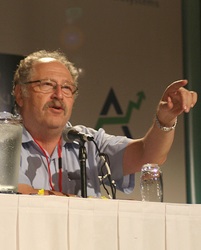
A lot of this insistence on positivity comes from the Godfather of the Israeli Web scene, Yossi Vardi. It’s one of the main house rules at his KinnerNet conference, where he tells people if you don’t agree with something someone else is saying maybe you are the problem. Well said, Mr. Vardi.

The amazing thing is how people respect the rule. Vardi invokes a combination of fear, respect and sucking up among Web entrepreneurs in Israel, so when he demands people be nice, they actually listen. He came up to me after the Techonomy event, and I was slightly worried he was about to yell at me for saying one of the presenting companies needed a better logo because you couldn’t decipher its name. (Sort of a problem with a consumer Web business, if you ask me.) Instead, we got into an interesting talk about this insistence on positivity.

In short, he wants to promote a comfortable environment where smart entrepreneurs who may be easily intimidated aren’t driven out of the industry. I can understand that. I think a lot of the criticism written about Valley startups is uncalled for at best, and at worst just not that interesting. Many people try to hold startups to an impossible bar. They are startups after all. They are supposed to be doing something that is risky, seems insane and can easily fail. If they aren’t, they’re probably not taking enough risk. Most lazy bloggers and commenters have learned one thing: If you want to maximize the odds that you’re right about a startup, then trash them, because most startups fail. It’s much harder to believe in something, and harder still to say you do.

That said, I’m not sure I understand the concept of “constructive positivity.” I think a lot of startups benefit from, well, honesty. And honesty isn’t always nice. Take the first post I did on Israel.  Sure, some people think the Dow Jones numbers are understating returns. But no one will argue that Israeli returns have actually been good in the last eight years.

Guess what: They haven’t been great in the Valley either, something people write about all the time. You never hear an uproar, because it’s true. VCs, entrepreneurs and the whole Valley ecosystem gets it, knows it’s a problem and everyone is quietly trying various ways to solve it. If people were openly talking about the poor returns in Israel—the way they do in the Valley—would there have been such an uproar? Or would people just wince, nod, and aim to be the exception?

I’ve spent a lot of time talking to people in Tel Aviv about this idea of honesty—something Israelis are supposed to be known for. Essentially people have said everything about Israel inflames passion. OK, that’s a fair point and understandable. But the government, entrepreneurs, and investors can’t court mainstream U.S. bloggers and business press for coverage and not expect the same rules by which we write about our own startups, even the standout ones like Facebook and Twitter. That’d be a bit like me saying people should be nice to me because I’m a woman, wouldn’t it?

But here’s where Vardi’s view of the world makes sense: He doesn’t aim for his companies to build empires worth a billion or even hundreds of millions of dollars. What’s more, he said it’s unfair to expect them to. He told me after the event that Israeli companies are great at coming up with technology that a bigger company, with a bigger market, and more resources can then develop. He called them “tomato seeds”—there is a lot packed in there, but it’s not going to grow into a tomato plant on its own. And indeed, Vardi has had a good number of exits and made money off them based on this theory.

Of course, the natural question then is, should big venture capital money even be in Israel to begin with? I asked Vardi, and he said it was a good question. He noted that big venture capital money shouldn’t be funding Web applications, period, given the low capitalization and relatively small exits. Agreed. One of the main themes in my book about Web 2.0 is the comparatively-low importance of big money in this wave of companies, and that’s why you’ve seen such a different role played by angels and the emergence of strong seed funds like First Round Capital over the last few years.

Ideally, I think a mix between the positivity of the Israeli scene and the honesty of the Valley scene would be an improvement for both communities. But, I’ll grant Vardi that companies just aiming to build a product, don’t deserve a Facebook-level of scrutiny and should be nurtured. But, that means as someone who writes for primarily a U.S. business audience, I also probably shouldn’t be flying around the world to cover them. In short, Israeli entrepreneurs can’t have it both ways.

I, for one, continue to believe big things can come out of Israel, the same way they can come from anywhere. After just two weeks of foraging, I’ve found a handful of entrepreneurs swinging for the fences and building real, viable companies that I expect to watch for years to come. As someone who gets paid to analyze and ask uncomfortable questions, I’m going to hold those companies to the same bar that I hold any company with potential in the Valley to. And if any entrepreneur doesn’t want that kind of coverage: Don’t call me for a meeting.

Advertisement

Comments rss icon

  • In spite the fact I am Israeli (And a son of a Yossi Vardi classmate from his undergrad days) I subscribe to Jeff Jarvis’s saying that in many cases in business your harshest critic is your best friend. Fact based critasisam provided at the stages in which the Techonomy startups are currently at can lead to their vantures arriving at the market just a bit later but with a much better product.

  • All startups need to be criticized. The question is what is criticized and when. In my opinion, too many times we criticize the technology, logo, founders’ history, website, pr, marketing, and everything under the sun with the exception of one thing: Business Model!

    There are so many “startups” out there that do not have a business model (actually a better term would be a revenue model) that are hoping to become the next big thing. And many of the bloggers do not even touch that subject.

    So regardless of where the startup began, its business model, or lack of, is something that should be criticized first. The problem, you see, is that too often people get excited by the technology aspect but the startup is gone within a couple of years. I used to love Octopus (early news aggregator with a great UI – but no business model which ended up closing down) and was using it until one day it just shut down.

    I know that the VCs are supposed to do that before they invest, but we have all seen companies who got money they should have not gotten (hell, I worked for one that got $18 million and shut down after 7 years) or raised angel and “friends and family” money and ended up closing down.

    Lets face it, M&A is a great exit strategy for some companies but not a guaranteed exit strategy. A revenue model is the first thing that should be criticized and not the company’s logo or website.

    Jim

    • @Jim Z @Sarah Lacy

      How about the failing business model of opening so many starbucks or look at the layoff tracker the failed business models of every company? How many are closing this year? I believe they are having 100 failures or so.

      Near the end of the my comment, I give my one piece of wisdom, hopefully you will find it.

      Drive around your home town or the any Mall and see how many empty spaces there are; when someone opens up a shop then 9 month later closes down who writes those web posts?

      What about the one building your town where a restaurant can never stay in business for more than 6 months or a year, unless they turn it into a McDonald’s.

      Startup’s are easy to criticize since all you critics need is a blog post, spam mail, link backs and if you make your critical remarks bad enough in the hope of getting noticed, you sometimes do. The more outlandish the comment the bigger the chance of you getting noticed (Maybe not you personally, but the person making the post)

      Most of the criticism is probably TRUE, looking for the positive is still better than beating a dead horse. The objective of a startup is to FIND a business model where one did not exist. Correct me if I am wrong Sarah.

      You can tell startups privately you can tell the company these are what you need to work on. If the company is really that bad, DON’T WRITE ABOUT THEM.

      How many people here like the guy who criticizes his wife in public (visa-versa) you think that guy is a jerk. You just end up hating BOTH of the people.

      Mike had to know that getting spit on was coming, after his month off his posts have been much more objective vs in your face. The interview of the Etsy.com owner where Mike talked all over a company that is fairly successful and Mike made fun of him was totally disrespectful of Etsy.com and more importantly the founder.

      The founder was nice to Mike thinking that if he would of done what he should of done, like beat the crap out of Mike with his shoe, Mike would try and turn all investor’s against etsy or at least try too.

      Mike = Yossi, think about it

      Mike has the power to kill a startup and can do so just by making a bad post about it.

      Comparing the two (Old mike before vacation vs Yossi) I prefer Yossi, everyone does, unless Mike does something for you, like make your payroll check not bounce.

      Sarah did not get into the details of why positive review of the parts are good, not enough talent at writing? or writing about that topic just didn’t give her enough WHAM?

      I should make WebCrunch.com in a critic, every review post techcrunch.com does, roast the critic that hasn’t the talent to even write about a startup,

      I would love to read a review from someone who did a startup, invest his own time/money and failed startup, rather than a college educated facebook.com user who users twitter and myspace.com to get noticed, and who gets paid to slam startups. (NOTE: I didn’t look at every writers background to make this statement 100% correct)

      • WebCrunch,

        I agree with much of what you say. I have been a critic of many of the posts on this blog for a long time. There is much to dislike about TechCrunch and its authors and how their personal views influence their reporting (Just look at Jason and his unfounded Anti-Microsoft views).

        Having said that, I still stand by what I said in my previous comment. Criticism is good but the first thing that needs to be criticized is the Business Model and not the logo or website design.

        I worked at a startup and gave up seven years of my life, my wife’s life, and my children’s life (by the way, check out http://alonshwa...ng-your-family/ for a great blog entry about startups and family that a friend of mine wrote) and put blood and sweat working 80-90 hour weeks for it to fail because its revenue model was flawed. The problem was that no one criticized it (including the employees). More time was spent on criticizing the website and presentations than the unrealistic business model. It failed after 7 years and 18 million dollars. Most startups don’t get that type of a lifeline and most should not.

        How many companies do you read about that are getting money from VCs that have no business model? Have no revenue stream? Isn’t that the first rule in running a successful business? Generate revenue or, at least, have a path to revenue? Not every startup can embed or generate the traffic to live off of ad revenue.

        I am no longer part of the startup world and am working for a company that does not have VC funding and has to make its payroll each week and the number one thing that determines all that we do is revenue and profit. Too bad many startups are not run that way.

        Jim

      • webcrunch, sorry but most of these “analysts” dont’ have the power to kill any start-up. Most of them never invest their own money in start ups, and generally can’t do a good job of seperating the wheat from the chafe. However, they do a good job of bringing new start ups and things to light.

        If you want better analysis (on fewer start-ups) try avc.com.

  • From your post: That said, I’m not sure I understand the concept of “constructive positivity.” I think a lot of startups benefit from, well, honesty. And honesty isn’t always nice.

    You don’t have to be mean when being honest. A lot of people have this idea that ‘honest criticism’ has to be ‘harsh’. You can criticise in a positive manner, and at the same time be honest, sincere and clear. Nobody said you had to lie.

  • Very informative.. thanks for info.

    • True that most blogs are not interresting, such as a writer with incessant need to mention themselves. Plus, the photo she added of herself is not very flattering.

  • this is a great post.

    My rule of thumb is that I don’t criticize unless I have a suggestion that would make things much better.

    • I agree with Scott Yates. Criticism is fine, but to be helpful criticism should include suggestions for improvement. It stands to reason that if you are able to find something “wrong” with the company you are comparing it to something that is “right”. Help them out by telling them how they could improve.

      I also applaud Yossi Vardi for emphasizing positivity in a public forum. Building yourself up by tearing others down is a poisonous path to the top (ask Michael how it has worked for him). If you want to help people out, take criticism off the public stage. If the criticism is founded it will be just as valuable given on a more personal stage.

      • I largely agree, but sometimes there is a fatal flaw that makes the business unworkable. One time at a party I talked to a guy who’s company was winding down after Bubble 1.0. When he described the business to me, I asked about an area that might be a particular problem in making the product successful. He said that was in fact a fatal flaw and was why they were shutting down.

        And yet they raised over $100 million for the idea. Not that I’m a genius, far from it. If I could so quickly find the problem in that business, why couldn’t all the VCs who poured their money into it?

  • Well, I read the comments on your last post about Israel, and man! So many people bringing politics into a blog about technology. Just amazing. I guess the fact that Israel has a difficult political situation makes its technology and startups suck, too!

    As I’m originally from Israel, I’ve seen firsthand how driven and successful Israelis are when it comes to science and technology. Anybody who tries to deny that either hasn’t been there, or is politically anti-Israel and for some reason decides to let that affect their views of a non-political subject.

    As for the whole constructive positivity thing, I agree with Jim Z. Criticism is important, but only constructive criticism. What’s most important to a startup isn’t necessarily the logo or the homepage design. Those are important for, say, Facebook. I get annoyed when I read blogs bashing startups just to get a cheap laugh from readers.

  • DeathToSpammers - April 4th, 2009 at 5:22 am PDT

    Well, one thing is sure, it’ s hilarious to see panels of ‘experts’ bash startup after startup for ‘not being original enough – have you thought about the competition’ – AND THEN pour MILLIONS into ideas like ‘facebook but for dating’ or ‘twitter but for companies’.

    This is why the VC circuit is a complete fucking joke – the only way you ever get real money is if you’re a friend or family (see: youtube, netscape, etc).

    • Nice name.

      The VC circuit isnt a joke at all – its called network and clearly you need to do more of it.

      Fund raising is as much a social and ‘getting to know the entrepreneur’ action as it is having a good product.

      Sure you get knocked back – it happens all the time. And it can happen a lot. But if you get knocked down, you have to get backup and keep trying and trying and trying.

      The deafest attitude inclined in your post seems to suggest you have been knocked back – it happens to everyone. Get yourself up, keep iterating and developing your product and get out there and meet people.

      You have a long way to go if you DONT think its about friends and connections – if a guy came up to you off the street and pitched an idea, would you poor $3 mill into not even knowing him? You’ve got to be kidding.

      Now flip that, if a well respective connection introduced you and gave a great reference and then you demo’d – you’d have a different perspective.

      • Deathtospammers, you have a point.

        My partners and I presented our web site to a wealthy business person. The site is running and does exactly what it needs to do for the user. We do not have the resources to add a polished theme/design to the site, and we warned the person we presented to. The response? “I am not impressed with the design.”

        The point: VC’s / business people, they are unable to understand a concept, EVEN A WORKING ONE. The entrepreneur must add all the color, fireworks, spinning wheels. Just like selling a can of soda, getting funding is a pure marketing game. So death, if you have an awesome technology, or a web site that does something very cool, pay someone $5,000 – $10,000 to apply a theme to it, with all sorts of sparklies, because the sparklies, remarkably, is all a VC can understand.

        As for being “positive” – my partners and I have, I suppose, a typical tech relationship. We have no problem saying (even exaggerating in a negative manner), “That sucks. You’re stupid. Blah blah.” This does not affect what we do though – each partner has complete control over their project’s implementation. Yes, the “voted” projects get priority, but if someone believes in something, they can work on it in the long run.

        On the other hand, I understand what the author is saying about sensitive people being turned off by negative criticism. All people are not brutally honest, which tends to be characteristic of us tech guys. Death is right too – just look at Federal Express (A “C” paper at Yale.) The best ideas get shot down. Some inventors will not care. Some will cry their eyes out and change professions. This may be good if it sends them in a better direction, or it may be bad and the world loses a great idea. Can we suppose that only God knows if the critique had the right effect, or a destructive effect?

        • Couple of thoughts. Re the design, if the idea is good enough you really ought, with a little imagination, be able to bring a designer on board affordably. If your big idea is going to make your future then you should be able to convince a good budding designer at the same level as yoursef in their field that it could do the same for them.

          If you’d sent your project to me I may well have been prepared to spend time on it gratis providing certain criteria were met. Many designers often do that for projects and people they believe in. You’d be surprised at how often some of us work off the clock.

          As for the softly softly approach to startups – I couldn’t disagree more, the ability not to separate self worth from business success or failure as an essential one that has to be learned.

  • Well here’s a bit of encouragement. I think Techcrunch did a great thing by bringing you on board. Its like a breath of fresh air – informative and insightful. Keep it going Sarah!

  • Love the post, Sarah. Keep ‘em coming.

    While criticism is great, I feel a lot of startups know about some of their faults already. They don’t need to be constantly reminded of them each and every day.

    Instead, when you’re honest and perhaps focus on the positive, you cause them to improve, no matter what. But taking criticism and improving only works for some people.

    The bashing that random startups get on some blogs (not TechCrunch too many times) is just plain disgusting.

  • I guess this is the third post about Israel within 6 months?

    I don’t deny that Israel has great minds in techonology medicine, economics, etc.. But this is expected when collect and attract people from all over the world to be citizens of your country. You will get a variety of minds and some of them are brilliant.

    I, personally, dislike the existent of Israel for political and religious reasons. When I read TechCrunch posting about Israel I get … irritated.

    I demand a link that exclude Israel related post on techcrunch. Same as gizmodo has a link exclude apple news on it’s site.

    • And I demand a link that excludes comments that are based purely on hatred and political views.

      But we can’t all have what we want so both of us will have to deal with it. You’ll have to deal with posts about infidels and I’ll have to deal with moronic, stupid, hateful, and just plain stupid comments like yours.

      • Hatred? Infidels? Where does that come from? I think you’re letting your own views bear in here. Besides the fact that you may have a point, the guy was just saying that there seems to be a lot of talk about Israel recently whereas if you really dug in, you’d probably find just the same amount of tech entrepreneurialism in, say, Malaysia. There’s loads of very ordinary American and other people who object to Israeli policies, the same way they might have reacted to “the budding tech scene in Apartheid South Africa”.

        • I was referring to his specific request for a link that does not include stories about Israel! Nothing more than that.

          Why TechCrunch does not cover companies from other parts of the world is a question that best directed at TechCrunch itself.

          But what would happen if your Venezuelan readers will want a link for stories without the US or your Israeli readers will want a link for stories without Palestine?

          If it was up to me and in a perfect world, every company from every area of the world will get covered but that is just not going to happen due to lack of manpower. Why Israel was chosen? Probably because in the last 10 years, there was more technology and innovation coming out of that country than any other area with the exception of the US. So being 2nd in the world does earn you a little more coverage.

    • I’m sorry to hear that you get irritated. Maybe you should not read news at all. It will be the best for us too.
      Third post in 6 months… Wow. That’s really something to get furious about.

      Even if you don’t like it, Israel is relevant for this blog.

      If you want to ban it I suggest you’d start with not buying Intel products (Intel Haifa is a big R&D center), not using online credit cards (Cyota/RSA) not using IM (ICQ/AOL) or text messeging (Comverse) not reading your billing reports (Amdocs) and the list goes on and on.

      This is a technical blog. Lets relate to the technical issues.
      Thanks.

    • The cell phone was developed in Israel by Israelis working in the Israeli branch of Motorola, which has its largest development center in Israel.

      Most of the Windows operating systems were developed by Microsoft-Israel.

      The Intel microprocessor in your computer was most likely made in Israel.

      Voice mail technology was developed in Israel. Both Microsoft and Cisco built their only R&D facilities outside the US in Israel. The technology for the AOL Instant Messenger ICQ was developed in 1996 by four young Israelis.

      In proportion to its population, Israel has the largest number of startup companies in the world. In absolute terms, Israel has the largest number of startup companies than any other country in the world, except the U.S. 3,500companies mostlyin hi-tech).

      With more than 3,000 high-tech companies and startups, Israel has the highest concentration of hi-tech companies in the world apart from the Silicon Valley, U. S. Israel is ranked #2 in the world for venture capital funds right behind the U.S.

      Outside the United States, Israel has the largest number of NASDAQ listed companies.

      Israel leads the world in the number of scientists and technicians in the workforce, with 145 per 10,000, as opposed to 85 in the U.S., over 70 in Japan, and less than 60 in Germany. With over 25% of its work force employed in technical professions. Israel places first in this category as well.

      This is a technical blog. Israel is a technology leader ‘Nuff Said.

      Imagine that Israel never existed. Would the economic malaise and political repression that drive angry young men to become suicide bombers vanish? Would the Palestinians have an independent state? Would the United States, freed of its burdensome ally, suddenly find itself beloved throughout the Muslim world? Wishful thinking. Far from creating tensions, Israel actually contains more antagonisms than it causes.

      Do not be under any illusion that opposition to Israel’s existence, is inherently antisemitic so spare us all your racism and let’s keep it focussed on the tech!

      • it seems that the topic become political instead of tech. however, all the accomplishment you mentioned couldn’t existed without U.S. aid and money. if any other country was exposed to same amount of American support they would contribute with same.

        • “all the accomplishment you mentioned couldn’t existed without U.S. aid and money. if any other country was exposed to same amount of American support they would contribute with same.”

          Egypt receives about 70% ( $1.8 billion) of the foreign aid money that Israel receives per year. But Egypt does not produce innovations that reflect the American aid you speak about.

          Stop complaining, and start working.

  • There’s criticism and there’s criticism. Most of the criticism from blogs and commenters isn’t even earnest. Everyone knows that you get more attention by bashing something than saying it’s quite good or that you don’t really know. That’s why Simon Cowell is rich – he’s critical and rude.

    Honesty is good but I think the tenor of any discussion is improved by humility on the part of the speaker. Give an opinion sure, but be honest and accept you’re wrong about a lot of things and that you might be wrong about this. The Anglo-American style, which I’m try to shake, is to value confidence/arrogance over balance. It’s not healthy. Obviously neither is being insincerely flattering.

  • Great story, I think that all startups should be openly and honestly be criticized since it’s the best way to develop and build the product forward, I think Sarah is right, though I sure get Yossi Vardi’s point here.

    No doubt that a balance between the two is the ultimate

  • Thanks Sara. It sounds like this is just the beginning of the coverage from your time in Israel; looking forward to more.

  • This is a good blog post.

  • The point was made above, but I think its subtle but very important so I will comment on it as well, adding some additional observations.

    As Idham had commented above, meaningful or even “harsh” criticism need not be made in a mean or hateful manner. In fact there is an old unix “cookie” that states: “Diplomacy is the art of telling someone to go to hell, and making them feel glad to take the trip”. If one has something truly constructive and meaningful to say, there is is a way to say it so the point is conveyed, without demoralizing or “disrespecting” the person (or entity) you are saying it to. Of course that takes more effort, time, and value, so…

    To Sarah’s point, much of the vitriolic invective hurled as “feedback” are often orthogonal to anything of value for the company to use.

    As an addition, there is a disturbing practice of “single data point generalizations” when analysing emerging technologies and trends, mostly fed by the readily available “add comment” button, and the built-in audience to read it. These generalizations usually refer to some obscure, vague, and usually unsubstantiated claim or “observed” issue that is then used to “establish” some form of cause and effect relationship that spells doom for said technology, company, or trend.

    I’m not saying we necessarily need to all hold hands and sing “kumbaya”, but I think that if everyone works to improve the “signal to noise” ratio of feedback, it will ultimately serve everyone better, and much more quickly.

  • Yossi Vardi, sounds like the opposite of Michael Arrington.

    Michael is responsible for a large portion of negativity :p.

    • moris and the pigeons - April 4th, 2009 at 8:59 am PDT

      At least Michael Arrington changes his shirt from time to time…

    • Mike I think understood his position when he was spit on.

      Having power is having great responsibility, you can abuse it.

      The posts that mike has done since returning from vacation seems to be less harsh but still critical which is cool, his job is to be critical.

      Hopefully he will continue in that fashion

  • great post Sarah… altho regardless of ambition / size / etc, i think honesty should probably be emphasized over nicety.

    as an entrepreneur, the feedback loop is incredibly important. while it’s perhaps easier for some if the feedback is presented “nicely”, it is absolutely critical to GET the feedback. thus, whether or not it’s nice, it damn well better be honest.

    in this case, the adage “if you can’t say anything nice, don’t say anything at all” is hogwash… entrepreneurs NEED feedback, good or bad, mean or nice, loud or soft.

  • DeathToSpammers - April 4th, 2009 at 9:40 am PDT

    To Andy (sorry I can’t figure out how to post a reply to your message – doesn’t seem to allow threading on my end).

    You make a good point – and I agree with you in fact. What I don’t like is that somehow the VC circuit is presented as a ‘if you work hard, and you do what you’re told, then you’ll get a piece of that pie in the sky we’re holding’.

    Fact: there were upwards of 100 video sharing site when youtube started. But it’s only the one where Chad Hurley work (son in law of Jim Clark) that got the big money. OH geeeeeez I wonder why.

    You say I sound bitter because I’ve been burned – correction – I AM bitter because the whole show is run by big time hypocrite, who can’t admit it’s just about being polishing the right shoes and being at the right place at the right time.

    Don’t believe me? Just start looking at who founded startup that get funded. Read their bios – these aren’t nerds in the garage. It never is – the whole woz/jobs thing died ages ago. I think it’s reason enough to be bitter when IT is your genuine passion.

  • DeathToSpammers - April 4th, 2009 at 9:49 am PDT

    More on topic: DHH at FOWA Dublin: http://events.c...nemeir-hanson-2 -> move to 19:30

  • Laurent Rozenfeld - April 4th, 2009 at 10:02 am PDT

    Nice post Sarah,

    I agree with Dave, constructive critisism is important and extremely valuable because it helps us improve. One must learn to accept feedbacks and dissociate honest criticism from the rest.

    On the other hand, what saddens me is the Israeli look on possible exits, like you describe – they often develop a platform with as sole or main purpose to sell it to a larger company. This is simply not a sustainable model and will with time harm Israeli employment rate and growth.

  • Does this author have something to write about apart from something related to Israel?
    I AM NOT OFFENDING ISRAEL IN ANY WAY WHAT SO EVER ,, but I have not seen any article from Sarah which is something other than related to Israel.
    com’on,,, are you hired as an ISRAEL RELATED NEWS editor?

    • She went on a trip to Israel and is covering her experiences there. Do you expect her to write about Shaq’s blog while visiting high-tech companies in Tel Aviv?

  • Well Sarah, I think that it is probably one of the few occasions where Israelis have been accused for over optimism.
    Before stating my opinion on all you wrote, I ask you to recall the fact that you did not attend the on the first three presentations and that the fourth one was done in Hebrew. The first presentations were criticized in various aspects: business model, solution efficiency, over optimism and more. Then, once the second session was opened, the moderator asked the panel to be more positive (as Vardi asked). I guess that this is where you got your point of view. The founder of vitrina.com came up and gave a knockout presentation in Hebrew. You couldn’t understand the sequence but even though questions needed to be asked, she left everyone with the ability to grasp only WOW! The reaction you saw from the panel members was not a result of Vardi’s request, but of what to my opinion was the best presentation of the day.
    —————————
    As for the overall optimistic request, I do believe that Vardi has his own way and knows how to push his companies toward success, but he does not invest in every Israeli startup, and surely not the one to set the whole mood in the startup scene.
    Israeli startups are looking for funding all over the world, and their founders hope to become the best next thing. They have language and social boundaries which makes it harder to begin with but they do try to overcome it. And of course: if you don’t know what it is you are facing – you won’t be able to overcome it.

    So I hope your last paragraph represents the approach to be taken by most critics, VCs, angles and anyone with a say in the field: If there is an Israeli startup team who takes the risk of opening a company, it should expect the criticism and would hopefully use it to evolve.
    —————————
    BTW – What about TechCrunch Israel?

  • I think Yossi’s comment at Techonomy was mainly humorous (though you never know…)

    The problem at Techonomy, and the reason the presenting startups didn’t get the feedback they deserved was that the panel members were not interesting\colorful enough, didn’t “get it” or just have vested interest…

    After all, the Israeli scene is pretty small and you don’t want to piss anyone off…

  • Arguing in favor of honesty is a bit like the politician who takes that bold stance against cancer — not a lot of risk involved here.

    For me the greater problem is blather, and all of the casually offered nonsense you have to wade through before you get decent feedback. 96% of VC meetings are just talk sessions. Those guys love to go on. Networking events? Conventions? If we did a per-word ROI study, you’d find you have to comb through volumes of crap to get one useful sentence.

    Our company turned the corner once we started taking all feedback, positive and negative, from one source only — sales calls.

  • A lot of successful people were severely criticized when following their dream. And if they listened to nay-sayers they would have given up long before they were successful.

    That aside, choices about which criticisms to listen to are hard. You can easily get bogged down in trying to please everyone and as we all know – will never happen. Stuff like making a launch site perfect for all 5 browers for a start-up is asking too much.

  • Why does Israel have such a popular community for web startups? Where did this come from? It’s obvious Silicon Valley has one, but how did Israel’s come to be?

    • Lack of natural resources,
      surrounded by larger enemies,
      isolated,
      and poor.
      Innovative technology was a way to survive.
      When you need to plant tomatoes on a desert soil,
      to find ways to optimize water consumption,
      to defend yourself from enemies supported by USSR, and without any allies (US started providing aid to Israel and Egypt only after the peace treatment, and France enforced military embargo on Israel after 1967)
      Israel had to take care of itself, it developed agriculture and water recycling technology, satellites, missile technology, aircrafts, defensive weapons, etc..
      Also, from a commodity perspective, until 1993 due to the Arab boycott on any company who trades with Israel, the local industry had the privilege of none competition with the electronic giants such as Hyundai, AEG, Sony, Toyota, Mitsubishi, etc..(Damn, Israelis didn’t had even Reebok, McDonald and Pepsi), so it flourished and earned the experience independently.

      Eventually all this Intellectual Property turned out to be the basis for civilian oriented industry which laid the foundations of the Israeli high-tech now days.
      (The local fast-food burgers are still suck though)

  • i learned a lot from people just asking; telling me about the market. bidness is rather blunt and if you feelings get hurt, well, that’s tuff; you learn and improve your product.

  • RACISTS !!!!!!!!!

  • Just when I’m starting to read more elewhere about the boycott of Israeli goods finally starting to have an effect I’m reading more here promoting Israeli technology. Coincidence? I think not.

    • Yeah, those crafty Jews! They control everything and I guess you can’t expect them to go down without a fight! As far as that boycott goes though, it’s not really having an effect at all. Yes, there’s a lot of noise coming from certain quarters, but they were always noisy weren’t they? It doesn’t seem to have affected us yet and it’s not likely to have any effect on us ever. I don’t mean to sound smug or anything, but ultimately people aren’t that stupid. They keep talking about Genocide against the Palestinians and yet since 1967 the number of Palestinians living in Gaza for instance has quadrupled. Clearly, if what we’re trying to do is commit Genocide, we really suck at it. Either that or uh… there’s no Genocide in Palestine.

      I think all of us want a peaceful resolution to the conflict, one that assures safety and prosperity to all. When we accomplish that, it will be no thanks to those shrill elements with hidden agendas hell bent on presenting a one sided view and on demonization. That applies to both sides of the conflict by the way.

  • Oh, I wish i knew you were going to Israel. I could have suggested you visit a great upcoming company called EZchip (EZCH). They are going to be to the internet what Intel has been to the PC.

    Stephen Pickering
    Little Rock, AR

  • Isn’t a bunch of yes-nodding bobbleheads what caused the economic bubble in the 90s when people were investing in virtually anything that was web-related no matter how ridiculously unlikely they were to actually turn a profit?

    I have to agree with the first comment writer, Fact based criticism, objective analysis and both positive and negative feedback are needed. Things don’t improve simply by telling everyone to back slap one another.

  • I have some “tomato seeds” in my possesion.
    How do I contact Yossi Vardi?

  • Sarah,

    I think that as you have stated in other posts, the fact that “infrastructure technology” which was the strongest edge of many Israelis companies in the past, does not mean that competing in a “hype” market of WEB apps is that where value is created. the problem is that developing new infrastructure technologies today requires a much higher level of funding, hence the R&D centers of CISCO, Intel and many other in Israel.

    I my believe the days where a “free” ICQ like product would result in 500M$ sale to another company is can not exits in today’s market.

    Yossi Vardi, is still taking the same approach of ICQ with Fring (a great product, but no real business model, they actually signing deals with manufacturers where THEY pay them revenue share and not the opposite), therefore i ask “what is the business model?” every company, selling a service and not a technology (and don’t get companies sell me stories about we have developed a great new thing doing, a very small thing that can be replicated in software in 100 different ways), needs to have a revenue stream, a highly lucrative business model with partners that would recognize the value and maybe some day deliver the exit strategy everyone are aiming for (instead of building a company – which i think a much better approach).

    well, nuff said for now, i only wish the best to all the Israelis start-ups and hope to see lots of USD, Euros and whatever currency people have flowing to Israel.

    Eyal.

Leave Comment

Commenting Options

Enter your personal information to the left, or sign in with your Facebook account by clicking the button below.

Alternatively, you can create an avatar that will appear whenever you leave a comment on a Gravatar-enabled blog.

Trackback URL
Short URL
bugbugbug