
Hi5 Hopes To Make Real Coin With Virtual Gifts
by Erick Schonfeld on December 10, 2008

Social networks need to find a way to make money fast. Online advertising never really worked well on social networks in the first place, and with online advertising feeling the same pressure as everything else in the economy, new sources of revenue must be found. Internationally-oriented social network hi5 is turning to virtual gifts, which can be bought with virtual coins that members buy with real money. Members can buy virtual gifts for about a dollar each and send them through hi5 to their friends (both real and virtual).

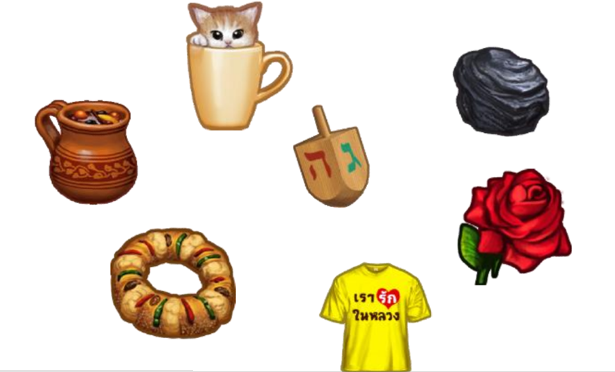
True to its international reach, hi5 is taking a multi-culti approach to virtual gifts. They include a Mexican Rosca cake, a dreidel, and a steamed pork bun. Don’t ask me what culture values rocks or finds cats in cups to be tasty (see below). Each virtual gift costs 80 coins, or about $1.

Hi5 is claiming to be the “first major social network to launch its own virtual currency.” But Facebook has been selling virtual gifts for a long time, even though CEO Mark Zuckerberg won’t talk about how much they are bringing in. Each virtual gift on Facebook also costs $1, and you buy them with 100 gift credits. Facebook’s gift credits are no different than hi5 coins, other than they are not as shiny. They perform the exact same function.

In the future, however, hi5 members will be able to buy other “premium goods and services” with their coins.
Advertisement

Responses

Comments rss icon

  • I just don’t understand it. Has anyone here purchased a virtual gift? If so, why?

    • Like you Tim, I dont understand … Can someone explain what’s the motivations to buy virtual gifts ?

      Is this (only) the pubic recognition of spending $X amount of money for the purpose of giving a gift to someone ones like ?

      In the real life, you spend money for gifts which are concrete. You can buy drinks, you can offer entertainment activities.
      In the virtual sphere, is there an enjoyment to own virtual gifts or is this purely the public image that come with it ?

      My question is not ironic, I really try to understand.
      Thanks for your answers!

      • Hi Babou,

        Apparently, some virtual gifts are worth paying for. In fact, I may consider myself in a gift business (you may visit my website for more info, but I am not going to talk about my business here as it may sound spammy). Based on my experience, people do purchase digital gift if the perceived value is beyond the money they are paying for.

      • Hi Tim,

        As a co-founder of dating site I can say that virtual gifts work very well for dating sites. We get 5 percent of our monthly income from virtual gifts. People -especially men for sure- like to get attention women they interact with some other things besides messages, winks… But I am not sure if it works in the same way for social networks.

    • more proof, just because you can do a thing doesn’t mean you should.

    • virtual gifts are dumb

    • There are idiots in this world and some how some of these idiots have money to spend on imaginary gifts that hold no value.

    • This has been done for a few years now on facebook. all the gifts are $1 and YES people do it. Why? I have no idea? Too much money? Not enough sense? Who knows?

    • OK, here’s what everybody who says “I don’t get it” isn’t getting:

      Virtual gifts aren’t replacements for real gifts. VIRTUAL GIFTS ARE REPLACEMENTS FOR GREETING CARDS.

      In other words, a virtual birthday cake isn’t replacing a real birthday cake, it’s replacing a birthday card. The virtual gift is $1 of cheap, prefabricated sentimentality, just like a card one would buy at the corner drugstore.

      So really the question isn’t “What’s the point of a virtual gift?,” it’s “How is Facebook making so much money off virtual greeting cards?” Online cards haven’t traditionally been considered a big moneymaker.

      The secret to their success (as others here have hinted) is that virtual gifts are more public than e-cards sent to a recipient’s e-mail box. Apparently, people are more willing to spend the $1 on a greeting card when they know all their friends are going to see it, too. Looking generous makes people spend money.

      I think you have to give some props to Facebook for this one. They saw a hook for e-cards that none of the actual greeting card companies did.

  • Gaia Online has had its own Virtual Currency for aaaages.

  • Maybe it’s just me but all this talk about virtual gifts being a legitimate monetization strategy seems pretty lame to me. I can see how it can make a couple bucks but definitely not anything substantial. Realistically, I think the best use for virtual gifts would be for non profits like when Facebook sold the pink ribbon for breast cancer awareness or if the Armstrong foundation sold there yellow bracelets (I don’t know if they do or not already).

    Peter Epstein
    http://www.thewebwar.com

  • hi5 has 56 Million Uniques. If half a percent all bought a virtual gift once a month, that’s $3.36M/year. And that’s just a starting point. Sounds legitimate to me.

  • I am impressed by the level of innovation going into monetizing. Hi5 really is the future. I am going to log into the account I have not touched for over a year, and buy everyone I know a virtual gift, with the money I don’t have. Didn’t / Don’t FB do the same? Why spend $1 buying someone a virtual beer, when you can buy a real one for $2? Crazy, and crap too.

  • I think they should sell real things of value, like groceries or tp.

  • What is wrong with all these web companies? The best they can do to make money is to copy a pretty lame idea from facebook?

    This is like GM deciding they are going to turn a profit by allowing car owners to pay $1 for the ability to put a bumper sticker on their POS chevy astro. Sure they might make a few bucks from soccer moms but they could just make more money by holding a fund-raiser car wash at the local Taco Bell parking lot.

  • everyone talks about creating alternate revenue stream besides online advertising. But in tough economic times like we’re having now, why would anyone be wasting on virtual gifts or for that matter, want to buy or subscribe to anything. So what’re the alternate revenue streams?

  • Virtual gifting does work on both mobile and PC based services, Habbo Hotel is a great example of PC based virtual gifting service.

    Our site MOKO.mobi is completely integrated across both the mobile and PC device and we also offer a points based system, users purchase a bundle of points to redeem against premium activity like private media messaging, private chat rooms, and slaps & tickles. On mobile these are billed via our direct carrier billing relationships, usually per event, typically 0.50c. On the web we bill via PRSMS and sell point bundles of 300 points for $3.00.

    We are seeing 12% of our PC base purchasing a monthly recurring subscription for the point bundles, and on mobile we see across our global user-base 3.80 private media messages per user per month being bought. So yes virtual gifting/features can work when offered as mirco billing events.

    The key is injecting value into the system to ensure users are having fun, while getting good value for their purchases.

  • Virtual gifts don’t seem like a sustainable revenue stream. Facebook has free gifts available & I have never thought about purchasing gifts from any site.

  • Hey Eric come on over and we will serve you and your friends up a Virtual Cocktail, on the house.

  • Does Obama will raise taxes on these coins, too?

  • Virtual gifts are huge in northern europe. Local social networks generate loads of money this way. There has never been a possibility to send free “heart”, “hug” or “flower” to your friends, thus, people buy them.

  • You guys may hate me but I bought virtual gifts on hi5 and facebook before. I spent about $23 in all. Facebook gave me a $5.00 extra credit to give virtual gift. It was an interesting experience and the person receiving the virtual gift thanked me. It felt good. Even though it’s not mainstream now, just how selling virtual swords and stuffs like that, it will be and should be.

  • Is this seriously the extent of the value added by these networks? I have never seen anything that stinks so badly of desperation and bubblethink.

    If advertising is failing this miserably we need to seriously rethink the entire value proposition of these networks, because there may not be one.

  • I have been wondering when Facebook is going to do this. I log into my account with 50 requests for things like this. I bet it’s not long before Facebook starts charging too.

  • I wish someone would give me a virtual job that would pay me real money!

    This will work enough to net a few million $$ per year. Thirteen year old girls from Brazil and the boys that court them will definitely use this.

    I say keep making chicken salad out of chicken poop hi5 and keep up the good work!

  • Virtual gifting is certainly something we’ve included in the micropayment system (and we already provide badges and the like as recognition and rewards for community participation). It is certainly revenue, especially in a marketplace of millions of users, but communities deliver actively engaged participants, there is more value there than a $1 or so in gifts.

  • whats that smell…. desperation? It is! Its the smell of desperation and clammy hands because you never had a half decent thought over how to make money with your also ran website.

  • Given the previous post, i have thought these possibles justifications for the need of virtual gifts, knowing that gifts have an intrinsic intangible value and being that value more important that the material gift itself:

    1- Recognition form one person to another
    2- The fact of being recognized/perceived appreciation from another person
    3- The value of giving a gift, because what matters most is not the gift itself, but the act of giving something to another person

    As you see, it relates with one’s need to feel recognized and the need to express yor interest in another person. This concept is related with Maslow premises. So it may seem stupid now, but it can have long repercussion in future generations whose behavior could be even more influenced by marketing campaigns than millenials and Gen Y’s have been.

    And you can generate virtual currency and “real” capital out of nothing like banks do with loans and deposits. Watch out with this one ! kind of dangerous may be.

    Well, future could hold some really cool concepts for monetization on web 2.0 . Let’s be open to new kind of ideas that at first may seem somewhat crazy

    Marcos Lambolay

  • Didn’t facebook have something like this already but the number of gifts were limited?

    Facebook should charge for collaborative gaming apps like scrabble, chess, pool or whatever. But too bad they opened it to 3rd party developers to take advantage of.

  • I am missing Adriana Gascoine from Hi5 telling us all how cool they are, how great the company is, how innovative this idea is, how internationally-minded they are, how many millions users they have, how well they understand the international audience (ha!) and how they are dominating the market in portugal and philippines.

    • I’m from Portugal and indeed they dominate the social networking here, unfortunately. It’s always been a crappy website, and they just keep on copying every facebook feature and implementing it in a really ugly way. And how depressing is it that portuguese teenagers see hi5 as “the internet”.

    • Snideness aside, philippines would be Multiply.com. They got a 15 million USD investment from the main filipino broadcaster. 15 million would represent the entire lifetime earnings for both your parents had they lived and worked about 5 lives back to back, douche.

  • Virtual gifts is so yesterday! Facebook has done it and I’m waiting for the next best thing.
    Sorry hi5, you’re going to have to come up with something more than virtual gifts to entertain me.

  • I agree with you carreralee, one thing I don’t get, is that the world is facing a global recession, why on earth would virtual goods be in viable.

  • Let’s celebrate this post for what it really is. A successful job by Adriana Gascoigne on getting a product that has already been done by Facebook, and covered by TechCrunch, into another story for Hi5 on TechCrunch. Not an easy accomplishment.

    • I really don’t see any reason to celebrate, so hopefully this will remain in the confines of techcrunch and not make the real news…

      I think there was a post by the infamous Loiq le Miur about how he thinks PR sucks and startups don’t need to have PR people… not that I believe in anything that guy says, but since Techcrunch celebrates everything he does/says, I thought it was worth mentioning :-)

  • Virtual currency for online payments has been tried for nearly 15 years now, and its failed every time. Let’s face it… no one has confidence in currency that isn’t backed by anything except faith in the issuer.

    … like the US Govt’s dollar. :D

  • The Korean version of cyworld does this, you can either buy scences, characters, shoes, music all for your virtual world, and of course you can gift them to your friends…. Cyworld has done this for years, i never understood it, but I guess a sucker is born every day…

  • In Japan Mobage-town and Gree became quite successful after introducing virtual currency & gifts, generating hundreds of millions of revenue.

    In those services you basically acquire virtual currency by clicking on ads or buy real products thru their EC sites though you also have an option to buy virtual items by real money.

    Younger kids seem to be so much motivated to differenciate their avatars from friends and are crazy about getting currencies. So the click-rate of ads is quite high on these sites.

  • In the next few quarters you will see virtual gifts becoming core components of every social network, just as the activity feed has become.

    A social network is just a sum of interactions between people (friending, messaging, commenting). Virtual gifting is just a premium way of interacting.

    Of course, its not for everyone. But can it be a successful incremental source of revenue? It has worked for facebook and hotornot. (Remember the $10 roses?).

    People are still social animals. Even in down economies, people have the need to socialize and find entertainment.

  • I never thought virtual gifts would get far. I think dating sites will probably do the best with them by marketing to the most desperate people on their sites. Other than that, I think they would be big in Japan. Isn’t the entire Japanese economy and culture based upon virtual gifts and cell phones?

  • We’ve got a pretty interesting company that helps big virtual worlds and social networks sell high-value virtual goods based on pre-existing IP. Our catalogue includes Justin Timberlake, Tila Tequila, Paris Hilton, Snoop Dogg and Elvis Presley. If you just think virtual goods are dumb, then you won’t like it. If however, you think that virtual environments and social networks are places where teens experiment with identity, then you might like it. http://www.virtualgreats.com

  • hei men i liked hi5 :X is nice

  • slt la bande de kaloloteur et kaloloteuse je suis nouvelle est je suis ici pour me faire des amie je vs fait de big bisous la sorp

  • I don’t know why but I noticed all the comments on techCrunch seem to be on negative nature…wondering wtf is wrong with people here.

  • You also have to remember that 2nd Life was doing fake commerce with things (even though they were not using coins or anything like that) as a part of their income coming from it as well.

    I’ve also noticed some of these social networks starting to run Affiliate Offers now to, or are trying to get Affiliates to buy ad space through them as well.

Leave Comment

Commenting Options

Enter your personal information to the left, or sign in with your Facebook account by clicking the button below.

Alternatively, you can create an avatar that will appear whenever you leave a comment on a Gravatar-enabled blog.

Trackback URL
bugbugbug