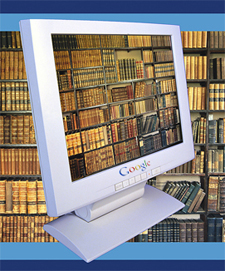
 The Authors Guild and the Association of American Publishers, on behalf of a broad class of copyright holders, will join with Google to host a teleconference today to discuss a settlement agreement that would expand online access to millions of in-copyright books and other written materials in the U.S. from the collections of a number of major U.S. libraries participating in Google Book Search.
This concerns a class-action suit brought by the Authors Guild and a separate one filed by five large publishers as representatives of the AAP’s membership. The Guild had sued Google in September 2005, after Google struck deals with major university libraries to scan and copy millions of books in their collections.
Roy Blount Jr., President of The Authors Guild, writes:
The settlement, which must be approved by a federal judge before it takes effect, includes money for now and the prospect of money for later. There’ll be at least $45 million for authors and publishers whose in-copyright books and other copyrighted texts have been scanned without permission. If your book was scanned and you own all the rights, you’ll get a small share of this, at least $60, depending on how many rightsholders file claims.
Far more interesting for most of us — and the ambitious part of our proposal — is the prospect for future revenues. Rightsholders will receive a share of revenues from institutional subscriptions to the collection of books made available through Google Book Search under the settlement, as well as from sales of online consumer access to the books. They will also be paid for printouts at public libraries, as well as for other uses.
The settlement is still subject to approval by the U.S. District Court for the Southern District of New York.