ScanLife: Barcode Scanning for the 21st Century and Beyond
by John Biggs on July 8, 2008

In the grand tradition of UPC codes and CueCat, ScanBuy/ScanLife is attempting to barcode the world. Their mission: to allow companies and individuals to place small barcodes on their publications that are readable by over 70 phone models including an upcoming application for the iPhone.

The 2d barcodes - meaning that unlike standard barcodes they are read in both the X and Y axis - can trigger menu events, download content, lead you to a website, or create a contact or calendar entry in your phone. They currently appear in outdoor ads, some magazines, as well as transit schedules in Europe. The program is actually compatible with multiple types of codes, ensuring international compatibility.

ScanLife wanted to offer TechCrunch users a chance to create their own EZCodes for placement on business cards, documents, and tattoos. You can download the application by texting SCAN to 43588 (U.S. only) or visiting www.getscanlife.com in your phone’s browser.

You can then get your own EZCode by visiting this link and typing in the invitation code techcrunch. One thousand invitations are available under this code.

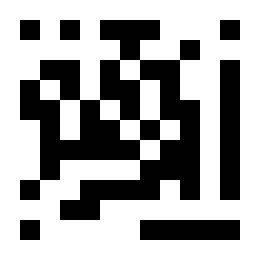
The company, founded in 2000, is dedicated to making 2d barcodes a mainstay of the modern experience. Current ScanLife users can scan the barcode below to receive a special surprise.
Comments

The Japanese have been doing this for ages - and it’s really quite cool


Someone please share what is the surprise on that bar code. Else I won’t sleep tonight.


Nothing new. In Japan those “barcodes” are already on student business cards with URL links to their facebook page (got one card in Beijing).

In Germany we use these codes for all kind of things: packages, train tickets. In 2006 I saw the first public advertisement using this technology with access to the products webpage.

Main hindrance in Germany however is the accessibility of internet via mobile phones, i.e. the costs which are still incredible high compared to flatrate offers in Japan or other countries.


@1 digitalhen: yep, QR codes were created in 1994. http://en.wikipedia.org/wiki/QR_Code


Why doesn’t someone tackle the problem of how to read regular barcodes with a camera phone. You know, the bardcodes that are on EVERY product sold. That would be handy. Using a new barcode format requires massive change. Change is hard. Harder, I think, than cracking the problem of reading existing bar code formats.


Sweet I want this. Getting it asap.


@ NoOneImportant “Using a new barcode format requires massive change” - It doesn’t, barcodes have a pretty short shelf life so it would not be too hard to adopt a new standard.

Scanbuy has massive potential, especially for local search. Imagine being able to scan a barcode with your phone then get a list of all the local outlets stocking it along with the prices. The effect on the market would be huge.


1D codes (ISBN, EAN, etc) can generally only be read by camera phones with a macro focus option or auto focus. Few phones are being sold with these features yet. 2D codes can be read (generally) by most camera phones which are being sold today (provided they have the right software on them)


Video looks cool, but I just tried it from my iPhone and the list of phones on the page they send you by SMS does not include the iPhone.

Looks really great, but as the boss of the candy factory (Truly Scrumptious’ father) said to Dick Van Dyke in Chitty Chitty Bang Bang after he blew his chance at making a good first impression: “Time’s up. Had your chance. Muffed it.”


One thing to note is that the 2D barcodes people are talking about that have been used for a long time in Japan is not EZCode, but QR Code. This is a proprietary format, which can only be encoded through this company, and can only be read by their software. It also does not encode data itself, but an ID which has to be resolved against their server. There’s no offline access, or access that does not involve a dependency on ScanBuy. QR Codes and Data Matrix have their own pros and cons but are open formats that can directly encode data, and are the ones typically read by reader software out there.


Misleading to use an iPhone image to infer that ScanBuy/ScanLife is available on the iPhone - of course, once the iPhone Apps store is launched there maybe a specific iPhone application


Scanlife should allow you to create an unlimited number of codes - what is with this “three to a customer” limit?


Between this and RFID, there’d be pretty interesting “information overlays” on top of the real world.


SemaCode out of Waterloo, ON (Canada) does some really cool stuff around the same thing. They have a really slick Facebook application available for a lot of phones.

John Biggs - you should really check them out: http://semacode.com/


Uh duh. Way to catch up. Too bad their business model sucks, there are already open source solutions, and this technology is minutes away from being outdated (see: Google’s coming image based version of this).


Great technology, now can you build a true going concern. Great tech without a business model - one that is truly scalable - does and means nothing. Scanbuy has a true poultry (chicken and egg) problem. Also, get this. Changing consumer behavior is a bi*ch. Why do think you it’s been in Asia forever and not here. Everyone “Everyone” Everyone – if you don’t make money – you wont be around.


Oh great, ANOTHER 2D barcode standard that nobody asked for…

Let’s stick with QR or Semacode, please! More info here: http://tinyurl.com/5p3rkz


@Robleh
I am referring to the bardcodes that exist on products on the shelf. There are many interesting applications for using these existing codes…and replacing these is indeed a massive undertaking. The existing infrastructure is entrenched.


Careful, on my BB Pearl I figured it’d be as easy as opening the app & scanning away. Not so– on the pearl you have to change image size to “small” or the scanlife app hangs the phone.

Hope this startup takes off– anything’s better than finding a pen & napkin to write down a flippin phone number :)


I agree with NoOneImportant. I have wondered ever since I started seeing QR codes popping up - why can’t users simply MMS the image to a server that processes the barcode and responds appropriately with a text message, rather than requiring the user to download an app?


@NoOneImportant The problem with that is how good the camera has to be (and it requires alignment, focus, etc) - we need something more user-friendly.

They have also done it in Ghana, using a Semapedia graphic. It opens up a whole new World of possibilities for users and marketeers.


And why exactly should I, or any other consumer, care? Come on TechCrunch.

Oh yeah, I remember… I was up all night wishing I had the ability to scan propriety codes with my phone, because those codes aren’t in use anywhere I care about. That was it.


Much prefer Qr codes, least their openess. Don’t understand why anyone would want to reinvent this again. Nokias come with a bcode reader these days. now if I want ot use their codes I have to go and install another one…. not cool IMHO


iMatrix from http://www.imatrix.lt/ - has been around for months for jailbroken iPhones and supports: QR Codes, Data Matrix (Semacodes) and even ShotCodes, they will shortly support Aztec, EZCode and BeeTagg - its a robust application and bound to get better with the full iPhone 2.0 release. I have been using machine type codes for years in the mobile space for enhancing location based services and its good to see its finally catching on in the mainstream in North America.

Each of the different formats and companies deploying them have all had some unique offerings, and variations on locking you in to their format, or monetizing it in some fashion. However, if you look at the growth over time and adoption of each of these technologies, its very clear to see that the most open and transparent offerings like Semacode are the ones building the largest user base, and offer the most value.

A killer app like iMatrix that can read all of the formats and provide value in doing so without restricting you to just one format, is going to help adoption.

I have a personal wish that some of the original IP and features of ShotCodes back when they were called SpotCodes when it was still being developed by High Energy Magic/University of Cambridge - were things like telemetry tracking and other data that provided realtime 2 way feedback once you “locked on” to a target - it was really compelling and allowed for interactive experiences with the codes, above and beyond the simple transmission of ID’s and small amounts of data. A user could physically “lock on” to a code, and then manipulate their phone while maintaining a lock, and the phone could transmit data to a nearby bluetooth server, and simultaneously receive back additional data from the same server or device. It allowed for some very interesting prototypes and user experience.

For another one of these machine code companies to really break out, they are going to need a ubiquitous client, the ability to make their codes without any licensing agreements or lock in/tie in to their backend, and they will need to up the bar to add features like what the ShotCode guys originally had - otherwise they simple wont get very far in North America with such a splintered and diverse market of devices, carriers and consumers.


QR Code is open and better!


As many others said: “Who needs another 2D Standard??”

QR-Codes totally offer what you want and there are many services that do great stuff with them like
http://www.semapedia.org/
http://www.snappr.net
or http://www.emmacott.com

I must say I like these ‘community driven’ and more standardized services waaaay better


Haven’t used these codes till now.. But I am sure that this will be the future. The mobile handset manufacturing companies will quickly adapt to introduce the scanning facility - once they feel that it will create value addition . Remember , few years back, even phones with camera were considered premium?


QRC (quick response codes) have indeed been used a lot in Japan and accompany a lot of advertising. Some posters are made up entirely of QRCs in different colours that you can photo and get data.

One of the best implementations I’ve heard of is that QRCs were placed in retail stores and allowed shoppers to visit the relevant product page on amazon.co.jp to compare pricing and other information.

I don’t know where the incentive for the shop is there but it sounds cool.


@NoOneImportant Regarding the 1D barcode problem, most of the points raised are valid. The problem has been the quality of the camera modules in mobile phones. Traditionally, there have been 2 solutions, either increase the quality of the camera or change the barcodes (this is Scan Life’s solution). As experts in camera phone imaging, we took on solving the 1D barcode scanning problem, our company Realeyes3D recently made a breakthrough in decoding a 1D barcode with a VGA quality camera phone. Our solution can be used to decode 1D or to enhance the success rate of 2D barcode scans, in that regard it could be used in conjunction with a solution such as ScanLife. Here is a post on the subject. - http://blog.qipit.com/2008/01/.....ra-phones/


@7 You have got it right.

I’ve been thinking lately that it’d be great to have a product comparison/rating system as well. You could scan, say, ZipLock brand “Zip and Steam” bags (for steaming veggies in the microwave) and see if they actually work, or if it is just marketing (they do work, btw.)

So yes, the ability to scan a product, have customer reviews, and perhaps the ability to find it at other markets, though that may be difficult to orchestrate. The recommendation system only requires a unique ID for each product, which is exactly what a UPC is.

And finally… the next pickup line:

“Can I scan your barcode?”


@Clayton
When it comes to product reviews and search at other markets i think the guys at Snappr.net do a good job. Even though they are still in beta they have a quiet good product comparison/price comparison/shopping page for mobile devices. See http://tinyurl.com/5czfc4

You can not scan the 1D barcode there with the cam (due to the problems Conrad - @29 mentioned) but entering a numeric-only string on the mobile is quiet fast and i guess they are getting even better with their stuff when time comes.


It should be noted that:

Scanbuy’s indirect resolution process, which they use for their proprietary EZcode, is infringing on NeoMedia Technologies’ core patents.

Indirect encoding (patented by NeoMedia) is the process of linking the target information to an index (364528 for example) and putting that unique identifier into a 1D UPC/EAN or 2D barcode. The code reader on the mobile phone reads the barcode and sends the code data over the Internet to a central resolution server that will tell the mobile phone what action is associated with the index, i.e. access a URL, download media, initiate a phone call, ect.

NeoMedia Technologies has a suite of twelve issued patents covering the core concepts behind linking the physical world to the electronic world dating back to 1995. These patents cover various linkage methods including: Barcodes, RFID, Mag Stripe, Voice, and Other machine readable and keyed entry identifiers.

http://neom.com/13.html

NeoMedia brought suit against Scanbuy for patent infringement. Litigation has been ongoing.


In order to scan 1D & 2D barcodes, users can download the NeoReader, which is a free mobile code reading application.

Based off the award winning Lavasphere technology developed in Germany by Gavitec, the NeoReader features NeoMedia’s patented resolution technology combined with Gavitec’s ultra-small footprint and platform independent algorithms. It is able to read and decipher all common non-proprietary 2D codes (Data Matrix, QR, Aztec) as well as URL embedded 2D codes and all 1D UPC/EAN/Code 128 open source codes. The NeoReader supports direct and indirect code linking, which guarantees maximum interoperability with already existing platforms like 2D Data Matrix Semacodes, and Japanese QR links. This allows the user to click on a variety of codes with a single application installed on their mobile device.

The NeoReader ushers in and inaugurates a brand new era of innovative mobile enterprise and optical code reading solutions for the wireless industry. Visit get.neoreader.com to download the free application, and instantly transform your mobile phone into a universal code reader.

http://www.neoreader.com


Ditto… its not new. Check these 3D barcodes out that have launched in Singapore Feb2007

http://b-side.com.sg/blog/2007.....apore.html


You may find this also interesting:
http://blog.bryton.hu
(realtime mobilecode recognition running on iPhone)


Citysearch and Antenna Audio recently deployed ScanLife codes in San Francisco.

Bar codes create bridge for window-shoppers
Ryan Kim, Chronicle Staff Writer
Thursday, March 27, 2008
http://www.sfgate.com/cgi-bin/.....LVQQOB.DTL


What ever happened to RFID anyway?


I had my friend download the ScanLife application to his iPhone so I could give it a test drive.

For starters, the application can only read and decipher proprietary EZcodes. Unfortunately the ScanLife application offers no support for 1D UPC/EAN barcodes, or Data Matrix, Aztec, or QR codes. This is the major downfall of the application, since it only supports one proprietary 2D symbology. As a result, ScanLife is not a true universal code reader.

For those wanting a much more intuitive mobile code reading experience, I highly recommend the NeoReader application from NeoMedia Technologies. The NeoReader is able to read and decipher all common non-proprietary 2D codes (Data Matrix, QR, Aztec) as well as URL embedded 2D codes and all 1D UPC/EAN/Code 128 open source codes. The NeoReader supports direct and indirect code linking, which guarantees maximum interoperability with already existing platforms like 2D Data Matrix Semacodes, and Japanese QR links. This allows the user to click on a variety of barcodes with a single application installed on their mobile device.

Download the NeoReader and instantly transform your iPhone into a universal code reader.


Too bad ScanBuy is trying to force their proprietary EZcode on consumers. Who wants multiple barcode readers in order to read multiple codes? That’s too complicated for me to keep track of different barcode readers. I like that Neoreader application. I installed it on my iPhone and it reads mutiple codes and could not be happier.


Leave a Reply

Create a Gravatar for your comments.
« Back to text comment