AppLoop Tracks iPhone Users, Advertises Accordingly
by Calley Nye on July 1, 2008

With the launch of the new competitively priced 3G iPhone just around the corner, there has been a lot of speculation about the effect it will have on the mobile market. Since the iPhone has released its SDK, and added GPS capability, it is an opportune time for third-party companies and developers to take advantage of the possibilities that GPS offers. Throughout it all, venture capitalists have been pouring money into mobile-based solutions and analytics, and advertising platforms have been working to extend their reach to the iPhone and other handsets.

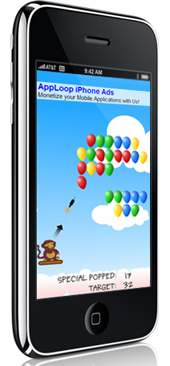
AppLoop is a startup launching today that will provide developers with a self-service platform for tracking mobile application usage and distributing ads on top of these apps. It also claims to be the first ever real-time, location-based mobile ad network. By leveraging the iPhone 3G’s native GPS capabilities, AppLoop will tell when a consumer is close to a specified business address and then serve up ads for that business accordingly. This enables businesses and restaurants to attract nearby consumers to their location with promotions, coupons, and discounts.

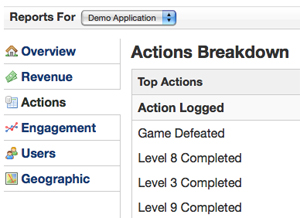
In addition to tailoring ads to locations, AppLoop offers developers a comprehensive set of statistics for developers to track usage, location, and session info. It provides custom action logging, which makes it possible for developers to track which of their features are used most often.

AppLoop provides location-based usage and session information so that developers can track how often and how long people in each region are using their applications. These capabilities potentially allow for better advertising opportunities and could also deliver greater insight into how to design marketing campaigns.

An advertiser dashboard can also be used to create ads and target consumers based on region or proximity to a specific address. It also offers an option for advertisers to filter by which types of applications they want to advertise on.
Mobile advertising, specifically location-based enabled advertising, is a big market. eMarketer reports that mobile ad spending will reach $5 billion this year alone. Most major ad networks are attempting a mobile web or application advertising platform, but few have hit on anything successfully, thus far. It seems logical though, that in such a competitive marketplace, the big dogs will be the ones to take over. They have the resources, users, and trust, to be the go-to ad network of choice. But it won’t stop companies like AppLoop from trying.

There are currently several competitors in the iPhone advertising space including Pinch Media, a startup that recently launched its initial set of tools for iPhone SDK developers. Pinch Media offers a similar iPhone analytics toolset to AppLoop, including a geographically-based set of statistics with usage and session data. However, the Union Square Ventures-backed startup does not yet offer custom action logging or an ad platform, though have signed up advertisers for an upcoming release.

AppLoop’s closest competitor is Smaato’s Open Mobile Advertising Platform (SOMA), which offers advertising and analytics for mobile applications, but do not offer location-based ads. Other mobile advertising networks include AdMob, Ad Infuse, and mKhoj.

Comments

Mike: Nice writing here: Competition, market valuation, basic strategies, a bit of a SWOT analysis, everything is covered in a short write-up. Pls. keep that one !


I laugh at the line “competitively-priced.” $599 for current customers doesn’t exactly have competition on the brain.


I think we’ll soon learn whether location-based advertising works well or not. My guess is not.

1) You are already on your way somewhere. An ad would not make me nor anyone else who I know change their plans.

2) It would take mass adoption from local businesses, otherwise the ads are few and far between. It will take years for this kind of adoption.

3) Best case scenario, this is for people out window shopping already. But see #2 above. And if they are out window shopping, most businesses catering to that crowd are already displaying store front display ads.


p.s. I’m making an ad block app for the iPhone downloadable for $1. Just in case I’m wrong. ;)


This is the exact feature I proposed in this post on how the 3G iPhone could be the basis for new Mobile Social Networks. http://www.nurdz.net/2008/06/1.....-networks/


who pays for the data upload download involved in this??


jason, agree … would be great for astral traveling, maybe walking, but for driving and parking? no way. after petrol is 10 bucks a gallon, maybe


@4

Jason, Don’t you know multiple applications can’t run at the same time?! In reply to your first post, I have to disagree (I think most founders would :] )

I do agree with the statement that local businesses will not immediately adopt location based advertising. If that was the only form of advertising we supported, it would be tough to gain adoption. This is why we also support globally/country targeted ads (like traditional mobile-web advertising companies [admob, etc]) so ad-density in a given area wouldn’t be as much of a problem.


I just think how much those adds will cost from my bandwidth? Here in Brazil, we pay for how much megabytes we use… so…


This is great. When I’m traveling and looking for restaurants to grab dinner or a bar for drinks, I’ll have advertisers pointing me in the right direction. Doesn’t mean that I’m going to act on the ad, but I’m willing to be that if you’re paying for advertising that you have your act together. Not quite a personal recommendation, but could be useful.


Proximity seems like the key to mobile advertising, but Expressed Need and Proximity is the grail. Here’s how it should work:

Let me create a list of criteria, tags, that define what I’m looking for. Regarding food, I like organic, fresh, vegetables, fruit, sushi, and pasta. Show me the nearby restaurants that fit my needs, their menu, today’s specials, prices, the interior and exterior, and the current wait. Don’t you dare waste my time and bandwidth with coupons for something I’m not interested in.

With other shopping, again show me what is nearby based on what I need. Return my search as stock available nearby, or work from a list I’ve created previously (maybe bookmarked while online the night before). Then create an efficient route for me (hey, I’m a guy).

We have a way to go before we’re beyond the perspective of the advertiser and into fulfilling the actual needs of users. I hope we get there fast.


A great bartering tool.

This would be great to use to bargain with the business you are at. You could log on and tell them that “so and so” down the street is offering your same stuff for 20% off.


Alternative title to this article -

“Another Reason I Won’t be Trading In My Current iPhone.”

Techcrunch, you are great, and my comment above is in no way negative toward you.


@12
We very much agree. However think about what you would make first if you were trying to build on that idea. Would it be a specific way to find/compare groceries or would you first build a basic ad network and then add on specialized products/search as you gain distribution? My guess is the latter.


Isn’t use of location data expressly probitied by the carrier and perhaps the Apple SDK? In the MMA guidelines, consumers must “double opt in”…a fairly onerous process. Is this the same?


I don’t know how you guys can reprint: “…AppLoop will tell when a consumer is close to a specified business address and then serve up ads for that business accordingly.”

This is a dead on arrival method of marketing. You know nothing about the user and will only annoy them. The consumer is in charge in 2008.


@17
How relevant do you find ads on the side of Facebook, where the consumer is in charge? Do pictures of your friends make the ads more engaging.. or more frivolous?
The consumer doesn’t want spend money when they are “in charge”.


@18

Eric, if your mission is to “make ads not suck”, doesn’t the comment

“The consumer doesn’t want spend money when they are “in charge”.”

somewhat contradict that noble goal? If the consumer doesn’t want to spend money, then any attempt to force it upon them might be construed as a giant sucking sound ;)

Either your service provides a better match of a consumer’s wants/needs to an advertiser’s product or service, or it doesn’t really accomplish that laudable goal.

I’m still not convinced of the legality/ToS regarding sharing a location with a 3rd party like an ad network. If I use Loopt or Google Maps, I expressly give them consent to use my location. But an ad network doesn’t give me any service directly, so I’m not sure I want my location tracked when I’m browsing mobile RSS feeds or mobile iPhone games. I certainly would want to be able to know when my information is being shared, and to whom it is going to.

If ATT were to disclose this, I believe it is a violation of FCC law. Or at least MMA best practices.

(And tiny text with a check box would not be a good way to give me control over the use of my data! Like Loopt, I would want to be able at any time control who has access to my location. )


Heard of AdLocal?
I found this Japanese startup called “Cirius Technologies” that’s doing GPS location-based advertising long before AppLoop.
They actually say they have the world’s largest local ad network.

Services are in Japanese but they got a website in English.
http://cirius.co.jp/en/service/


Leave a Reply

Create a Gravatar for your comments.
« Back to text comment