The Long Decline of the Music Album Continues
Erick Schonfeld
26 comments »
The music industry can’t stop the hemorrhaging, even with the help of digital music sales. Despite a nearly 45 percent surge in digital music sales last year, overall album sales in the U.S. still declined 9.5 percent, according to Nielsen SoundScan. (It counts ten digital tracks as an album). Some stats:
- There were 500 million CDs and other physical albums sold last year, and another 844 million digital tracks (or 84.4 million digital “albums”).
- That compares to 588 million digital tracks sold in 2006.
- Digital music accounted for 23 percent of all music sales in the U.S. last year.
Did we mention that the music industry needs to change its tune?
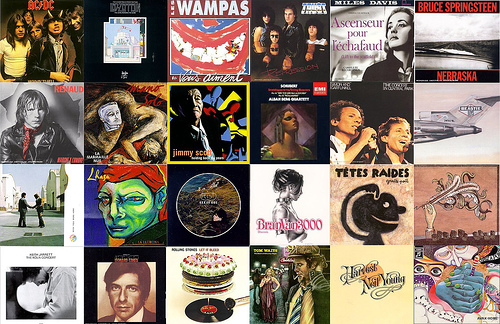
(Photo montage via Mr. Delgoff).


Good! — Hopefully the Labels will die with the album.
I hope so. I totally support Independent Music.
Die Labels, Die!
I still prefer to purchase CDs though. This decline of music CDs will be very gradual indeed.
I listen to pandora, and buy the really good stuff via their links to amazon. I get awesome music I would have never heard of otherwise, and buy cds at all!
It’s a win-win.
But of course, they don’t see it that way, now do they.
I still prefer to purchase CDs as well, but more and more I rarely do because of the “only a couple good songs” thing. I buy those online for a couple bucks, rather than blowing $15 to buy a CD of songs I won’t listen to.
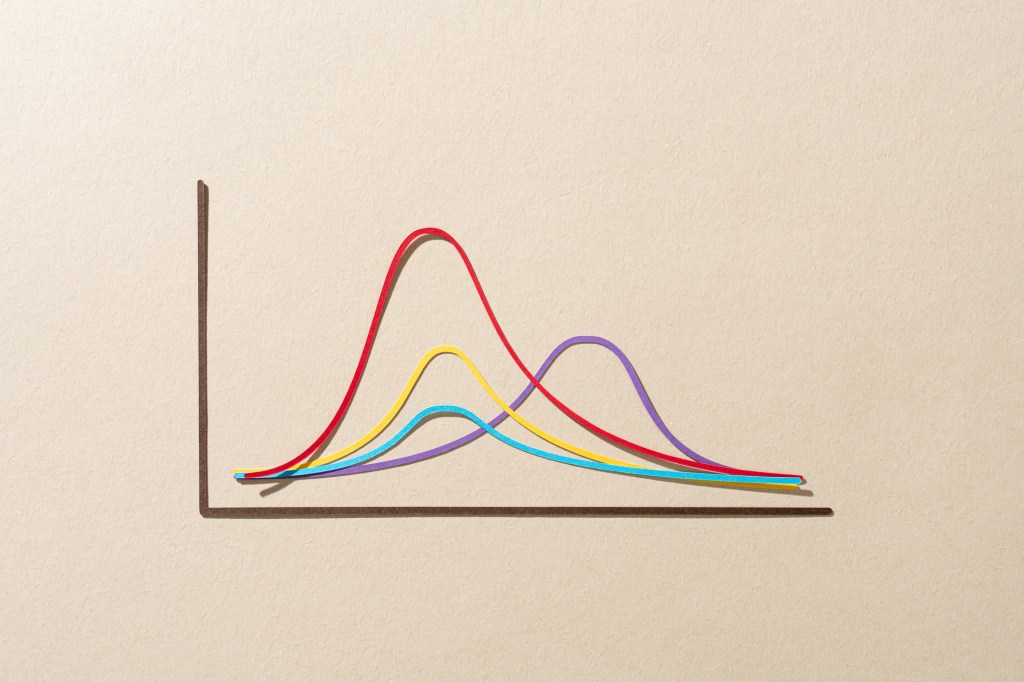
This is a bit misleading, though, isn’t it? It’s only the majors, who can be measured easily, that are seeing such a decline. The Long Tail philosophy suggests that the industry is likely growing, but that the growth is distributed through out the curve, with the tail thickening, even slightly. Yes, the majors need to change their tune, but one would hope the theme in this forum would be “look at the growth in digital music!”
This is a sad realization that the majority of people do not care about music quality. They’d rather download low quality rips, instead of moving towards “high definition” audio standards. I still purchase CDs every week. Even if they are ripped to a computer system, it’s using a lossless.
Who own’s the copyright on those album images?
I’ve found myself recently reverting back to listening to entire albums. Now, anything I’ve purchased in the last 18 months or so was a digital download, but I still like listening to albums all the way through. It’s an entirely different experience that putting the IPod on shuffle play.
The numbers in the AP story seem a bit off (or possibly presented in a confusing way). Using the RIAA’s numbers and the “1 album == 10 singles” assumption, the 2006 unit numbers were:
CD: 6,150.6 million units (614.9MM albums, est. 1.6MM CD singles)
Digital: 862.4 million units (27.6MM albums, 586.4MM single tracks)
So it looks like the 588MM digital tracks in 2007 that they cite is singles only, which makes me a little concerned about trusting these numbers without seeing a bit more of what’s behind them.
To @Ben’s point regarding “look at the growth in digital music,” here’s one to start thinking about…the RIAA didn’t start reporting on digital sales until 2004 (if you can believe it), but using the same assumptions as above, here’s what you get:
2004 digital: 185.4MM units
2005 digital: 502.9MM units (63.1% increase over prior year)
2006 digital: 862.4MM units (41.7% increase over prior year)
Given that at their peak growth rate in the early ’90s the best year-over-year increase for CD sales was about 25%, I’d agree with Ben that the industry should be paying a lot more attention there.
Anyone who’s interested can download the RIAA numbers for 1990-2007 directly from their site: http://www.riaa.org/keystatistics.php (though the 2007 numbers aren’t available yet).
Yea, the labels and phsyical albums may be hurting like never before…Yet, I fully believe MUSIC is as strong and popular as its ever been before. The accessibility is at our fingertips, and that will only continue to improve. The industry is heading in a different direction and it’s due time for the old guard to take notice.
I believe that the rap community is hurting the most with the impending changes to the industry. A simple beat that just about anybody could construct on a little playset is turning nobodys into somebodys with the ringtones “boom”. It’s not even rap. It’s garbage. Hopefully the quality of rap music will pick back up to when the likes of 2pac, Biggie, Bone Thugs and Jay-z were dominating the charts.
On that note, as much as I love the state of the industry, the biggest downside has to be the decline of the album. I fully commend Jay-Z for pulling his entire American Gangster album from Itunes. Think back to only 5, 6, 7 years ago when Rap albums like Outkast’s Stankonia and Wyclef’s Carnival were full masterpieces! Those albums are not nearly the same now that the younger generation is breaking the full length album (with interlude’s to boot) into the 22 individual singles that they are today. Now, how do we bring that back today?
Ben: Any artist can register with SoundScan. The reporting is tied to the barcode that the artist would purchase and assign to your cd.
Roy: Love Pandora.., its services like this that act as new music discovery tools that will help the independents out a bit as the majors hit hard times and support a smaller amount of artists.
Adam: Pretty much completely agree with you…, music IS still strong and your point about looking back a handfull of years and the notion of “complete albums” is right on the money. It is because of slumping sales, iTunes, and piracy that artists are forced to write their albums to have as many singles as possible that can make it to the top of the charts.
El and Marc: You two are idiots.., educate yourselves on the industry before you comment.
I don’t think saying 10 tracks equals an album is a fair comparison. I would argue that music sales are increasing, the number of people purchasing music is rising. It’s just that they don’t buy ‘entire albums’, they buy just the songs they like. Most people don’t like 10 songs on an album, they may only like 1 or 3 or 5.
Maybe this just raises the bar for the quality of music that needs to be produced now to encourage more single track purchases.
its simply market forces.
Years ago if I liked a song , often the song may not be a single so I had to pay £12-15 pounds uk for a full album. most of the time I didnt want or enjoy the other 12 or so songs on the album.
These days I can choose we songs to go for. These days people prefer to go to live shows more than just buying tracks.
music has evolved from pasive to a more active experience for both the audience and musicians.
Check out peter gabriel the musician. he is at the cutting edge of technology and music . some of the companies he has founded are extremely successfull./
———-
http://www.xenbet.com
———-
besides the bad deal of so many cd’s containing so many useless tracks, i am finding it not comfortable to listen to digitized music…
i cannot explain it, certainly cannot measure it, but more and more lately i am preferring silence…. something in the sample rate, and the mix dynamics… and having to constantly juggle the volume via the always at hand remote…
could be age, could be mainstream recording engineers got their head up their production values
what the point to pay for something that is free else where?
Kaiyzen & Josh - It’s the sad truth. It might make that ONE song great, but take away from the rest of the album. Due to limited money and subsequently, studio time, I wouldn’t be surprised if certain artists focus the majority of their time on producing that ONE great track as opposed to a complete body of work.
10 songs equal an album?? I quess classics like Steely Dan’s AJA and others were not albums then. A number of my favorite albums have less than 10 songs, and some that I regret purchasing have 18+ songs! The key is to stop bitching over things that you can’t control. Give everyone what they want, and then find out what is popular. If folks want to buy an album one song at a time, I say great. Have it your way. Sure, I think you miss out, but not everyone played the whole album in the past either. We would play the popular songs first, then later sit back and listen to it in total. But, not everyone did this, and we survived. I am sure that if a CD is worth buying people will buy it. If you want full album purchases, get it the old way, EARN IT! People are sick of your one or two hit CDs. Some artists will seek the easy way, and others will go for excellence. I have Radiohead’s full package, and it is obvious that they went for excellence here. Gee, I guess it all comes back again to hard work and the quest to be number one. Stop bitching people, and get to work making products people want. Peace.
Since I listen mainly to Jazz & Classical, I tend to listen to a full album.
I only buy CD’s. Mainly used but I did buy 4 new CD’s yesterday from http://www.CDBaby.com.
Sales may have declined this year, but the “decline of the album” started imho about 20 years ago. The days of someone creating a compilation of songs that join together in a certain order to form a greater whole, wrapped in a well thought out package that further intrigued the listener into an audio/visual story is truly what has been lost.
The web as a convenient delivery method for poor quality snippets of an entire “album” has only made this process easier. Much like TV and the news has been simplified down to “snippets and sound bytes”, the art of long form albums has been replaced by quick downloads of individual tracks.
In some ways it is good because a lot of albums contain 1 maybe 2 good songs and a bunch of filler-crap and all the digital age has done in that case has made it convenient (iTunes for example) to separate the good from the filler and pay $2 instead of $15 for the 2 songs that don’t suck. But it is truly sad that the album as an experience is a thing of the past.
I tend to listen to albums only, and don’t care much for individual songs. I think it would help if the music industry would come up with an (open) album file format, that would encapsulate all songs, the order, and some equivalent of the booklet. Wouldn’t that be great?