Here Comes The Google Mafia
by Erick Schonfeld on December 28, 2007

google-mafia.pngAs Googlers get long in the tooth and their stock options fully vest, some are hanging up their employee badges and giving up the free food at the Google cafeteria to try their hand as venture capitalists and angel investors. (That is, if Facebook doesn’t nab them first). Just like the Paypal Mafia before them (Peter Thiel, Elon Musk, Reid Hoffman, Max Levchin, Chad Hurley and Steve Chen, Jeremy Stoppelman, David O. Sacks, etc), these rich alums are setting out to use their Google money as seed capital for a new round of startups.

But there are some major differences between the two mafias. The Paypal group was tightly knit and forced to direct their entrepreneurial energies elsewhere after the sale of PayPal to eBay. And, with the exception of perhaps Thiel, all are company builders first, and investors second. They did not just invest in other startups, they went on to found them—YouTube, Slide, LinkedIn, Yelp, Geni. PayPal still only had a few hundred employees when it was sold. In contrast, Google now has 16,000 employees. It is quite possible that many in the new class of Google investors never even knew each other while they were at Google. And while there are certainly plenty of ex-Googlers going on to found new startups as well, the emerging group of Google angels and VCs seems to be made up more of pure investors.

So who are these people? The growing Google Mafia includes Chris Sacca, Aydin Senkut, Paul Buchheit, Georges Harik, Satya Patel, Salman Ullah, Sean Dempsey, and Andrea Zurek. Sacca just left his post as head of Google’s bid for wireless spectrum and WiFi initiatives to become a full-time angel investor. Already while at Google, he invested in Twitter and PhotoBucket. Zurek, a former manager for AdWords, is also an angel. Patel, another former Google adverising exec, now works for Battery Ventures. Former deal-makers Ullah and Dempsey are reportedly raising money for their own venture fund.

But the Peter Thiel of the group (or is it the Reid Hoffman?) is former sales manager Senkut. Reports the NYTimes:

Since leaving Google in 2005, Mr. Senkut, 38, may have become the most active angel investor of the bunch, putting $25,000 to $100,000 each in about 35 companies. So far, only two of those were started by ex-Googlers. But Mr. Senkut has invested alongside other former Google employees, including Paul Buchheit, 31, who built the first versions of Gmail, and Georges Harik, 36, who ran many of Google’s new businesses when the company began expanding beyond Internet search.

The three invested in Meraki Networks together. Senkut’s Felices Ventures also has stakes in BrightRoll, Buzz Logic, Cake Financial, Dogster, FreeWebs, Mashery, MesmoTV, Mint, PowerSet, SayNow, and Yapta. Many of these names should be familiar to regular TechCrunch readers. So if there existed a Google Mafia venture fund and a Paypal Mafia venture fund (which would include Facebook, where Thiel sits on the board), which one would you rather invest in?

Advertisement

Comments rss icon

  • I would invest in whichever has the best deals first, and whichever has the best success/exit ratio second. A lot of these deals have not matured yet.

  • just off the wall…

    could you guys not show crunchbase broken listings in the feed or maybe just a text link (feed only)

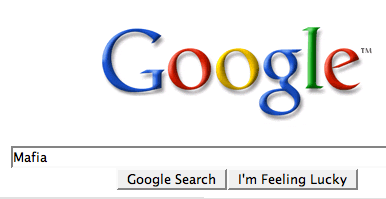
  • Instead of using the word MAFIA as a search term in that picture, you should have used GOOGLE MAFIA……

    Techcrunch has INSTANTLY made it to page one postion #2. :-D

    Mafia or not, you can’t beat their fast algos. This article is only a few minutes old.

  • The google mafia has been around…

  • The higher the risk in investing, the higher the turn over of your money. So if all goes well , when you invest you money in an immature deal, you’re money comes back to you in a greater fold. But then again, you could loose it all, thus the high risk situation. Kinda like double or nothing.

  • I would pick up that fund that had more former founders in it..

  • interesting post. i would love to see an update on this post in 2 years, to see which of the Mafia has become the new kingpins.

  • Whatever. Nobody can touch the PayPal mafia. What have ex-Googlers done? Nothing.

  • This is so funny when you say Mafia.

  • This reminds me of when the rappers turned on the record industry.

    Can’t wait to see all these guys roll up in Hummers all iced out with their ‘twenty fours…

    Well it doesn’t have to be that dramatic, just something more interesting than the typical VC attire.

  • This is a nice “reply” to those whining that startups will be virtually impotent at getting funding for their new ideas.
    The money is rolling in, people! Creating and keeping alive a startup based on your idea is getting easier!

    As Robert Collier said: “Visualize this thing you want. See it, feel it, beileve in it. Make your mental blueprint and BEGIN”.

    Good luck to y’all…

  • Dear Lord

    Give it a rest man. If the term “Mafia” in or something ? all I seem to hear about is Paypal mafia , now its google mafia and soon it will be facebook mafia.

    Just because a bunch of people worked somewhere in the past and now invest/or start their own thing is nothing new.

    It has been done before by netscape people , former excite people , and before them Microsoft people. I happens all the time. No need to group them all together like they are going to rule the world or they have some sort of masterplan. and these people do no have the midus touch. some will fail other will succeed.

    It suprises me that you guys get so many hundreds of pitches for coverage from startups yet you write a bunch of junk half the time to fill up the pages.

  • A bit of misinformation in the first paragraph, you include Chad, Steve and Jeremy as rich alum when most likely they make very little in the IPO and buyout.

  • Google people will not succeed in building new companies. The reason that the media covers the PayPal crowd is that it is extremely rare to breed so many successful new companies.

    In fact, most Google investors have horrible investment records, especially Aydin.

    Most of the companies that googlers have started are jokes.

  • Interesting post…but it’s a NY Times story.

    http://www.nyti...iness/28vc.html

    That article is certainly referenced, but only in the 4th paragraph. No doubt post has a unique TC angle on it, but it’s kind of presented as an original TC idea…I just had a laugh when I went to the NY Times site and saw the same story.

  • Very nice post erick.

    Good to know insights into the google mafia. Now we can predict where the next big things come from.

    I Would invest in both of them..
    Thanks, Nag

  • Errick ,

    If it is indeed a NY rip off them im extermely disapointed unless of course you did not know about the NY article.

    Just by chance are you able to tell us how many tipoffs or pitches Techcrunch gets a day from semi decent startups ( by semi-decent im ommiting the half backed ones like some dude starting a new blog on blogspot or some kid starting an affiliate selling site ).

    its just some of the stories TC covers are pretty lame. Thus the writers I must say go a great job.

  • Both PayPal and Google alums are undoubtedly intelligent, web-savvy and wealthy. But most of the PayPal people are startup people. If you’re still at Google after all these years, maybe you aren’t.

    It seems like there’s a big difference between the PayPal alums starting companies, and the Google alums who are bankrolling them. (Miguel Helft’s article in the New York Times closes with Google alum bragging about funding a PayPal alum’s company, which only made me wonder what the other PayPal folks knew about the entrepreneur that the Googler didn’t).

    I’ve often wondered why some companies, like Oracle or PayPal, produce so many entrepreneurs, whereas others like Microsoft and maybe Google don’t. The most successful seem to smother their young: on the strength of their rising stock price and their (once-)intense culture, Microsoft and Google retain people until even the most intelligent lose their ability to thrive in the wild.

  • @18: Very good points, Glenn.

    I think that a kind of an answer to your thoughts is that the Google guys will not be entrepreneurs (well, they will be entrepreneurs in VC) – they will fund entrepreneurs who have new ideas. Thus, they don’t have to be innovative in this industry. Financially, they are doing fine, so that now they just can spread small amounts of money (up to 1M) around and see which one will generate the next big thing.

  • Bottom line: The best (new) venture investors are those that have been there done that. Making money as an early employee of a successful IPO does not make you a great entrepreneur nor a great VC. Sure they’ll have some sensibilities for identifying interesting/useful technology…but newco’s and their success is dependent on so many more factors than just novel IP. And those factors are very difficult to read, if you haven’t been there at least a few times before, in the hot seat. This is why some of the Paypal guys do really well as angels.

    I started several Internet companies before launching a small venture firm on the side, (Venture Factory) and have seen many XYZ Mafioso with pretty lame pitches over the years. I’ve also been schooled by how hard it is to do VC, even after a few successful startups. I’ve also learned the hard way through a few blown investments alongside the successful ones. Venture investing is not a get rich quick scheme, it is a time tested profession that plays out over seven years to really see who the first batch of winners are. That said, there are plenty of lame VC’s out there who do it for a living. So either way, I am really glad to see more groups like Founders Fund, Foundation Capital, and Series FF stock deals, shaking things up a bit. The industry needs to evolve.

  • its skule time. time for former googlers to get an education in how little they know beyond being lucky enough to work for google, being lucky enough to sit on a stock bubble, or the one contribution they may have made that would mean nada were it not done within google.

  • @Glenn Kelman:

    “I’ve often wondered why some companies, like Oracle or PayPal, produce so many entrepreneurs, whereas others like Microsoft and maybe Google don’t.”

    because they might just be smart enough to realize that enjoying the money, giving it to your kids, or just giving it to charity is a much more positive outcome than pissing it away on startups in a market already oversaturated. i’ve been there and done that, the best exits from succesful firms are the ones who don’t believe their own hype, who just take the money and live life. the ones who believe what they read in the press, that they are a breed apart and can turn lead into gold, they are just creating needless stress and misery in their lives…which is exactly what money should preclude!

    nathan mhyrvold is the lead these people want to follow – he does a little dabble investing here and there, but he gets excited about cooking. he’s smart enough to know he sat on a bubble, and that bubbles rarely expand under the same ass twice

  • The diff must be the burocracy among these companies

  • There is no “google mafia”. What have ex-googlers done since google? Nothing.

  • Interesting philosophical discussion about the multi-generational approach to creating wealth and then spreading that wealth around. It is a similar discussion we have regarding west coast angels and east coast angels. Multi-generational entrepreneurs occur when one company succeeds tremendously, and it creates entrepreneurs that want to go out and do it again, creating a second generation of success, and so on. Then there are those that make it and are done, they have enough wealth to live on and give some to charity etc. Some of those that added comments seem to resent the notion that it is good (and expected) for those who have been successful to go out and strive to repeat that success. It is important to keep in mind the real impact of second generation entrepreneurial ventures….jobs and regular wealth for working folks and greater wealth for the founders and investors who then can go spread it around some more. It is the foundation of our capitalist culture and what keeps our economy growing. Even those that just choose to invest rather than build are necessary in the process of company and dynasty creation. We are building a whole new generation of angel investors, but most of ours don’t have the benefit of exiting a wildly successful venture like Google or Paypal, they have earned income that they divest by investing in early stage companies. The Network of Business Angels & Investors have become very active for a SE angel group and to further that momentum across the country we are syndicating with other groups and bringing in new investors through our angel investor education books: http://www.lear...gelinvestor.com and offering a new blog with insights and tips for angel investors http://www.myvi...langelworld.com

  • I agree with what several people have said…what google mafia? The paypal guys own them

  • It is important to keep in mind the real impact of second generation entrepreneurial ventures.when you invest you money in an immature deal, you’re money comes back to you in a greater manner

  • No Mafia, maybe jealous? tks

  • I think Paypal is carrying the pants here.

  • Take a break Karen.

  • How about this mafia now?

Leave Comment

Commenting Options

Enter your personal information to the left, or sign in with your Facebook account by clicking the button below.

Alternatively, you can create an avatar that will appear whenever you leave a comment on a Gravatar-enabled blog.

Trackback URL
bugbugbug