In Japan Half The Top Selling Books Are Written On Mobile Phones
by Duncan Riley on December 2, 2007

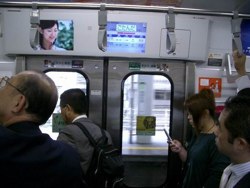
japan.jpgWith all the talk about Amazon’s Kindle, there’s a bigger revolution taking place and those who studied classic literature will be horrified. In Japan, half of the top ten selling works of fiction in the first six months of 2007 were composed on mobile phones.

According to the Sydney Morning Herald, mobile phone novels (keitai shousetsu) have become a publishing phenomenon in Japan, “turning middle-of-the-road publishing houses into major concerns and making their authors a small fortune in the process.”

One book, Koizora (Love Sky) about high-school girl who is bullied, gang-raped, becomes pregnant has sold more than 1.2 million copies since being released.

The mobile internet has a role in this growing phenomen in Japan, with another book Moshimo Kimiga (420,000 copies) starting with installments uploaded to an internet site and sent our to “thousands of young subscribers.”

Notably, at least when considering the Kindle, is that the Japanese market happily pays for mobile books as well; we’ve quoted hard copy figures here but there are many more Japanese viewers paying to read this content online via their mobile phones.

I can’t see anyone in Western nations waking up tomorrow and seeing mobile phone composed novels on the top seller lists, but usually Japan is years ahead on many tech fronts; mobile phone data services were available and popular in Japan years ago as the rest of us are only now catching up. Perhaps the NY Times best seller list in 2012 might consist of keitai shousetsu, stranger things have happened.

(image: Wikimedia Commons)

Advertisement

Responses

Comments rss icon

  • Written? Don’t you mean READ on cell phones? I doubt authors are typing in their books using cell phones.

  • No Jason, funny you should say that, got the same email from Michael when the post first went up. WRITTEN. They are written on mobile phones! A dare someone to write a novel on a Kindle :-)

    To quote the source (SMH):

    I typed it all on my mobile phone,” Rin explains matter-of-factly over the same device. “I started writing novels on my mobile when I was in junior high school and I got really quick with my thumbs, so after a while it didn’t take so long. I never planned to be a novelist, if that’s what you’d call me, so I’m still quite shocked at how successful it’s turned out.”

    So successful that one volume of her book, which began its life in a series of instalments uploaded to an internet site and sent out to the phones of thousands of young subscribers, has sold more than 420,000 copies since it was converted into hardcopy format in January.

    Remarkably, half of Japan’s top-10 selling works of fiction in the first six months of the year were composed the same way – on the tiny handset of a mobile phone.

  • This sounds like an Onion article.

    What disturbs me more than the thought of someone wearing their thumbs down to stubs typing novels on a phone is the thought that these novels are being composed… where? On train seats? In line for a movie? In the john? WHY someone would choose to write on a cell phone is more mysterious to me than the mechanical challenge of fighting T9 four thousands of words.

    I think that quote would have gone well in the main post. I had the same question as Jason Moy at first.

  • Imagine writing a book on your mobile. Wouldn’t it take a long time?

  • Thanks for the link to that article in Syndney Morning Herald, Duncan. Fascinating read. Having grown up in that part of the world, I understand why reading literature is part of the Japanese culture. My Japanese-speaking father reads about 10 novels every month, I kid you not. It is stunning to read in SMH that a re-print of Dostoevsky’s The Brothers Karamazov recently has sold 300,000 copies!!! Japan is a nation where people do use public transportation for long commutes, and reading is all they do. Plus, there is a cultural encouragement of reading in general.

    I am not surprised that novels are being written on cell phones. The level of cell phone usage in Japan is deep . A rough analogy is that the way they use cell phones to communicate is like the way people use computers here.

    Here in the U. S., the consumption of entertainment is also going through a significant change, as you pointed out in an earlier post related to the on-going writers’ strike. The act of picking up a TV remote, or a paperback, is evolving as there are more and more online videos, blogs, and social networking sites to feed that hunger.

  • a sober note
    I did see the Dostoevsky mention, amazing contrast when you think of it, Russian greats vs the mobile generation. Kudos to Japan though that Dostoevsky would be a hit today.

  • Well, I definitely can imagine writing a blog from cell phones. But books??

  • Why not!? I honestly have to say that I´ve never thought about that opportunity. But while sitting at the haircutter or in the subway it´s a good way to record thoughts.

  • You can also download free many of the old classics and some new Creative Commons books (some fantastic modern scifi) to read on your cell/mobile phone.

    Take a look at http://www.booksinmyphone.com

    It’s nice not to hear the kneejerk ’screen would be impossiblly small’ reaction here.

  • In contrast to English, the burden for using the numeric keypad for inputting Japanese compared to a full keyboard is not very large. The reason for this is the very powerful front end processors on cellphones and the nature of Japanese which requires few keystrokes than English. When I write email messages on my phone in Japanese, I never use the slideout keyboard on my smartphone while I use the slideout keyboard for even the shortest entries in Japanese. Also, these keitai novels are apparently written like email messages written on cell phones, that is, short lines, etc.

    Many younger Japanese spend much more time writing email messages on their cellphones than they do talking. My daughter’s data charges is much larger than her voice charges for this reason. Also, the long commutes to work or school that many Japanese make on crowded trains helps to reinforce this trend.

  • @Jason: It is absolutely WRITTEN.
    If you have been following news in Japan mobile area, u will know that trend started 2 years ago.
    Don’t be shock guys

  • Robert #11 is right. Predictive text and Japanese input are a pretty powerful combo. Phone plans in Japan give you very little talk time compared to the States as well, encouraging messaging instead of talking. Still, HTPCs are just talking off here, and I find it hard to believe that people are composing and editing whole novels within their keitai’s limited notepad capabilities.

  • So in other words, a great reason to learn Japanese. A much more efficient language. Cool Story, Duncan!

  • I don’t understand what is wrong in writing a book on the move? Writers don’t always have to be exclusively ‘writers’, normal people like you and me can also write books, to share our experiences in life, or just use it like a diary, or a means of timepass while travelling. This is what I call the ‘real’ use technology.

  • This is way old news. If you keep up on Japan at all you would know this has been popular for over a year now that I know about, and I am sure much longer than that in actuality. There is a site that I can’t recall the name of that is very popular with the genre… and many high school girls are writing romance novels on their phones. I don’t think this will catch on in America, for numerous reasons, but who knows, maybe it will. The societies are very different though.

  • It’s the fucking future we will live soon ;)

  • Has someone done any proper research on this. i.e going and asking those authors how they did it. Did it just involve note taking and then composing it later on a computer? Or is it done entirely on the mobile device?

    As someone who writes a fair bit, I can tell you that its not just about the idea or the typing, you need to spend a lot of effort in increasing the quality of the content “once” it is written. It is well known that it is easier to pickout mistakes from printed paper than on a monitor which to be honest are a lot more similar to each other than the little tiny screen of a mobile phone is to a computer display. Even with this similarity we still find paper easier. So unless the quality of these novels are not a factor, I am having difficulty believing that “half” and not just a few, yes, half of the best selling novels are written on a tiny mobile screen.

    It is more likely that the authors exaggerate to sell more books by publicizing it as “mobile-written” and journalist exaggerate in their titles to get their articles read.

  • I read Dostoevsky’s The Gambler, and plenty of Victorian novels on my 176×144 mobile screen.

  • “but usually Japan is years ahead on many tech fronts; mobile phone data services were available and popular in Japan years ago as the rest of us are only now catching up.”

    But not everything is adopted in the “western world”, for example imode was hyped but then died in Europe…

  • Googling “Koizora in English” I found this:

    “Koizora is just another example of traditional Japanese diffusion patterns for pop culture [...] Once a certain product or style becomes slightly visible on the street, the mainstream media complex scoops it up and propels it into national news/advertising campaigns [...] the subsequent high sales should not be too surprising.”

    http://clast.di...ndagency.jp/en/
    (interesting read!)

    I wonder how many words make these stories up. Short stories are a viable form of art, perhaps evanglizing their dissemination methods is simply an idea whose time has come.

  • Looking for any mobile marketing related content

  • Kay: The Gambler ? Ok, try reading The Brothers Karamazov next time ^_^

    Not sure that the Western world can massively adopt this trend. I believe that in the Europe and the US, the market for e-books will be split up between dedicated readers and multi-purpose devices.

    Honestly, I can easily understand the arguments on both sides of the fence. While it may bother some people to carry an extra device, I’ve been using an e-ink device for a full year now, and I just love the overall experience. I carry books and blogs on it (I usually read Techcrunch on my Sony PRS-500) and usually switch from one another. The screen is fantastic, BUT I only carry this device when I have some sort of bag with me (or a jacket with large pockets), while I always carry my cellphone.

  • Well, Japan was always the first in technology.

  • I am a little confused here. The article really talks about books being RELEASED or PUBLISHED on the mobile internet but really says nothing about the authors’ process of actually writing or composing the work. Does the story have the facts wrong or just ignore the details of composition?

  • As a european, I thought I’d mention that I have been writing a play using my phone (not quite finished yet but it will be performed 9-12 April 2008). The trick is to to have the right phone – I use an HTC TyTN II which has a querty keyboard (slides out sideways) and I have little difficulty typing on it – I would not have been tempted if all I had was the standard phone keypad! I do copy the files to my PC for final proofing and printing but all the original writing and re-writing is done on the phone whilst I sip cappuccino in Caffe Nero in Bath. Of course, one difference with the books mentioned in the article is that my play will be seen on stage (Rondo Theatre, Bath) and there isn’t any expectation that people would read/watch it on their phones.
    For those who like numbers, the first act is roughly 10,000 words and the second will be a bit shorter. Of course, the actual number of words I wrote is much higher – probably twice that number, counting all the rewrites.

  • @ Duncan – it is interesting, but there are some big value chain differences between Japan and US / Europe

    (i) Better handsets for doing this – reading and writing
    (ii) In DoCoMo business model more money goes to content provider, motivating them more
    (iii) Ditto, less chance of “sticker shock” from high data charge rates.

    I am told (I don’t write Japanese, so can’t confirm) that you also need far fewer Kanji characters to convey an idea (as they symbolise memes, not letters)

  • Looking into this story further from here in Japan. Not EXACTLY as presented above. Wouldn’t think SYDNEY ANYTHING would be the final authoritative word about what is going on with the Japanese.

    Trying to uncover the so called “thumbing authors”. Pretty unusual. All sources so far have said if there was one, that person would be quite the celebrity here as well for the same reason.

    Overall the premise of the story IS CORRECT. Keitai (mobile phone) shousetsu (books and comics) ARE very popular in Japan and yes, they ARE read by many people, particularly during commutes to and from work.

  • Btw forgot to mention the dialogue is more Proustian than Dostoyevskian…

    Did you get that?

    Yes!

    Good.

  • What’s so mysterious about this? I bought my own BlackBerry, not for e-mail, but because its the easiest mobile device to type on, there is a Word-compatible word processor available, and the phone then allows easy transfer of my written documents over to the PC for final editing. I live in Manhattan, and simply do not have enough time to sit at home doing all the writing I need and want to do. It’s ideal for those moments when you have some great thoughts and you are out in the middle of doing something else.

  • The quality of the screen has a lot to do with ketai reading in Japan.

    The biggest obstacle to mobile reading in the US has been the quality of handset displays … you wouldn’t see too many RAZR users sitting down for a good read on a 176 x 220 screen.

    By contrast, the iPhone is one of those rare cases where the US market leads Japan by having a bigger, brighter display. Judging by the feedback from users of our webkit app (http://www.textonphone.com) reading on the iPhone can be an enjoyable experience.

  • I Am Not Posting To Spam My Blog - December 3rd, 2007 at 8:06 am PST

    “Koizora (Love Sky) [is] about high-school girl who is bullied, gang-raped, becomes pregnant”

    How cheery. I was wondering what I was going to get my mother for Christmas. Thanks Japan!

  • People in Japan spend a lot of time travelling and playing with their mobile phones, they send sms and play games, reading is also a major mobile activities, that’s why the mobile ebooks are so popular, but I don’t think they will writing a novel with a mobile phone.

  • Try writing a novel on the iphone next…

  • The US is headed for this too, people are just waiting for the MSBookReader!

    http://fakestev...er.blogspot.com

  • People write their best stuff on the go.

  • @Hadrien: Dostoevsky gives me the same experience on my mobile, so I’m willing to try it. :-) I’ve read at least a thousand pages on mobile.

    @Chris R.: You mean SMS? :-)

  • I’m surprised by the number of people who don’t believe a novel can be written on a hand held device. To them, I’ll say “Get out (of your country) more”. The US is ages behind the rest of the world on mobile usage.

    On my recent trip to Italy, I’ve written all my travel journals (an indulgence for myself) on a palm pilot – no keyboard. I did not have to carry my laptop around for 3 weeks.

    I’ve seen for myself Blackberry addicts who can type faster than many of us can on a keyboard. Yes, it is easier writing on a computer, but writing on a mobile device is entirely possible.

  • If you told me just five years ago that 3 out of 5 people around me would be actively text messaging conversations while watching TV, eating dinner or driving their cars, I would have seriously doubted it. And I would have been wrong.

    While it is not likely that our culture is in any immediate danger of its citizens writing or reading novels from their cell phones, it is not so unlikely that we will be watching sports, movies and cartoons while placing bets, bidding on ebay, blogging or messaging as a means of filling every potentially empty moment of our day. c’est la vie… just not for me. Every once and a while I just prefer to do nothing more than ponder; preferably with a fishing rod in my hand.

  • I would like to see if it’s possible to take place in Western countries. They (Japanese culture and others) have the advantage of not depending on an alphabet to build words like us, so maybe their language system is much more suitable for this kind of thing.

  • Yikes, people are so hung up on the typing aspect, when the gristle of the story is the fact people are reading novels on their phones. In an age where the traditional publishing industry ponders it’s future peddling hardbacks nobody reads, this presents a new business model and means of capitalization.

    I have an iPhone, I make sure to access my favourite blogs when I have wireless access in the office, I then use the Underground to get home and read the cached blogs on the phone during my journey. It’s not such a leap of faith to imagine reading a novella or comic in the same fashion, at least not in Europe.

    I’m not writing a Christmas mobile novella bestseller called ‘My Thumbs Are Sore And Other Lovers’.

  • This is unlikely to map well to the US, but possibly to Europe. Main reason is that mass transit is much more popular in Japan than in the US which gives people time to read on their phone. In the US, most people drive to work or even if they do take public transport they are most likely on an underground subway with no cell coverage. Translation, mobile applications in Japan are ahead of the US, but they won’t be coming the the US any time soon.

  • Great post, Duncan. Here at Lulu we’ve also seen this happening in the European region, so the wheels on this phenomenon are beginning to roll outside of Japan. I see this as a potentially disruptive phenomenon in the global user-generated content space, especially as individual creators begin to monetize their content for mobile distribution. Cool Stuff!

  • I lived in Japan a long time and the story is totally believable. Japanese language is well suited for typing on a mobile phone. Trains are so packed it can sometimes be impossible to read a book or a newspaper, which is why the phone is great for reading/writing on trains.

  • Sure, you can write a book on a mobile phone. But I don’t believe you can write a good book on a mobile phone. Editing would be too difficult. What this article suggests to me, is that the Japanese love crappy novels that are really just first- or second-drafts.

  • It also suggests that half of Japanese bestsellers are written by people who don’t even think of themselves as authors, and who write stuff on the subway on the way to work. This can work sometimes, but over half the bestsellers? Again, it suggests a culture that loves the energy/enthusiasm of a first draft, or of something rapidly updated on websites, more than it appreciates finely-crafted, well-structured, professionally-written stories.

  • It’s easy to spot a cellphone novelist. His thumbs look like Popeye’s forearms.

  • I have two quick points..

    - This ‘news’ is so old.. suprised the TC crowd didn’t know..?!? The 1st mobile phone novel award ceremony was held here over a year ago:
    http://wireless...e-novel-awards/

    - Furqan (#42) and several other point to the mass transit angle, while that does – to some degree – have merit.. there are several detailed studies that show consumption and usage patterns between city dwellers in Tokyo and people in rural Hokaido (read: no subway there) are almost identical.

    As for this comment:

    “Translation, mobile applications in Japan are ahead of the US, but they won’t be coming the the US any time soon.”

    I seem to recall Wired saying something to that effect about camera-phones in 2001.. 8-)

  • I am from Tokyo.

    >One book, Koizora (Love Sky) about high-school girl who is bullied, >gang-raped, becomes pregnant has sold more than 1.2 million copies since being released.

    Hey, the story line of Koizora is totally different…

    A sixteen-year-old girl named Mika falls in love with a classmate boy named Hiro,
    and they live happily in their school life.

    One day Hiro’s ex-girlfriend harasses Mika out of her jealousy again and again, and finally gets some guys to rape her…

    With all his regrets about his helplessness, Hiro promises Mika to stay close and live together forever to take care of her.
    She keeps a baby with him and they make up their mind to bring up a baby on their own.

    However, another tragedy tears them apart…

  • My mind is further blown by the pasted quote of the author saying she first wrote a novel on her mobile phone when she was in junior high. Japanese phone technology may be ahead of the US and Europe, but that far ahead? Or are Japanese bestselling authors only a year or two out of junior high?

Leave Comment

Commenting Options

Enter your personal information to the left, or sign in with your Facebook account by clicking the button below.

Alternatively, you can create an avatar that will appear whenever you leave a comment on a Gravatar-enabled blog.

Trackback URL
bugbugbugbug
Techcrunch on Facebook