 DocuSign, an eSignature service, has raised a $12.4 million series C led by new investor WestRiver Capital, LLC and their existing investors Ignition Partners, Frazier Technology Ventures and Sigma Partners. It follows a Series B investment of $10 million in April 2006 from Frazier, Ignition, and Sigma. DocuSign, which has been around since 2003, enables companies to get legally binding signatures quickly over the internet instead of over the fax or mail. The whole digital signature business was really opened up during the turn of the century with that passing of the UETA and ESIGN acts, which clarified the legal grounds for electronic signatures nationwide.
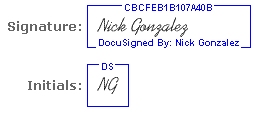 DocuSign certifies digital signatures completely over the web, acting as a intermediary who holds the documents and verifies the identity of the signature. To get a document digitally signed, you upload the documents to DocuSign (works with any document you can print), select the parts needing a signature, and create an authentication code for the transaction. DocuSign then sends an email to the recipient with a link to the documents where the signer can log in to their DocuSign account, enter the authentication code, and simply click the signature points to sign the documents. The person’s eSignature (example right) and ID number are then posted in those points of the document, and the signed documents sent back to the sender. There are more details breaking down the transaction on their product page.
Competitors include EchoSign, VeriSign, Entrust and others.
If you have doubts that people are using eSignatures, you should know that, to date, DocuSign has completed over 5 million of them. Their clients currently include Expedia, Land America, RE/MAX, AMICA, Worldspan, Sony, Weyerhaeuser, Yamaha, Tektronix, and Fidelity National Title.