
European ISPs are up in arms over the BBC’s new online TV player, iPlayer. Concerns from service providers such as Tiscali and companies like Carphone Warehouse center around, of all things, a fear of the BBC’s player being too successful and pounding their networks during peak hours.
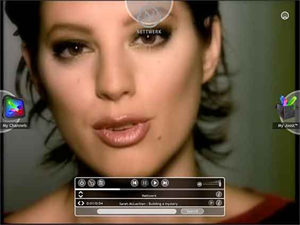
Apparently the internet isn’t ready for IPTV. As the Financial Times reports Mary Turner, CEO of Tiscali UK says, “The internet was not set up with a view to distributing video. We have been improving our capacity, but the bandwidth we have is not infinite”. Add to this concerns over Joost’s ability to compete head to head on quality with other online video providers and it paints a poor picture for TV getting online.
However, this seems a thinly veiled return to the net neutrality debate that periodically pops up when ISPs start thinking of ways to increase revenue without increasing network capacity. As GigaOm cites, it could cost UK ISPs up to $2 billion to upgrade their capacity to match increasing demand.
We’re due for an upgrade in the U.S. The U.S.’s top broadband speeds actually lag behind other OECD countries. Japan’s surfers can connect to the internet on a 100 Mbps Ferrari compared to the U.S topping out at a 40 Mbps 1970’s hatchback. They also pay much less, $0.22/Mbps to our $3.10/Mbps. And to think companies brag about a $260/month 50 Mbps connection in Sacramento.
New IPTV startups are only a slice of internet traffic. According to a report by CacheLogic, more than 60 percent of Internet traffic is used by peer-to-peer swaps, and about 60 percent of those swaps involve video content. IPTV adds to demand, but has been singled out most likely because there are a few large content providers to point the finger at.


I wonder if this is because the BBC and Joost are using peer2peer stuff. Because here in the UK most ISPs have long had a very dim view of users who use a lot of upload bandwidth. Even ISPs who market themselves as ‘unlimited’ usually have some ‘reasonable use’ clauses, and they arent usually enough to sustain a lot of much Joost viewing.
Why do people like the BBC bother using p2p anyway? If they are trying to shift distribution costs to someone else, the someone else is going to complain, and so Ive long wondered how the ISPs would react when there were some ‘legitimate’ mainstream p2p services in widespread use by users.
I use Joost, and my main problem is quality, I’d definitely accept a 5 minute buffering time before starting a program if I knew it’d be good quality and not skipping.
But so far, yeah, I kind of agree TV’s not working out on the Internet.
I agree that this is likely another attack on net neutrality. To me this is pretty obvious, as P2P does dominate such a large portion of internet traffic.
It is really sad that these big businesses work so hard to screw the market. There should be some way to shut them up, but I suppose they feel the same about us. =^)
I was very suprised when I arrived in the states a few months ago to discover how much slower the average connection speeds are here. In the UK companies advertise 8MB connections as average, and fast connections are 12-15MB.
A lot of the TV advertising here centers around switching users from dial-up to broadband, and hyping the ‘high-speed’ 2MB connections. Is there still a large proportion of users on dial-up? This amazes me as the US is so advanced on so many levels, but seems to be dragging its heels somewhat here..
You mised the whole point!
The problem is not access link speed. It is congestion in the metro-backhaul and the routers attaching to the Internet backbone. Stating that Japan has 100Mbps full-duplex from an Ethernet switch in a 300 unit apartment building served by a single fiber link to a congested backbone is a STUPID comparison to a single family residence served by DSL, cable of FiOS. The network in Japan is designed to provide megabits for milliseconds, not sustained throughput. Burst capacity is great for gaming and HTML, not for continuous video. Every country’s metro infrastructure chokes on large amounts of SD video.
I guess it depends on the ISP. Tiscali has really crap network and slow download speeds. There are some fast internet providers in the UK like Be there which offer up to 24MBit. I am using it and Joost and Zatoo IPTV works great. I haven’t had TV in my home in last 5 years and with IPTV + DVD for rent not really missing it.
“Even ISPs who market themselves as ‘unlimited’ usually have some ‘reasonable use’ clauses, and they arent usually enough to sustain a lot of much Joost viewing.”
Replace ‘usually’ with ‘all’ and you have got it spot on!
More converage from El Reg: http://www.ther...yer_neutrality/
Thanks for linking to that, I am reading the PDF now. being From Australia, I am on the Largest telstra broadband plan and every month run into trouble with having to pay for extra bandwidth and our speeds are shocking even compared to the USA (I can’t get adsl2+ where I live at the moment) so stuck with cable
I stopped taking the article seriously when I read
“European ISPs are up in arms over the BBC’s new online TV player, iPlayer.”
I like this site, and subscribe on RSS and its generally well written. But seriously European ISPs? This is ridiculously lazy reporting. What buisness to European ISPs have with the BBC?
Europe is NOT ONE COUNTRY.
Alastair – hang in there, chief…
We’re not as packed in here (~80 people per sq mile) as you are in the UK (~630 people per sq mile).
It’s a slightly larger country all the way around. Maybe you’ve noticed?
Alexander,
“As of 30th June 2007, Tiscali had 3.3 million active users in Italy and the UK”. I said European to include Italy.
Regardless of the specifics surrounding the Japanese v. U.S. transfer rates, Japan ISPs have embraced IPTV http://www.tvov...eo+Headend.aspx
IP TV is the future, especially when it is delivered on mobile devices. dont you feel you could catch up on your favourite tv show or a nba game, while on a train or a flight…however the current bandwith equation has still a long way to go..so the content is there..the delivery protocols are there but the delivery infrastructure is lacking…but IP TV is the way to go..
In Australia we pay almost $300 for a 6Mbit connection.
IP TV would probably kill the already slow Internet in Australia faster than anything…
Australia is terrible when it comes to our internet infrastructure. There’s a huge debate that’s currently happening at the government level regarding building the next generation internet network.
Year’s ago it was clearly evident that the internet would need to handle huge volumes of media. I completely blame the telco’s for not properly planning for this.
Don’t they have teams devoted to researching these things..
I believe BBC should be able to build there application, even if it consumes huge amounts of bandwidth, that’s not there fault. There building the application to deliver a particular user experience.
And if it isn’t Joost or BBC it will be another company. Yep this is all about how the telco’s get compensated for the excessive bandwidth use of there infrastructure.
In the end us users will pay for it!
may be future ok.
Nick Gonzalez, its not the Italian users in question.
If Verizon were kicking up a storm about a HBO VOD service would you call them North American despite the fact that Canadians couldn’t possibly access that service any way? Thats what we have here, Italians are under a different wing of the company and can’t access the BBC iPlayer anyway.
Lets not forget that there are ISPs which are also cable TV providers.
Then there are ISPs which are starting to use their DSL network to offer TV programming.
Now why should I subscribe and pay for any of these extended ISP TV services (”triple play”). IF I can get my TV programming for free from Joost or some other content providers which offer IPTV? IF you consider the fact that the Internet has the possibility to offer you thousands of different channels, as opposed to a handful from the TV providers (cable, DSL-TV).
I live in Germany and I have no interest in waiting x-months up to years until local stations have synconized tv shows which run in the US, and are of my interest. IF I could pay for shows like Battlestar Galactica and watch them a day after their US release, I would not even subscribe to cabel TV anymore. I would love to have access to National geographic in english over the internet without having to pay a premium price for a TV package that includes all other sorts of garbage.
You just have to look at South Korea to see where the TV market is going.
In the Tokyo area, both NTT and Tokyo Electric Power offer 100 Mbps to single family dwellings at about $60 a month (cost varies with the ISP selected). DSL speeds of up to 40 Mbps are available and my local cable company offers up to 30 MBps.
We have the Clinton Adminstration’s pressure regarding competition in telecommunications to partially thank for this happy state of affairs. Too bad they didn’t take Kantor’s (then USTR) advice to heart for the US.
I love how the Japan = 100 Mbps always gets thrown out there as the standard. Anyone here ever been to Japan? One of the highest population densities on the face of the earth AND never had to deal with regulation and divestiture like the US since 1984. Competition may look good on the surface, but look at where it put us. Anyways, the battle in terms of IPTV going forward will be the QoS and anyone in the business will tell you that service that you pay for will almost certainly be better than anything that’s out there for free. Sorry, but the cable TV market is not as free spirited as the Web 2.0 community. There’s too much at stake in the way of jobs and shareholders. Don’t forget, it takes money to run a business…and those union wages/health care that everyone wants…well, that’s not free either.
So, if you’re unhappy with the current state of broadband in the US, don’t blame the telcos or the cable companies…they’re just trying to make a buck and not end up like the fords/gms/chryslers of the world.
The idea that anyone MUST lease a part of that which they own as mandated by law to ensure fair competition is a joke.
I covered this story over at last100, and wrote:
I object to the notion that the BBC, YouTube or any other online video service is getting a “free ride”. Without digital music and video acting as a main driver for broadband take-up, then many of these ISPs wouldn’t be in business in the first place. In part, ISPs indirectly sell customers access to the content sitting on the network, which in-turn, most web sites provide for free, paid-for through selling advertising. The symbiotic relationship between content and network providers has existed for years.
Also see my earlier post: Will ISPs spoil the online video party?
I watch the news online from the BBC nearly everyday, and if more people watched the BBC as opposed to some less than credible sources on cable here in the USA… the world would be better informed to say the least. Its great news that the BBC is pushing the envelope with their IPTV. Im sure all of the ISPs will remain profitable without touching net nuetrality.
Why should the BBC have to pay the ISPs? The customers have already payed the ISPs for connections. So it’s not like the ISP didn’t get paid.
This issue really isn’t that difficult. The ISPs are selling broadband connections to their customers. The customers are using the connections they paid for.
If the ISP can’t deliver service to the customer, at the rate the customer was sold that service, then they shouldn’t sell it at that rate. It’s not like the ISP was forced to sell connections to customers at those rates.
50 mbps for $260/mo! I’m moving to Sacramento. Anyways, heard this whole argument about the infrastructure not being ready before…there were a number of articles in magazines like InformationWeek about this issue around a year ago.
ISPs and telcos will continue to improve their network infrastructures. In France, as in other European countries, they are aggressively deploying FTTH: its very expensive, and the deployment of such new technologies will take time before reaching a significant amount of the population in our countries.
During that time, to continue to develop IPTV and VOD, we need to make the smartest use of available bandwidth and existing Internet infrastructures, to decrease the cost of video delivery (this cost being assumed by the ISP or the consumer, no matter).
We can do that for instance by using “smart & legal P2P” like Joost and others are beginning to do, or even by using very basic “scheduled overnight FTP downloads”…
If we decide to do that, and to transfer this cost reduction to the consumer, then the consumer will benefit of very low-cost, thus very attractive, VOD and IPTV services… so the market will grow rapidly: this good for our entire ecosystem, including video providers and ISPs!
I think that this is great. in fact, i bet we can get them running on videogame sites.
http://www.buys...svideogames.com
There’s a new IPTV system that I’ve discovered which can deliver HD quality through as little as 100kbps connection.
The player they designed can go fullscreen and somehow doesn’t need to buffer at all.
I think this system is about to dominate the IPTV industry.
check it out for yourself: http://blastiptv.com
There’s a beautiful demo there to show the quality and functionality.