July 5, 2007

Belgium Says ISPs Must Protect Copyright

Nick Gonzalez

23 comments »

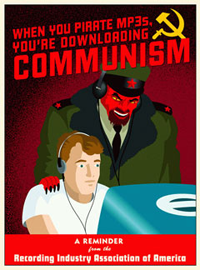
mp3communism.pngA court in Belgium has ruled that an Internet Service Provider bears the responsibility for stopping illegal file-sharing on its network. Although the ruling was made in Belgium, it relies on the E.U. copyright directive and may set precedent for the entire Union according to IFPI, an organization that represents the recording industry world wide.

Belgian courts have sided strongly with copyright holder in the past as well. In February, they ordered Google to stop copying Belgian newspaper headlines into their news and search indexes.

The suit was brought by a group representing Belgian authors an composers (SABAM) against ISP Scarlet, formerly Tiscali. In 2004, the SABAM received an injuction against the ISP, which assigned an expert whose investigation provided 11 ways to prevent infringement across the network. The judge agreed and Scarlet has 6 months to enact anti-piracy measure or face fines of up to $4,300 per day.

However, although the ruling means Scarlet must prevent piracy, it doesn’t require monitoring all network traffic. The Register quotes a SABAM statement saying, “The solutions identified by the expert are ‘technical instruments’ that limit themselves to blocking or filtering certain information transmitted on the network of TISCALI (SCARLET). They do not constitute a general obligation to monitor the network.”

Similar suits have traditionally not proven successful in the US, because ISPs have been seen simply as “common carriers“, not responsible for the contents of the packages they deliver. This has lead to a game of cat and mouse between pirates and copyright holders, epitomized by companies like MediaDefender allegedly trying to track down and catch copyright violators. As a side note, MediaDefender says the alleged honey pot, MiiVi.com, was an R&D experiment and the scandal surrounding it was a “libelously fabricated story”.

Now copyright holders are again trying to go after the bottleneck for piracy, the networks themselves. Because filtering technologies no longer place as harsh a burden on content providers, the industry is in transition and expectations are changing. After a lawsuit by Viacom, YouTube has begun scrubbing their own network for copyrighted content. Recently, AT&T announced they are making plans to track copyright infringement on their network.

Copyright protection company Media Rights Technologies has tried to push companies into implementing anti-piracy measures on their networks. They recently requested a cease and desist order against Microsoft, Apple, Adobe and Real Networks alleging the companies are in violation of the DMCA because they are not implementing copyright protection on their systems, namely their own product. They’re also cheer leading their own bill, the “Perform Act”, through congress with the help of senators Feinstein (D), Graham (R), Biden (D) and Alexander.

  • Sphere It

Trackbacks/Pings (Trackback URL)

  1. Tech Policy Summit blog
  2. Steinbring Inc.
  3. de tomKronieken » Blog Archive » België in het internationale nieuws
  4. ISPs belgas, P2P y copyright @ otro blog más
  5. tech blog » Top 50 Copyrighted Videos Google is Pirating
  6. Video Sphere France » Le Top 50 des vidéos protégées piratées et disponibles via Google
  7. barnesdmd.co.uk
  8. Media Defender Lied To Me, MiiVi Was A Front For An MPAA Sting

Comments

RSS feed for comments on this post.

  1. Tim

    Love the picture. Classic!

    This is a very dangerous ruling for ISP’s. It’s like suing the phone company for what someone said while using a phone.

    Crazy.

  2. Omega Wolf

    Typical! They always protect the interests of the big companies instead of the rights of the common man.

  3. Dave McClure

    nice [re-]use of graphic :)

  4. Mind Booster Noori

    The Register talks about 11 ways to stop illegal p2p traffic, while Macworld talks about 7. I would really like to know how many are they for sure, and which. The only that was talked about is “Audible Magic”, which was already proven to have flaws, thus not being effective. Also, that sollution has already their share of problems

  5. Bob Jones

    Why is a tiny little country like Belgium, made up of around 5 million French poeple who’d prefer the country to be part of France and 5 million Dutch people who’d prefer the country to be part of The Netherlands and some lost Germans, has any influence over other European nations? OH right, the EU … great, I’m now at the whim of an unelected bozo in Belgium.

    Obviously the wrong decision, but I’ve come to expect rulings like this, nobody cares about freedom and privacy anymore … the EU has no room for personal liberties.

  6. chall

    Not a good ruling from an ISP point of view. But having said that I think there must better ways of achieving the same objective(copyright protection) without necessarily putting all the load on the IPSs.

  7. Travis

    Oh dear.
    There’s always someone trying who wants to restrict web content.

    …and very nice graphic.

    Travis
    http://www.techshoot.net

  8. Robin Wauters

    @Bob Jones: man, you really don’t know a thing about Belgium :)

    The majority of the population (only about 35% speaks French by the way) wants Belgium to stay one nation as it is.

  9. Paul Jensen

    Where can I get that poster? sorry to leech

  10. Concrete Stain

    news flash - news flash

    - ISP pricing just sky rocketed in belgium

  11. Nick Gonzalez

    From the Modern Humorist. http://www.cafepress.com/cp/st.....rstore.460

  12. Dave

    In this global economy, whose law reigns supreme?

    Look for WIPO and the WTO to make major changes to US laws/sovereignty

  13. KwangErn Liew

    Does that mean they will be working closely with iTunes to distinguish those who legally purchased tracks and those who aren’t? And those countless royalty free music sites, and not to forget sites like Amie Street?

    Or we all can go back to the DRM-era with proper standards. Now, that would be awesome isn’t it? :)

    Oh, think I forgot about those who run SlimServer too.

    A big ambitious technology to build I must say.

    Fun. :)

  14. Chris De David

    This is crazy… like Tim said “a very dangerous ruling for ISP’s. It’s like suing the phone company for what someone said while using a phone.”

    well, why don’t Air Travel companies get sued for helping people smuggle drugs? same sh1t different smell.

    PS: phone companies have hands tied too… if authorities want to place a ‘tap’ then they get it no worries.

  15. Peter Warner

    Since the EU doesn’t have something similar to the DMCA that affords the ISP’s the immunity from content, this ruling - if adopted fully - would become the lowest-common-denominator for any multi-national involved in the public content stream. We all have a gut sense that this ruling is wrong. A stark and clear analogy might help others realize this as well. How about this: “States now require automakers to install monitoring equipment to prevent exceeding the posted speed limit”.