 Tommorrow, Google will be hosting a developer day for 5,000 developers worldwide. The bulk of developers will be gathering at the San Jose convention center for a keynote by Google’s VP of Engineering, Jeff Huber. At the conference Google will be outlining their developer strategy. But the big announcement will be Google Gears, an open source browser plugin that will enable developers to create offline web applications using JavaScript APIs. As a developer, you’ll be able to make an application with the assurance that it will work offline and online across browsers.
The plugin is a 700K download for Firefox 1.5+ and Internet Explorer 6.0+ that installs three developer APIs. One API will handle the creation of data objects to store application information locally, another will be a SQLite relational database for searching the data, and the final part will enable asynchronous JavaScript so applications can sync data in the background without overburdening the browser. More info on the APIs are available at the gears website.
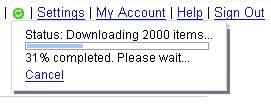 The first demo of Gears will be for Google Reader, but more Google apps are expected to come. Reader will add a green download button to the user interface. When you click the button, Reader will download the last 2,000 messages to your computer, preparing your computer to work offline or under a spotty internet connection.
Downloading will take place in the background, using the asynchronous JavaScript API. While offline you can read these articles and carry out your usual sharing and tagging. When you get back online, just click the button and Reader will sync your offline activity with their server. Right now the syncing is initiated manually, but it’s easy to see that it will become more seamless as the program develops. Gears could conceivably solve the large data overhead problems of Google’s AJAX applications, pushing updates to your desktop instead of slowing down your browser.
Google is releasing opensource and early to developers to get some preliminary feedback. They are also collaborating with a host of other partners such as Opera, Mozilla, and Adobe, which will to integrate flash and Apollo into their system.
Robert Scoble (coverage) and Artur Bergman (coverage) were also at the press event.