Here Comes Competition, Apollo
by Michael Arrington on March 23, 2007

The official developer release of Apollo, a platform that lets developers run their web applications outside of the browser, offline and on the desktop, is less than a week old, and they already have competition.

Firefox 3 will allow sites to work offline by accessing local datastores. And at least two
other products are offering platform products that will overlap significantly with Apollo features.

Ryan Stewart wrote about one of these, Dekoh, a couple of weeks ago and generally found it lacking.

Today, Joyent announced a new product, called Slingshot. At its core, Slingshot allows developers to build (or port) Rails applications to the desktop and run offline with “simple and transparent” data synchronization.

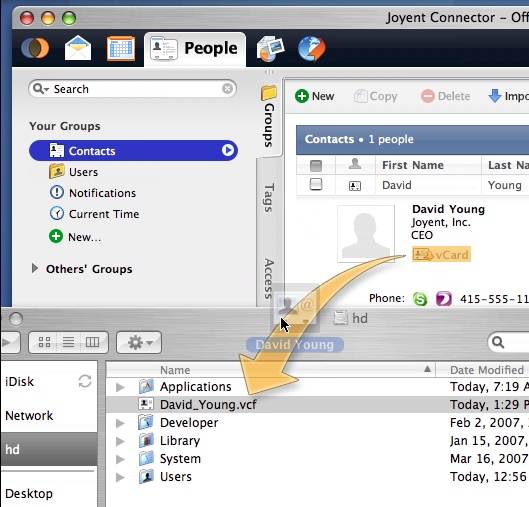
Existing Rails applications can be ported to the Slingshot platform, and include drag and drop of files to and from the desktop. In the future, Slingshot will include filesystem access to remote data.

There’s a great product and technical overview of Slingshot here, and a screencast here.
Advertisement

Comments rss icon

  • Are these all basically based on the original JAVA concept of a Program running within a Program ???

  • “Firefox 3 will allow sites to work offline by accessing local datastores.”

    Ooh, that has security hole written all over it.

  • Apollo has a lot more competitors if you include :
    Yahoo widgets, Google gadgets, Windows Gadgets as well as many others, seems like everyone wants a peice of this market, will be interesting to see what emerges.

  • Local storage for FF-3 is really awesome. I have an old post here: http://vinodliv...e-applications/

  • Another competitor is Web2os:

    http://www.web2os.com/

    Still proof of concept/ alpha but has some advantages over the big players (firefox 3, apollo and dojo offline) like the fact it requires no recoding of a website for it to be used offline (just a simple plugin creating for web2os) and the concept of “local mashups”

  • did I miss something here but in the screencast it looks like your source code is open for all to see?

    If so this has zero value for anything out of open source.

  • The problem with the Firefox plugin is that its only for Firefox. I’m sure they will do a great job and it will work flawlessly, but why would anybody launch an app that ONLY works within Firefox? It just seems a little silly.

    Dojo looks like a pretty serious competitor, though I’ve never personally tried it.

    Apollo is still a huge gamble, and I really like that Adobe is taking such a big risk with it. The first attempt at this, Central, was way ahead of its time. Apollo may still be ahead of its time as well.

  • QuineBox Media (a french startup) is developping a framework allowing the creation of RIA like Adobe Apollo but much more languages are embedded from HTML/JavaScript/PHP to flash and Python with the support of various web technologies (RSS, sharing, SSE for sync, light database for storage, Offline access…). Dion Hinchcliffe talked about us this week. The private beta test is going to start and more information are coming…

  • @Darren
    Ruby is an interpreted scripting language and as such the code is easily viewable. Work is going on to actually compile it to a byte code and run on a VM. I would imagine that it would then be possible to ship only the compiled code like Java or .Net. You will still run the risk of people being able to decompile your code. In fact for Java and .Net there are several decompilers around. You can run your code through an obfuscater but the results will be of limited value.

  • One of the main things that people tend to overlook is that Flash has been around for many, many years. It has a solid userbase, has been bug-tested to death, comes with a robust support base, and IS NOT NEW AT THIS.
    They said Microsoft Sparkle was going to be the next Flash killer too. Anyone even remember it anymore?

  • >>>Patrick B.

    Microsoft Sparkle, yeah… there’s this thing now called WPF and WPF/E retard. But this is probably too complicated for you.

  • Am I the only person that finds all of this stuff dumb? I want online access ALL of the time, I don’t care about offline access. If I have a computer and no network, it’s worthless to me.

  • SpringWidgets has offered desktop and web functionality since day one and handled Flash 8 and lower files with full functionality. Something that Apollo does not even do.

    That combined with single click popping to the content to your desktop makes for a very cool user experience.

    http://www.tech.../springwidgets/

    The install is smaller, seems to take less resources (depending on the widget you are viewing – the same is true with all platforms.)

    Take a look, We’ll be updating the tutorials on how to build for SpringWidgets in the next couple of days.

    -Don

  • I’m with ya on that, James V. A computer is just a terminal to the network (and my always-on servers where all my real work goes on) to me.

  • People have got to stop with the “Flash is hard to program” complaints. However true that statement may be, the reality is that anyone attempting to write RIAs should be using Flex instead of Flash. While they both target the Flash Player, Flex is a very robust framework that provides tons of functionality as well as a true development environment and Flash is a designer tool with scripting tacked on.

  • @James V: Offline applications make a lot of sense. Right now I’m sitting in a train with very limited net-access. Browings works “kind-of”, but working with one of these web2.0 apps is almost not feasible. On most planes, you don’t have network access either. And if you have, you will pay the mobile carriers fortunes.

    Off-line and syncing (or replication, as it was called 15 years ago in Lotus Notes – still going strong btw) is the way to go. As such, I think that Slingshot has a huge potential.

    -jc

  • IMHO James v. nailed it. All of these offline apps seem recidivistic. Perhaps I lead a less exciting lifestyle than some, but generally if I don’t have network access, I don’t need to be working – i.e.: If I’m on a plane flying or whatever.

  • Call me when there’s an SQLite datastore bundled in. Apollo looks really great, but who wants to save real data in an XML file?

  • I don’t think there is as much demand for offline access as we may be made to believe. Salesforce has had an offline synch module since ‘00, and with my own experience with various clients etc. it was rarely used (and this was years ago – before mobile broadband)

    Bringing web applications closer to the desktop is another matter though. The bridge between browser and desktop has always been poor (eg. clicking on a word document and just having the file passed off to word), but browsers are going to make it a lot more interesting. This field is the domain of the browser, and they will win the space. Why would I download an application that is nothing more than a specialized browser for each desktop-enabled web application I would like to run?

    Adobe obviously see the Apollo desktop client as the first second-generation web browser.

    The big predicament with desktop-enabling the web is that local web browsing has always taken place in a sanbox away from the local desktop because of security. Remove that sanbox and you have one big security nightmare – and not a single vendor as yet has a security model in place where a web application will be able to have access to the desktop securely. I still have some questions about how Apollo is going to achieve this – because the whole reason for it is to give Flash the ability to read/write the desktop.

  • Oh and a quick shameless plug – if you have a web application and you would like your users to be able to directly edit/save desktop files into the app, one-click link to your app, or a lot more – consider the Omnidrive API (http://dev.omnidrive.com)

  • Joyent Slingshot Pricing Model

    While we continue to kick around different business models for Joyent Slingshot, we can safely say that Slingshot will be available for free to developers that host their Rails application on Joyent Accelerators. Other uses of Slingshot will be allowed, but we haven’t finalized the pricing for those uses. Everyone using Joyent Connector will get a version of Joyent Connector on Slingshot for free.

    That pretty much ensures that Joyent won’t be a mainstream success

  • Perhaps the products mentioned above provide offline use and data sync, but Apollo is more that just those basic features. Also, Adobe has a major distrbution channel for Apollo through its Flash Player which I believe is installed on over 80% of the systems accessing the Internet.

  • Bob Don, can you explain why you think that? Joyent/Textdrive is one of the biggest Rails hosts on the planet. Shopify, for instance, is hosted on Joyent Accelerators.

    To another question, the code will be encrypted in the released version.

  • Brings me back to 1994 when WIRED announced Java Applets. LOL. The more things change, the more blah blah…

  • Wow, seems like this topic does generate a lot of debate. I don’t think calling me retard was necessary but it does indicate your general level of thinking (looking your way John).

    I’m well aware of Microsoft’s Windows Presentation Foundation and don’t get me wrong, neat idea, but Flash just has a much bigger head start. I played around with it (WFP) when it was still called Sparkle and it was essentially a very watered-down version of Flash. Back in the day when Java was getting its toes wet it was also similar to Flash on the desktop. Of course we now have the benefit of hindsight so arguably Flash will do it a little better.

    Will this be all she wrote? Probably not. Flash in a browser by itself still makes pretty extensive use of JavaScript and given today’s mashup world, excluding technologies really limits your boundaries. I code in Java, PHP, Pascal, and a touch of Ruby. All are great languages and have their strengths and weaknesses.

    Still, my point in my first post was simply to point out that adoption takes time and that Ruby is behind Adobe on this as well as having less backing promotionally. Competition is healthy but so is a dose or reality. Flash was simply there first and so the race isn’t exactly fair.

    Some responders here point out that they have no use for offline use of apps. Fair enough, but isn’t it nice to have that option? With Apollo it’s not even a matter of just being offline but having the same code run as a full-fledged desktop application. To me that’s exciting. It means more opportunities and greater scope of what’s possible. Also, I don’t know about you but when there’s a network outage, I don’t like to be sitting around twiddling my thumbs because all my apps are networked.

    To each his own :)

  • Yudel,

    I think you’ve been misinformed…there’s nothing limiting Apollo from loading any type of data (including binary). Flash can do it now through the browser. And Nik, I’m all about the shameless plugs ;)

  • I really want to use .NET to perform this functionality.

  • 3D3R Software studios have been offering Bubbles, an application that integrates web-sites/applications into the desktop environment.
    It features an easy javascript API that allows web-site developers to support drag and drop of files from the desktop to the web-app, system tray icon, menu and baloon notifications from the tray.

    3D3R also offers a commerical costumizeable and brandable product called Desktopize (http://www.desktopize.com).

    Both products provide a local store accesible through the Javascript API.

  • Apollo, Slingshot, Mozilla and Pramati are all attempting to bring the web closer to the desktop, but in different ways. Apollo has a custom client. Pramati relies on normal web programming models and web browser leveraging an auto-install model for the self-managing platform. Slingshot relies on a local Rails runtime engine. Mozilla is going after embedding XUL/XPCOM based model that allows having a HTML like presentation and logic layer clubbed with APIs to make native OS calls.

    Now this is nowhere close to the Java applet buzz of mid 1990s. Then whole Java env was flaky. Now, the web programming models are very well established. And with web2.0, users are more in the middle of the web than at the fringes. The latter is a key driver for bringing the web closer to user’s apps on their desktops.

    And most importantly, the platforms coming up all leverage existing established platforms and development models- Adobe building on Flash and Flex. Pramati building on server-side Java. Slingshot building on Rails. IN effect, trying to extend an existing body of applications and developers- onto this new space. Web’ish applications running on the desktop.

    (shameless plug.. :-) )
    Here again there are differences. Pramati a little more richer than the others. While the others are focussed on running apps on the desktops and probably allow access to sites/resoucres/services over the web. Pramati’s dekoh takes this further and builds more elements of web2.0 into the core platform like tagging, sharing, collaboration, user communities and more. All of these in Java. And also support applications in PHP that can also run on the platform. (And soon, Groovy even). One other differentiator is unlike the others there is no explicit installation needed here. On first access of an application, the platform and app get auto-downloaded and configured. One just needs a browser on the desktop to get started, and to subsequently access the desktop apps.

    The usecases of Dekoh model are beyond just desktop or offline applicatons. Now one can build desktop applications, that virtualizes the desktop. The apps can be accessed from that desktop, or from anywhere else.. using just a browser! IN effect the desktop is now on the web.

    The web-app running on the desktop with ability to access resources over the web and users needing just a browser to access it brings the web closer to the desktop. And the ubiquotous accessibility of these applications from anywhere on the net brings the desktop into the web. Bridging the web-desktop divide very effectively. This is something Apollo and Slingshot and Mozilla do not offer. Not yet atleast!

  • I heard also about “room31 project” offering platform to share files without uploading. here is the link http://www.room...om/special2.php

  • I can’t see going back to the Desktop unless yer able to access more Horsepower*

    Shades of Evil Microsoft*

    ;) )

  • Apollo has opened a new dimension to web applications.

    Developers should embrace apollo c’se its has wide applicability in enterprise wide applications.

  • it’s turning into a crowded space. Apollo, WPF/E, XulRunner as well as all the others listed here.
    I guess it’s going to come down to who can get their runtime adopted by the biggest user base combined with ease/cost of development and support…

Leave Comment

Commenting Options

Enter your personal information to the left, or sign in with your Facebook account by clicking the button below.

Alternatively, you can create an avatar that will appear whenever you leave a comment on a Gravatar-enabled blog.

Trackback URL
bugbugbug